
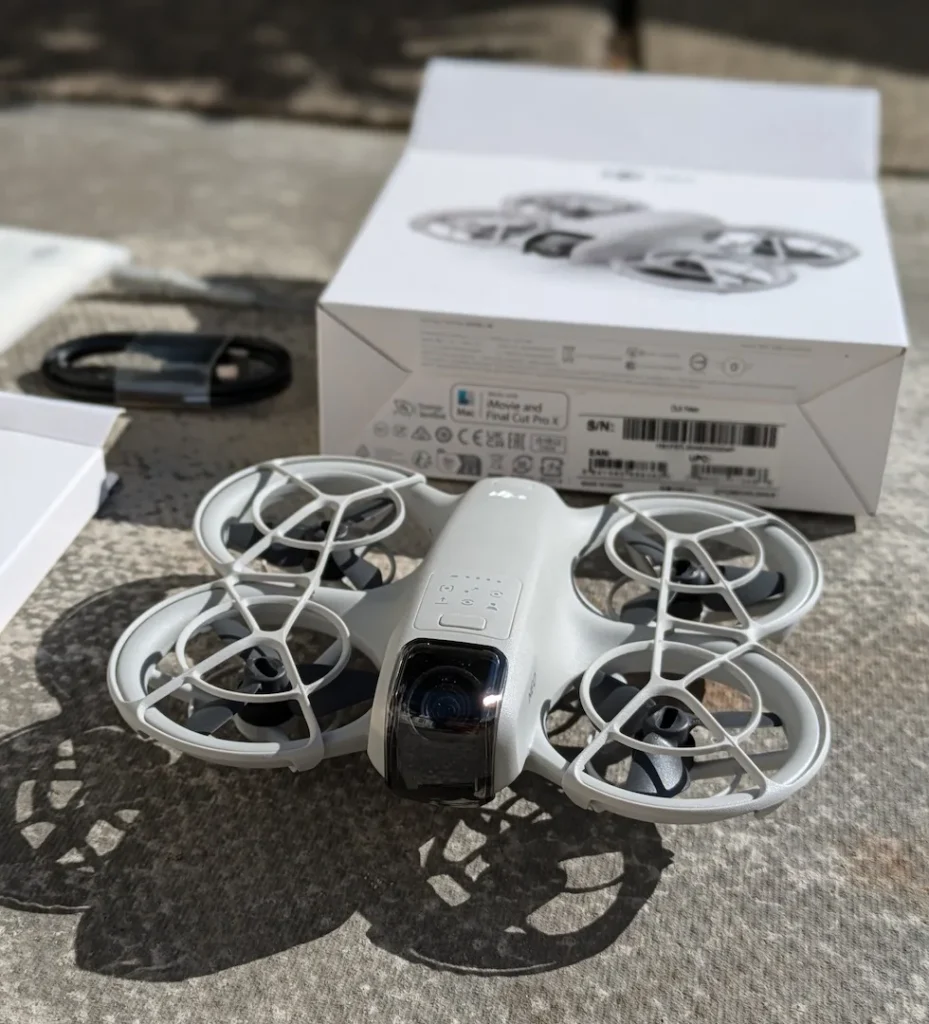

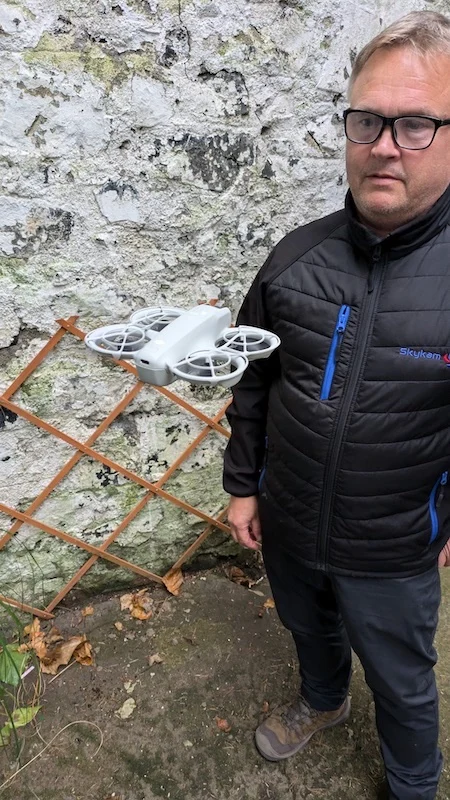
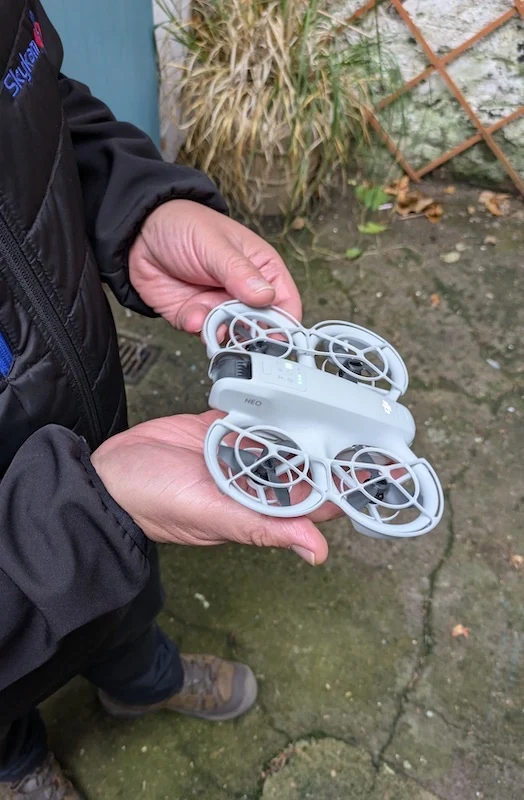
The DJI Neo doesn’t have an obstacle avoidance system. It lacks forward, backward, and side sensors for detecting obstacles. Instead, it uses a downward vision system and infrared sensors for stability, not collision prevention. The drone relies on its monocular camera to maintain hover stability within 0.5 to 10 meters. You’ll need to visually observe your surroundings and maintain a clear line of sight to avoid collisions.
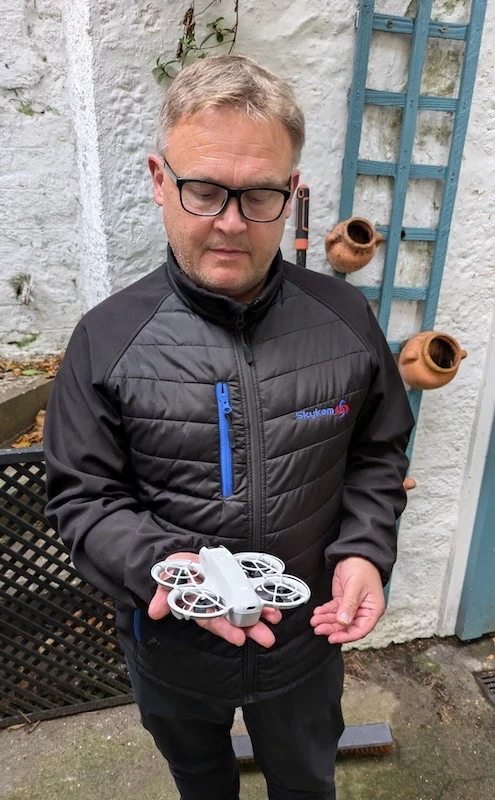
Exercise caution when flying in complex environments due to the absence of detection sensors. While the Neo offers tracking capabilities, it’s essential to understand its limitations and fly responsibly.
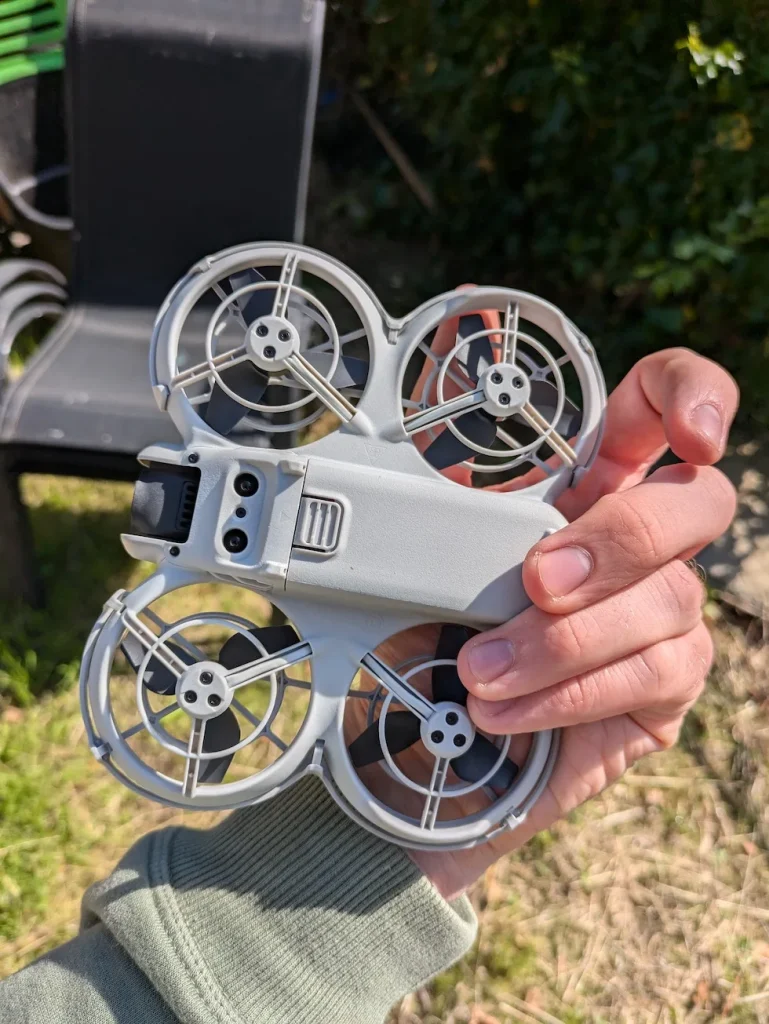
DJI NEO Has No Obstacle Avoidance System
The DJI Neo lacks an extensive obstacle avoidance system, setting it apart from more advanced DJI drones. Unlike its higher-end counterparts, the Neo doesn’t have forward, backward, or side sensors to detect and avoid obstacles. This limitation means you’ll need to be more cautious when flying in complex environments.
The Neo does have a downward vision system and infrared sensing system, but these are primarily for stability and positioning rather than obstacle avoidance.
The downward vision system uses a monocular camera, which helps the drone maintain a steady hover within a range of 0.5 to 10 meters.
However, this system can’t detect obstacles in your flight path.
When flying your DJI Neo, you’ll need to rely on your own visual observations to avoid collisions. It’s essential to maintain a clear line of sight with your drone at all times and be aware of your surroundings.
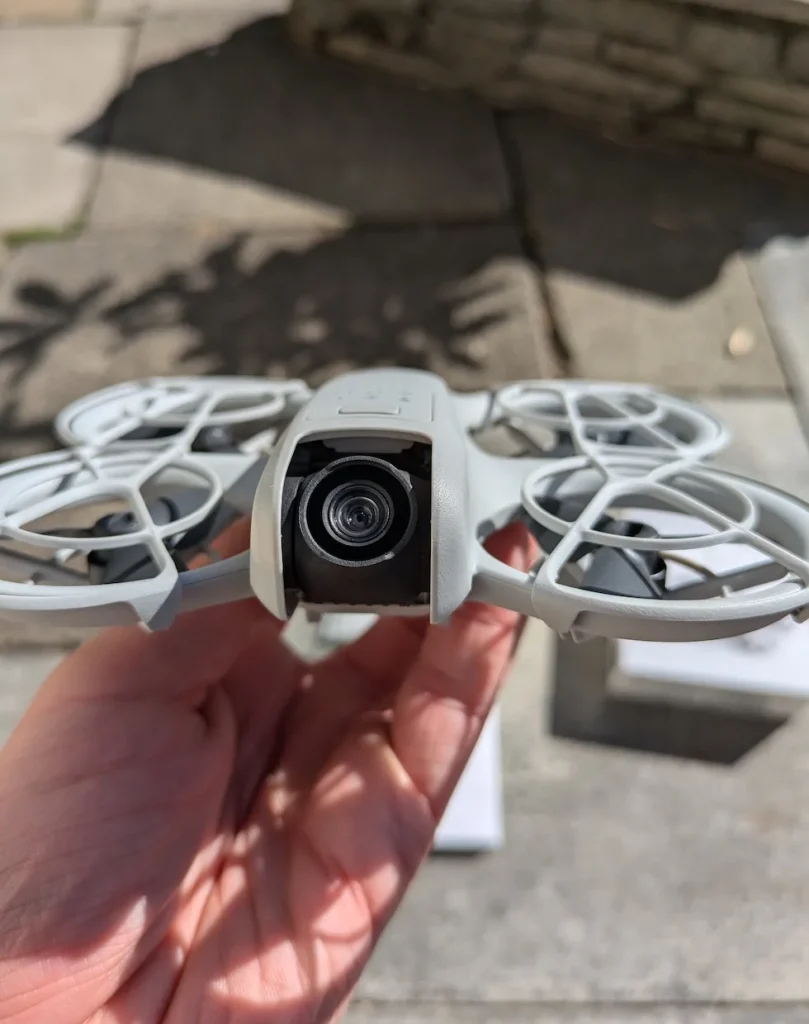
DJI Neo uses its camera and visual algorithms
While lacking advanced obstacle avoidance, the DJI Neo leverages its camera and visual algorithms to offer impressive tracking capabilities.
You’ll find that the drone uses its camera to identify and track subjects in the frame, allowing it to follow a person or object as it moves.
This AI-powered system aims to keep your subject centered during photo and video capture.
The Neo’s Follow mode reliably tracks subjects as they walk or run, with a maximum tracking speed of about 12 mph (20 km/h). This means you can easily track most subjects, including cyclists, though faster-moving targets might pose a challenge.
It’s important to note that without extensive obstacle avoidance sensors, the Neo can’t autonomously detect and avoid obstacles in its flight path while tracking.
You should also be aware that the camera-based tracking may face difficulties in complex environments or poor lighting conditions. The Neo doesn’t have additional sensors to compensate for these visual limitations.
Despite these constraints, the drone’s visual algorithms provide a solid foundation for subject tracking, making it a versatile tool for capturing dynamic scenes and moving subjects.
How DJI Neos Tracking Performs
My tests have shown that the DJI Neo’s tracking performance is quite impressive, especially in follow mode.
When running, it navigates tight turns and obstacles with ease, following the exact path of the subject around corners instead of cutting them.
This improvement over previous DJI drones enhances its tracking accuracy.
The Neo’s Direction Track mode allows you to set a specific direction for the drone to follow from, though it may occasionally switch between following from the front or behind.
It’s capable of tracking people, scooters, and likely bicycles, but doesn’t like to track vehicles effectively.
It’s important to note that the Neo relies solely on its camera for tracking, as it lacks obstacle avoidance sensors. This can lead to potential crashes in complex environments, so you’ll need to be cautious when using it in such settings.
However, the drone’s ability to reacquire its subject after losing tracking has improved compared to earlier DJI models.
While the Neo’s tracking capabilities are advanced, you should always be aware of its limitations and exercise caution when using it in challenging environments.
How To Set The Tracking For DJI NEO
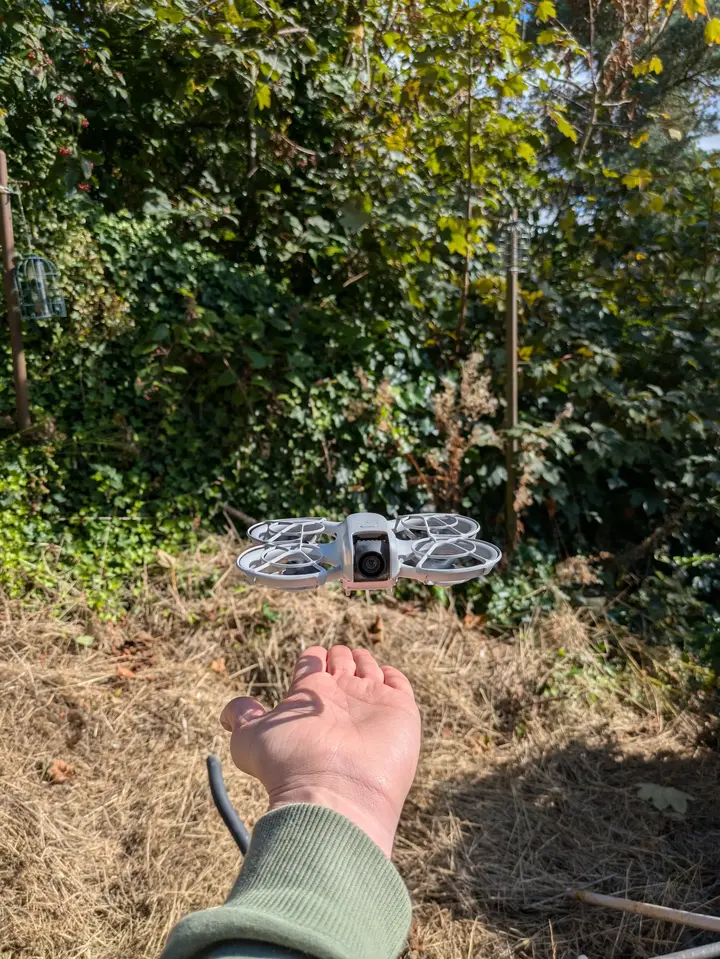
Setting up tracking on your DJI Neo is a straightforward process that begins with the DJI Fly app. Once you’ve opened the app and connected it to your drone, you’ll see the camera view on your smartphone screen.
There are multiple ways to select a tracking target.
You can drag-select your subject by drawing a box around them in the camera view. Alternatively, enable “Subject Scanning” in the Control settings and wave your arm towards the drone to have it detect and lock onto you.
You can also simply tap a recognized subject on the screen to lock onto them as the tracking target.
After selecting a target, the Neo defaults to Spotlight mode, where the camera stays locked on the subject while you control the drone’s movement manually.
You can switch between different tracking modes like ActiveTrack or Point of Interest by tapping the icons at the bottom of the screen.
To start tracking and recording, press the Shutter/Record button on the remote controller or tap the record button on-screen. The Neo will then automatically follow and track your selected target based on the chosen mode.
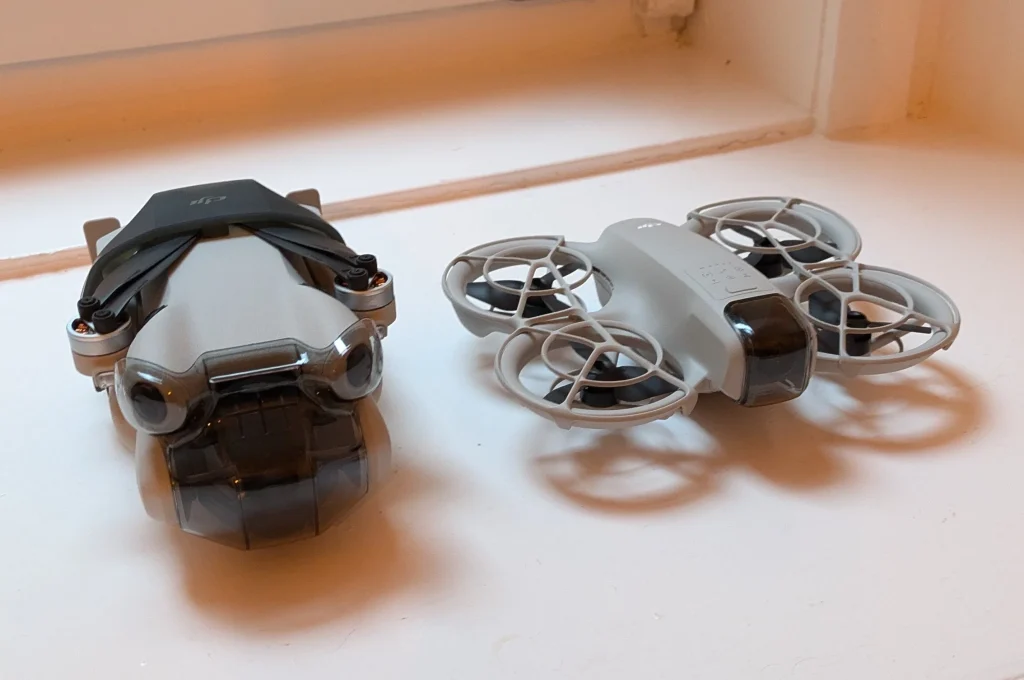
If You Want Obstacle Avoidance, Switch the Neo For Mini 4 Pro
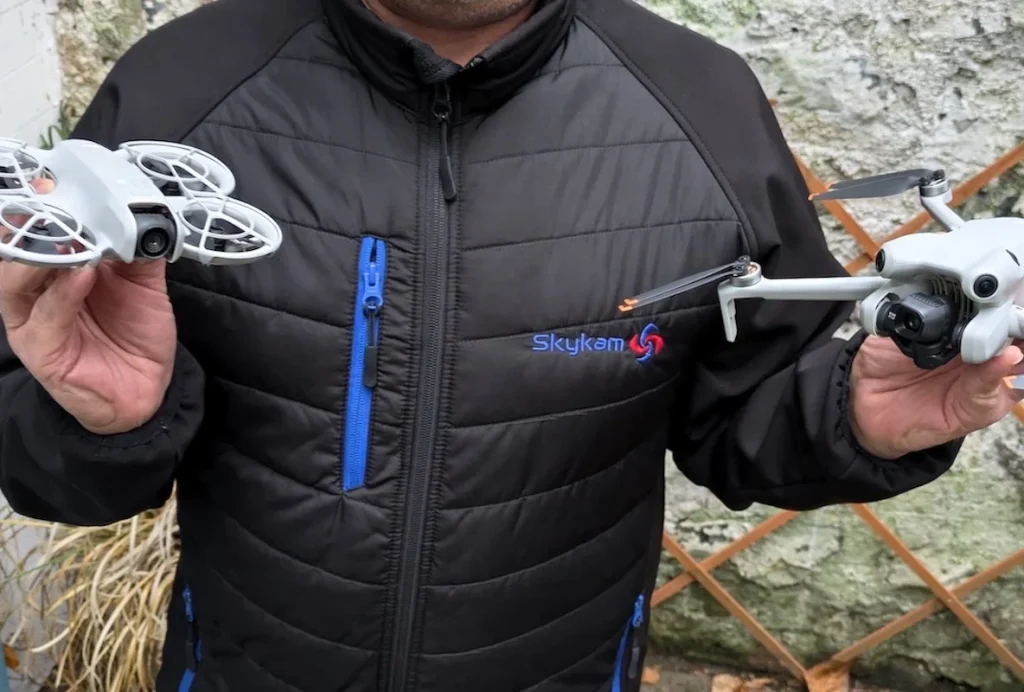
I recommend getting the mini 4 pro over the NEO if you are looking for obstacle avoidance.
The DJI Mini 4 Pro stands out as a top contender for obstacle avoidance in the drone market. Its fully omnidirectional obstacle sensing system sets it apart from previous models, offering enhanced safety in complex flying environments.
You’ll appreciate the drone’s ability to detect obstacles in all directions, including above and to the sides, giving you more confidence during flights.
The Mini 4 Pro uses DJI’s Advanced Pilot Assistance System (APAS) 4.0, which intelligently avoids obstacles. You have two main modes to choose from: Bypass and Break.
In Bypass mode, the drone automatically finds the best route around detectable obstacles, continuing its flight path seamlessly. Break mode, on the other hand, causes the drone to stop and hover when it encounters an obstacle, allowing you to decide the next move.
This advanced obstacle avoidance system makes the Mini 4 Pro an excellent choice for both beginners and experienced pilots.
You’ll find it easier to navigate challenging environments and capture stunning footage without worrying about potential collisions. The drone’s ability to adapt to its surroundings guarantees a smoother, safer flying experience overall.
Conclusion
To summarize, you’ve learned that the DJI Neo doesn’t have obstacle avoidance. Instead, it relies on visual algorithms and its camera for tracking. While you can set up tracking features, they’re not as advanced as true obstacle avoidance systems. If you’re looking for a drone with robust obstacle avoidance, consider the DJI Mini 4 Pro. It’s important to understand your drone’s capabilities and limitations to guarantee safe and effective flights.

