
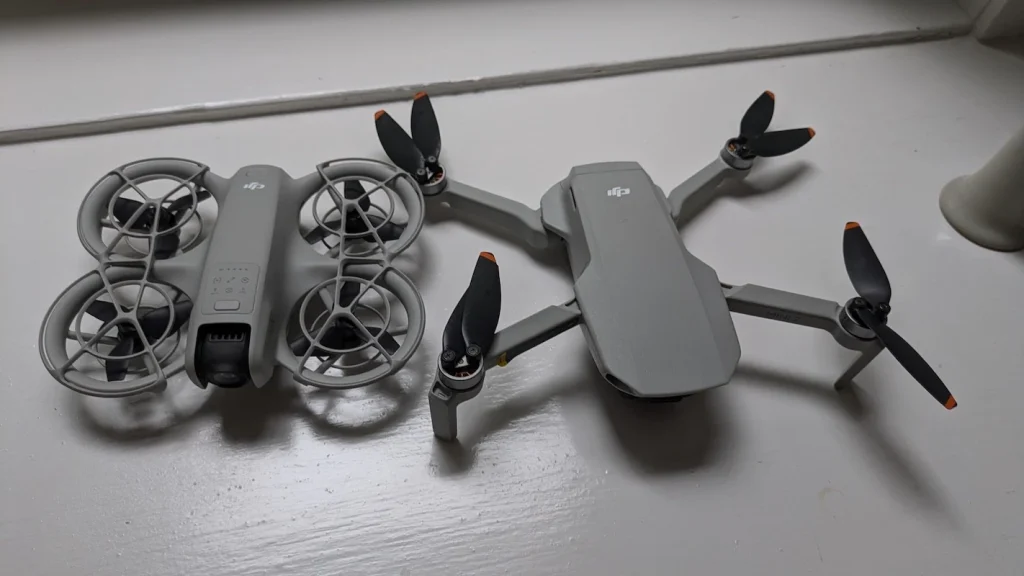

After extensive testing, I strongly recommend the DJI Mini 2 SE over the DJI NEO for most users. The Mini 2 SE boasts superior flight time, range, and video quality, making it ideal for content creators and hobbyist drone pilots. While the NEO is user-friendly for beginners, the Mini 2 SE’s advanced features and better performance outweigh this advantage.
Its longer flight time, superior camera stability, and higher-quality footage make it a versatile choice for various applications.
The Mini 2 SE’s foldable design also enhances portability.
If you’re serious about drone photography or videography, the Mini 2 SE is the clear winner. Let’s explore these differences in detail to see why it comes out on top.
DJI Mini 2 SE Is Best For
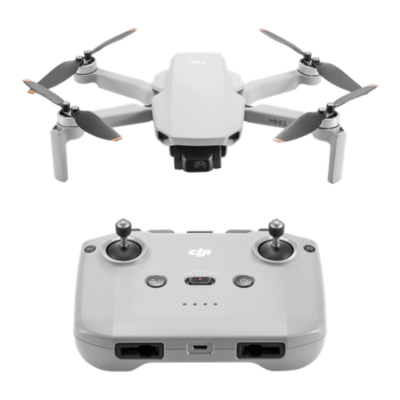
- Users who prioritize image quality
- Those who need longer flight times
- Content creators and vloggers on a budget
- Users who prefer manual control and traditional drone design
DJI NEO Is Best For
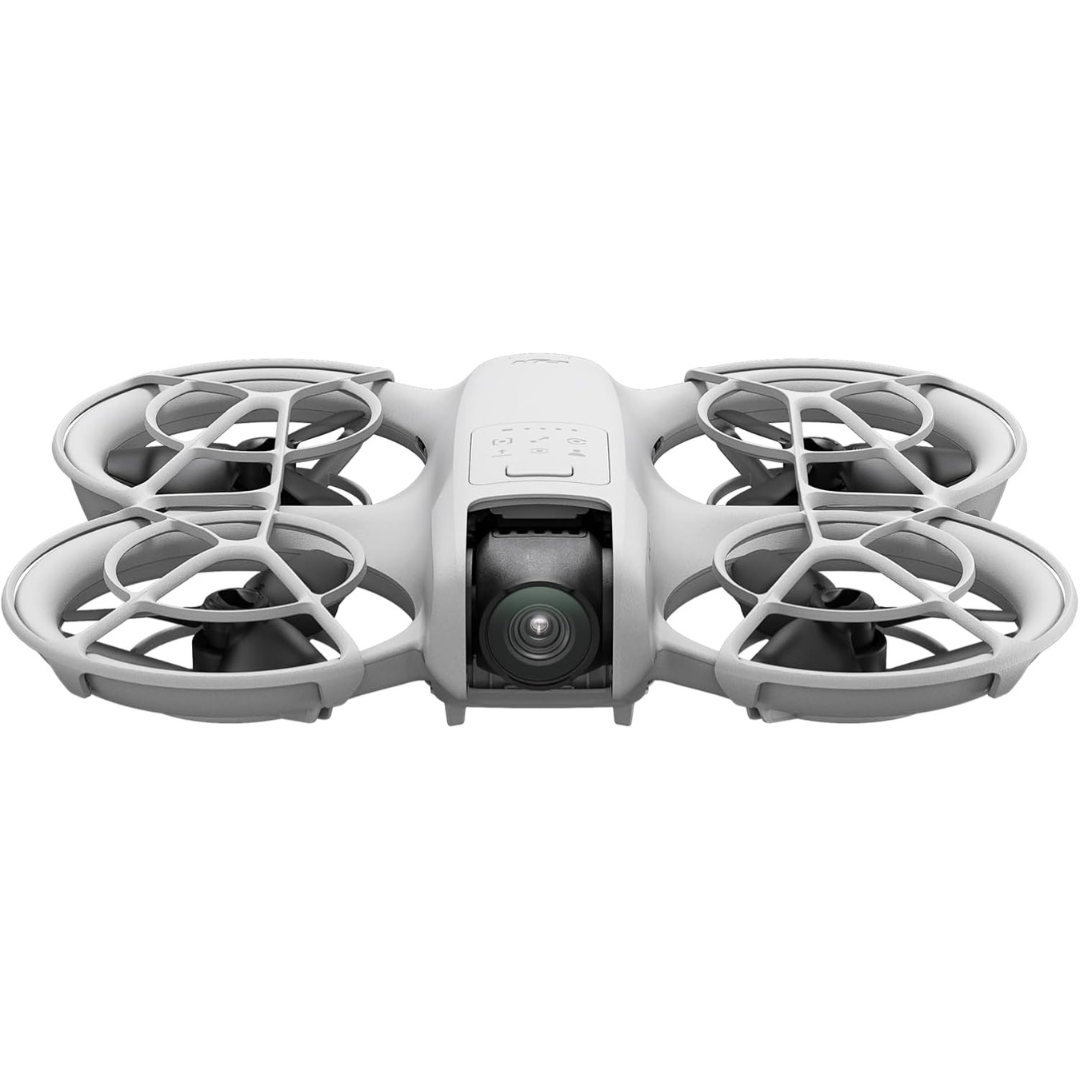
- Beginners who prioritise ease of use
- Those who want automated tracking and flight modes
- Users who need a more durable drone
- People who don’t require professional-grade video quality
- People who want hands free drone controls
| Specification | DJI NEO | DJI Mini 2 SE |
|---|---|---|
| Weight | 135g | 246g |
| Camera Sensor | 1/2 inch, 12MP | 1/2.3 inch, 12MP |
| Video Resolution | 4K/30fps | 2.7K/30fps, 1080p/60fps |
| Flight Time | 18 minutes | 31 minutes |
| Max Flight Distance | 7 km | 10 km |
| Video Transmission | 22GB internal storage | 10 km range, supports HD video |
| Gimbal | Single-axis mechanical (tilt) | 3-axis mechanical |
| ISO Range | 100-6400 | 100-3200 |
| Max Image Size | 12 MP (4000×3000) | 12 MP (4000×3000) |
| Internal Storage | 22 GB | N/A |
| Wind Resistance | 8 m/s (Level 4) | 8.5-10.5 m/s (Level 5) |
I love how the Mini 2 SE flies for 32 minutes straight, Over DJI NEOs 18 Minutes
One of the main differences between the Mini 2SE vs DJI NEO is their flight time. I’ve found that the DJI Mini 2 SE significantly outperforms the DJI Neo in this crucial aspect. With the Mini 2 SE, I can enjoy an impressive 32 minutes of flight time on a single battery charge.
In contrast, the DJI Neo’s battery life is disappointingly short. I found it only lasts about 10 to 12 minutes, which is less than half of what the Mini 2 SE offers. This limited flight time means I’d need to change batteries much more frequently with the Neo, interrupting my shooting sessions and potentially missing important moments.
The Mini 2 SE’s longer flight time isn’t just a convenience; it’s a major advantage for my work. I can capture more footage, explore larger areas, and have more time to perfect my shots without the constant pressure of a rapidly draining battery. It also means I can carry fewer spare batteries, reducing the overall weight of my gear.
In a side-by-side hover test, the difference in battery life was clearly visible. The Mini 2 SE continued flying long after the Neo had to land. This extended flight time allows me to focus on my creative process rather than constantly monitoring battery levels.
For me, the choice is clear. The DJI Mini 2 SE’s superior battery life makes it the winner in this comparison, offering nearly three times the flight time of the Neo. It’s a crucial factor that significantly enhances my drone flying experience and productivity.
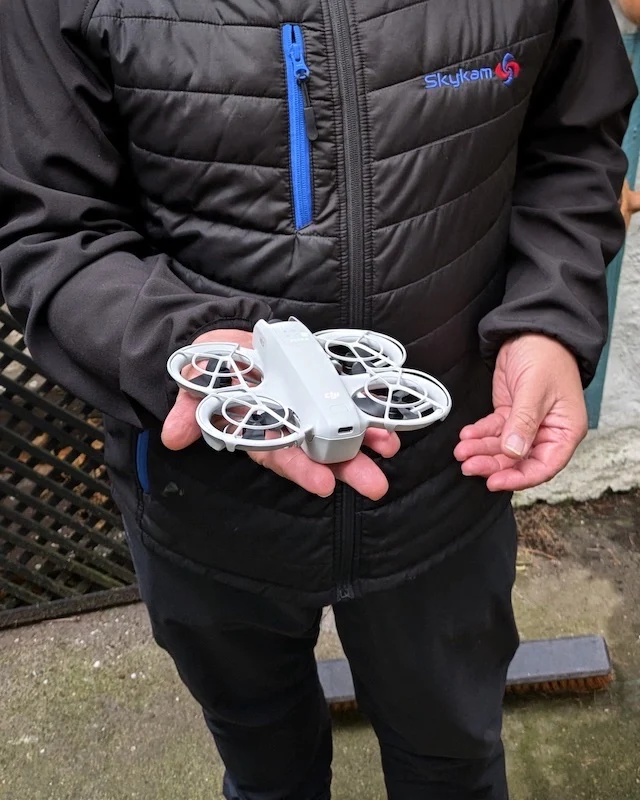
Mini 2 SE goes farther, but DJI Neo’s signal is super strong
While battery life is a key factor, range and signal strength are equally important for fellow drone pilots.
The Mini 2 SE takes the lead in terms of maximum range. In ideal conditions, it can reach an impressive 5 km, which is significantly farther than the DJI Neo’s 2-3 km range. This extended range gives the Mini 2 SE an edge for pilots who need to cover larger areas or capture shots from greater distances.
However, the DJI Neo features the newer O4 transmission system, which offers more reliable connectivity. This means I got a more stable signal and fewer interruptions during flight, even if the maximum range is shorter.
In practice, both drones perform well within line of sight, which is where most pilots operate due to drone laws. The actual usable range for both models is quite similar in real-world scenarios.
I’ve found that what really matters is how well a drone can maintain a good signal while flying to the edge of your line of sight, capturing the shots you want, and returning safely. Both the Mini 2 SE and the Neo excel in this regard.
Ultimately, while the Mini 2 SE boasts a longer theoretical range, the Neo’s potentially more reliable signal strength shouldn’t be overlooked. Your choice should depend on your specific needs and flying conditions, as both drones offer capable performance for most pilots.
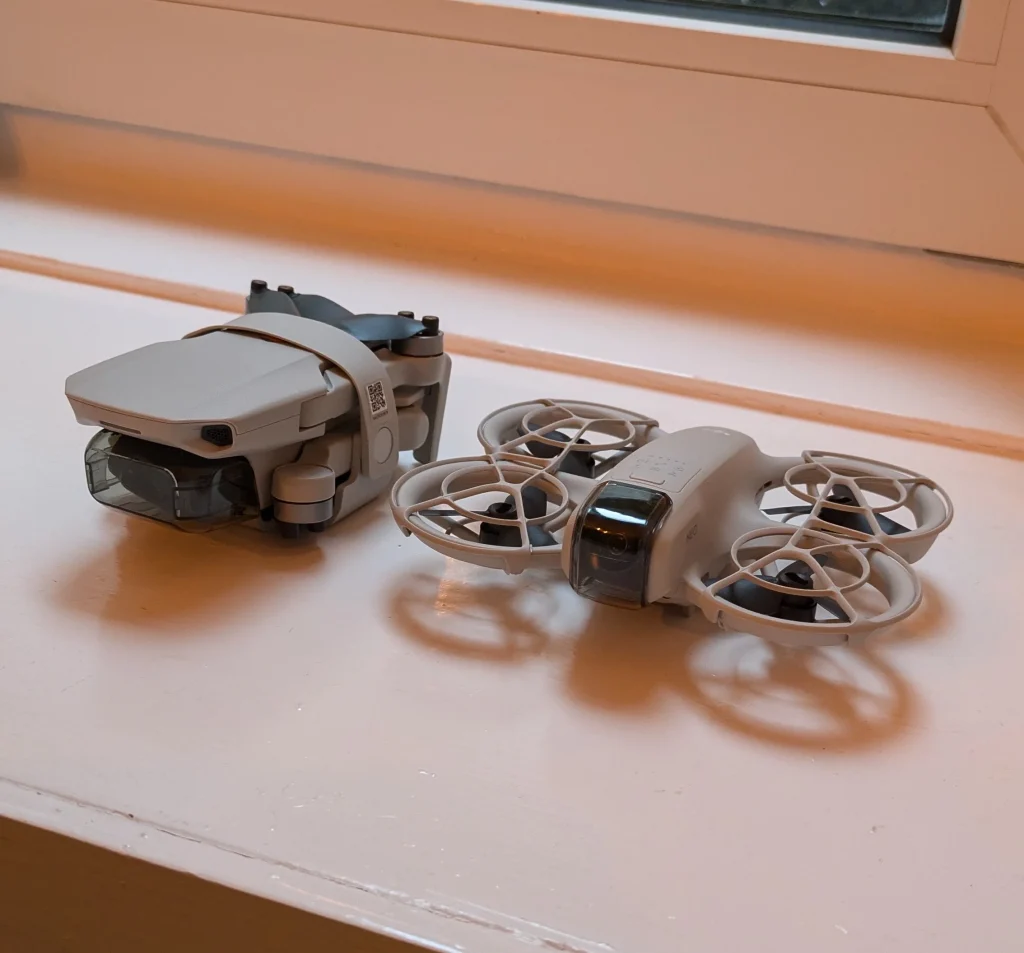
Mini 2 SE’s videos look way better than DJI Neo’s blurry videos
The camera’s eye doesn’t lie, and in this case, it reveals a surprising truth: the DJI Mini 2 SE outshines the DJI Neo in video quality.
Despite the Neo boasting a 4K resolution, it falls short in delivering the crisp, clear footage you’d expect from such specs. I’ve found that the Neo’s images tend to be oversharpened and very digital, giving them an artificial look that’s less than appealing.
What’s more, the Neo struggles with exposure, particularly in bright conditions. When flying near sunlight, the footage often becomes overexposed, washing out details and ruining what could have been great shots.
In contrast, the Mini 2 SE, with its lower 2.7K resolution, manages to produce superior results across various lighting conditions.
When I’ve taken the Mini 2 SE for a spin, I’ve been consistently impressed by its performance. The footage is remarkably stable and crisp, even at altitude.
This stability translates into smoother, more professional-looking videos that are a joy to watch and edit.
Putting the two drones side by side, you’d think the Neo’s higher resolution would give it the edge. However, the reality is quite different.
The Mini 2 SE’s overall image quality surpasses the Neo’s, proving that megapixels aren’t everything when it comes to video performance.
If you’re after the best possible footage from your drone, the Mini 2 SE is the clear winner in this matchup.
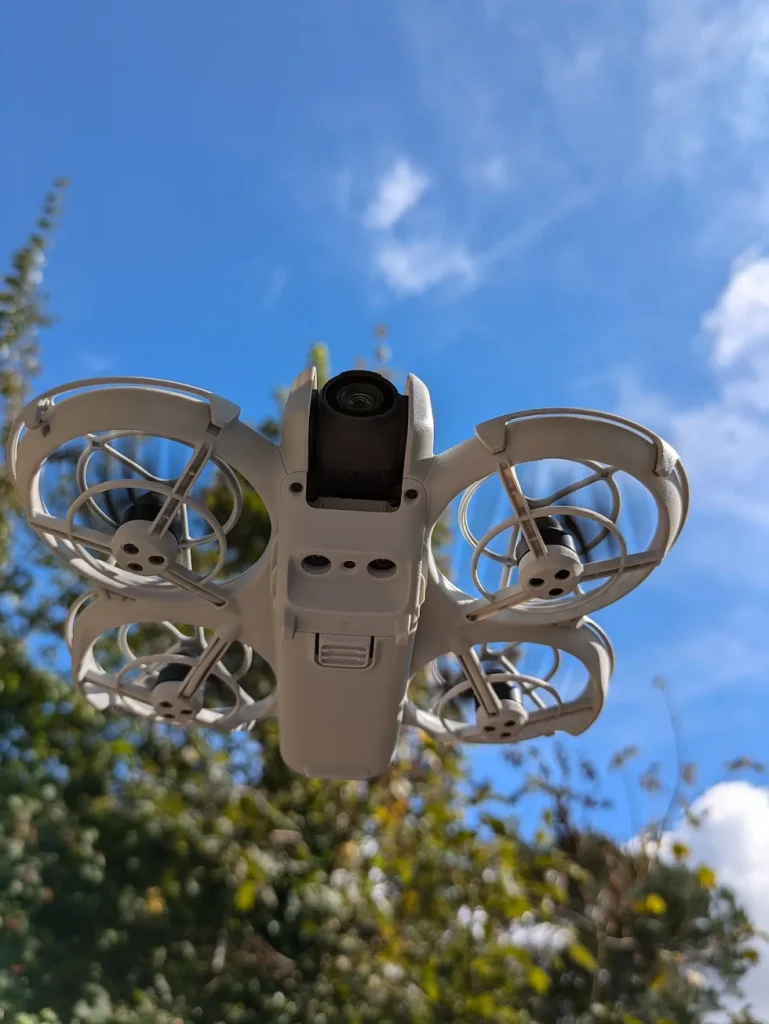
Mini 2 SE flies faster, over The DJI NEO
It’s clear that the Mini 2 SE outpaces the DJI Neo significantly. This speed advantage isn’t just about bragging rights; it’s a game-changer for aerial photography and videography.
The Neo, in contrast, is limited to a maximum speed of 24 km/h when in tracking mode. This slower pace might be fine for some situations, but it can be limiting when you’re trying to capture dynamic, fast-moving subjects. The Mini 2 SE’s superior speed makes it far more versatile for these types of shots.
With the Mini 2 SE, I can keep up with faster-moving subjects, execute more complex flight patterns, and cover larger areas in less time. This makes it ideal for action shots, sports coverage, or even just exploring vast landscapes.
However, it’s worth noting that the Neo prioritizes stability over speed. This might make it a better choice for certain types of shots where steadiness is crucial.
But for most scenarios, I find the Mini 2 SE’s combination of speed and camera quality hard to beat.
In essence, while the Neo offers some unique features, the Mini 2 SE’s speed advantage makes it a more versatile tool for aerial cinematography. It’s a one-trick pony, but that trick – capturing stunning, dynamic aerial footage – is one it performs exceptionally well.
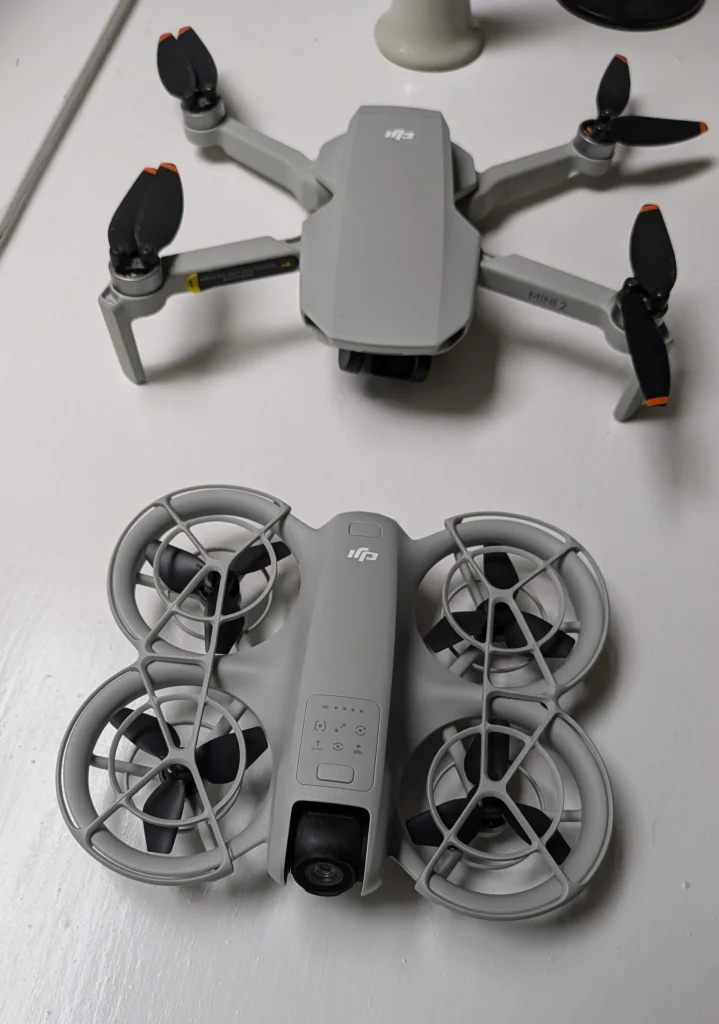
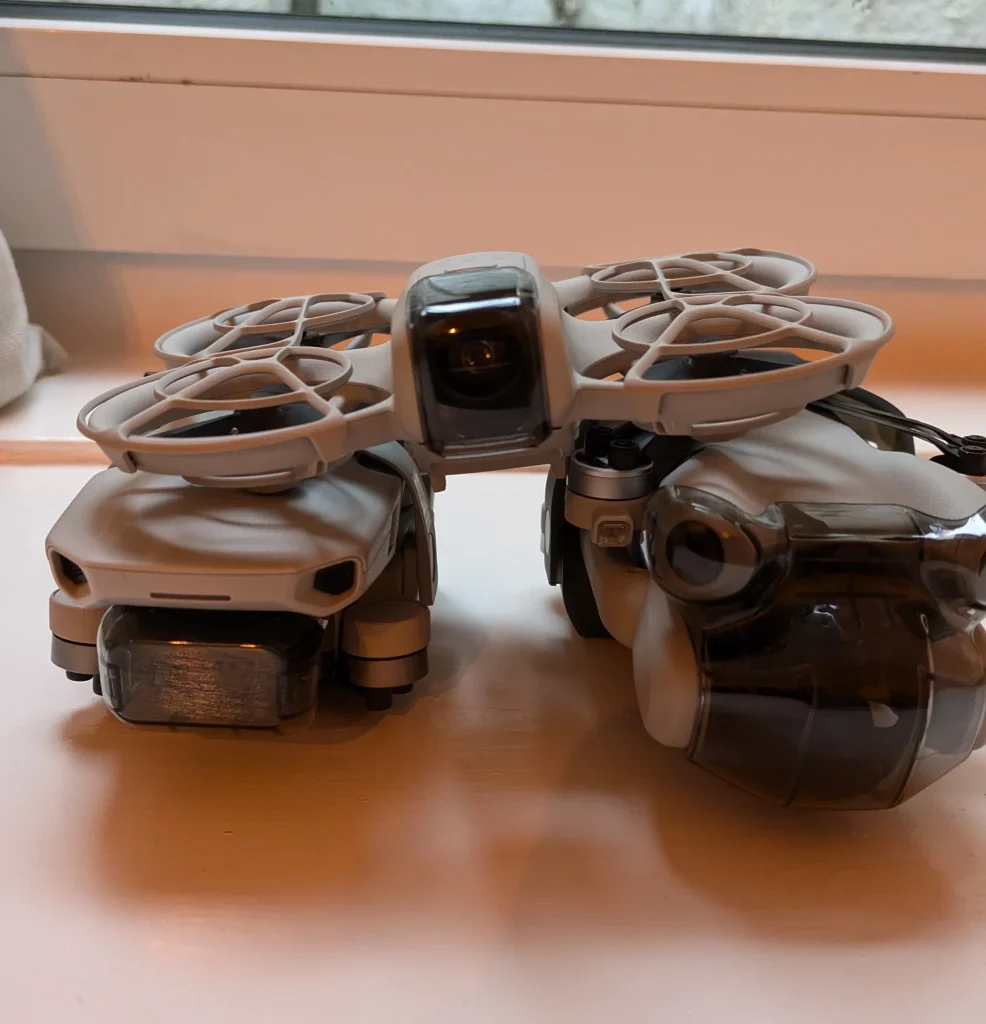
DJI Neo’s covered propellers made me feel safer in tight spaces, vs DJI Mini 2’s Exposed Blades
When it comes to navigating tight spaces, the DJI Neo’s covered propellers gave me a significant confidence boost compared to the DJI Mini 2 SE’s exposed blades. The Neo’s design allows me to fly in tighter areas with less risk, which is a game-changer for my aerial photography.
I’ve found that I can capture shots with the Neo that I’d never attempt with the Mini 2 SE. The enclosed propellers provide a level of protection that’s invaluable when flying near obstacles. If the Neo bumps into a branch or other object, there’s much less chance of damage compared to the Mini 2 SE.
This design difference has a significant impact on my flying style. With the Neo, I’m more willing to push the proximity and explore confined spaces. I can maneuver through areas where the Mini 2 SE simply wouldn’t fit or would be too risky to fly.
It’s important to note that neither drone has obstacle avoidance features, so careful piloting is still crucial. However, the Neo’s protected propellers give me an extra layer of security that the Mini 2 SE lacks.
This added confidence translates directly into the quality and variety of shots I can capture. I’m able to get unique perspectives and angles that were previously off-limits due to the risk involved. It also means I can fly the drone inside, perfect for those who are doing real estate photography.
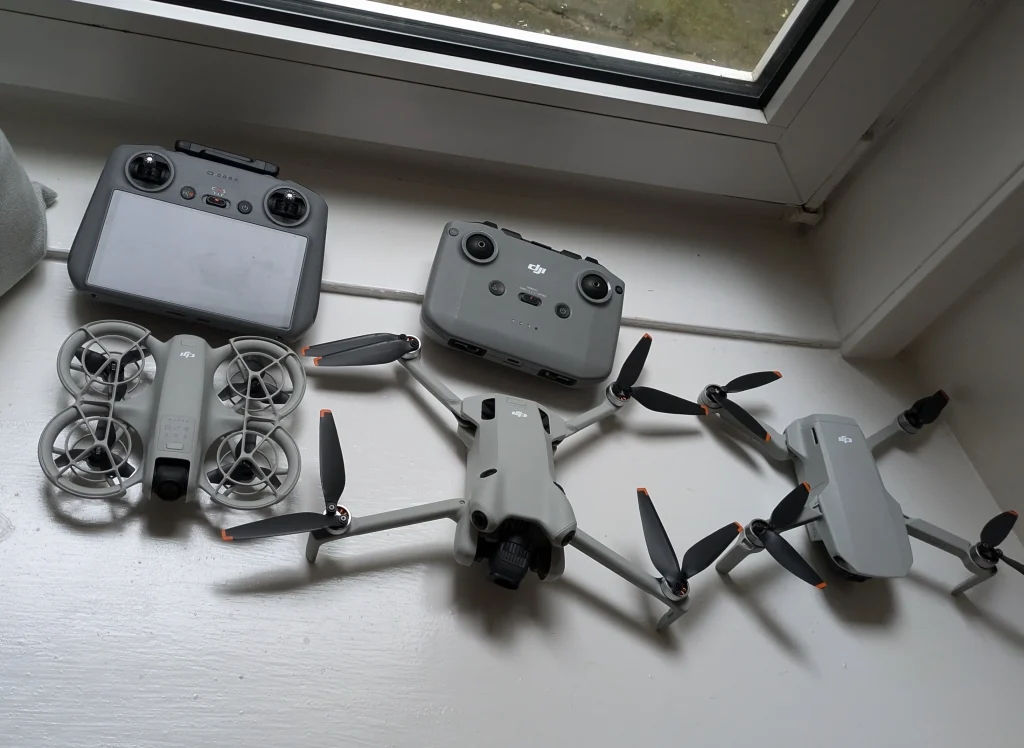
DJI Mini 2 SE’s camera stays steadier when it’s windy out VS DJI NEO
The DJI Mini 2 SE outshines the NEO when it comes to camera stability in windy conditions. This is primarily due to its three-axis gimbal, which provides superior stabilization compared to the NEO’s digital stabilization system.
As someone who’s flown both drones, I can attest that the Mini 2 SE’s footage is noticeably smoother and more predictable, especially when panning and tilting.
The Mini 2 SE’s gimbal gives it a significant advantage, as it can physically compensate for wind-induced movements. On the other hand, I found the NEO’s lighter weight, while beneficial in some aspects, make it more susceptible to being pushed around by the wind.
The Mini 2 SE’s shots remain stable even in a light breeze, maintaining that professional-looking smoothness we all aim for in our aerial footage.
It’s worth noting that both drones will have their limits in extreme wind conditions. However, for typical flying scenarios, the Mini 2 SE’s superior stabilization system gives it a clear edge.
If you’re looking to capture steady, professional-quality footage, particularly in areas prone to wind, the Mini 2 SE is the better choice. Its ability to maintain stability in less-than-ideal conditions will result in more usable footage and a more enjoyable flying experience overall.
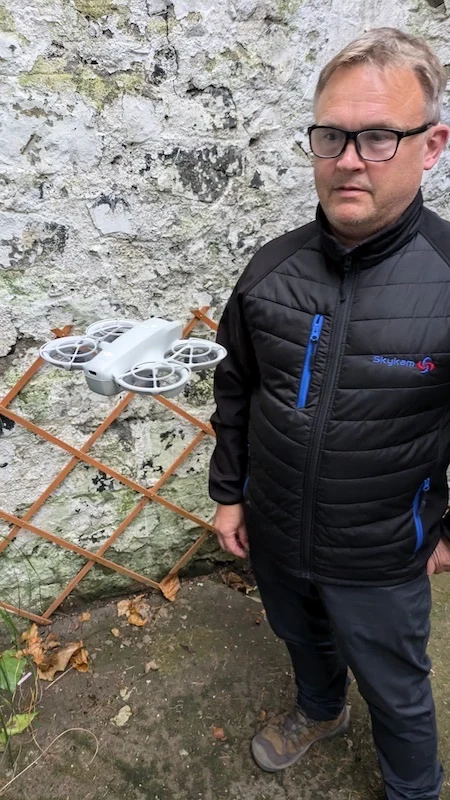
DJI Neo’s ready to fly quickly, but Mini 2 SE fits in my bag better
When comparing the DJI NEO and Mini 2 SE, there’s more to consider than just camera stability. One crucial factor is how quickly you can get your drone airborne and how easily you can transport it. In this regard, both models have their strengths.
The NEO has a distinct advantage when it comes to deployment speed. Its props are always extended, and it’s slightly smaller when unfolded. This means I can have it up in the air faster than the Mini 2 SE. There’s no need to unfold anything or extend props, which is a significant time-saver when I’m eager to start capturing footage.
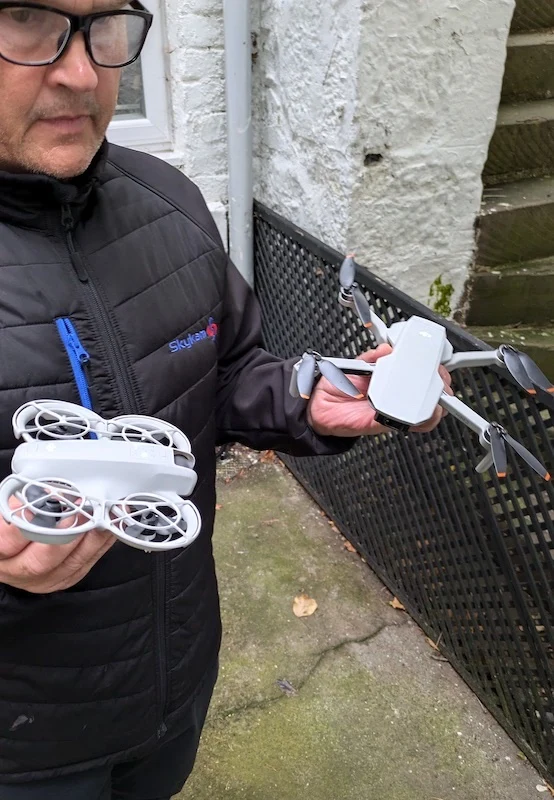
On the other hand, the Mini 2 SE shines in portability. Its foldable design makes it incredibly compact when stored. While the NEO is lighter, the Mini 2 SE takes up about half the space when folded. This makes a big difference when I’m packing my gear bag.
Despite being roughly twice the weight of the NEO, the Mini 2 SE’s space-saving design often makes it the better choice for travel.
The decision between these two drones ultimately depends on your priorities. If you value quick deployment and lighter weight, the NEO might be your best bet. Its enclosed props and always-ready design mean you can start flying almost immediately.
However, if you’re frequently on the move and space in your bag is at a premium, the Mini 2 SE’s foldable design could be the deciding factor. Its ability to compact down to half the size of the NEO is a significant advantage for travelers and hikers.
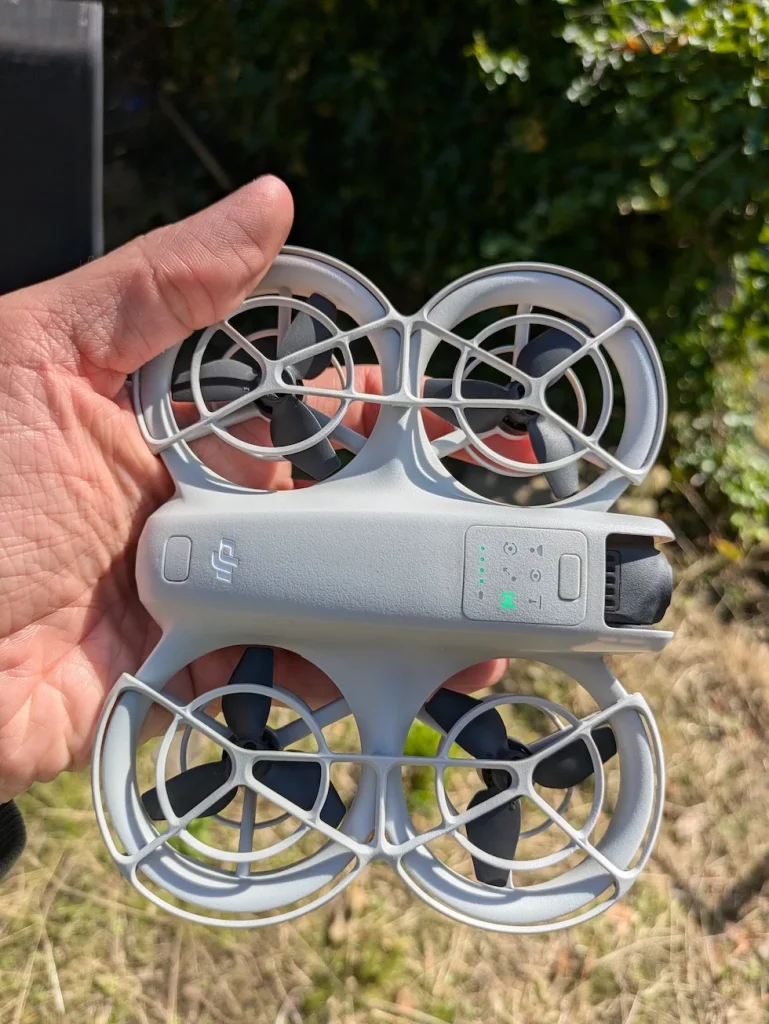
DJI Neo’s great for beginners who want an easy-to-fly drone
For newcomers to the drone world, I can’t recommend the DJI Neo enough. Its user-friendly interface and automated features make it an ideal choice for those just starting out. If you’re looking for a drone that prioritizes ease of use, the Neo delivers in spades.
The Neo’s standout features are its automated tracking and flight modes. These capabilities allow you to focus on capturing great footage without worrying about complex flight maneuvers. Whether you want to follow a subject or create a cinematic orbit shot, the Neo’s intelligent flight modes have got you covered.
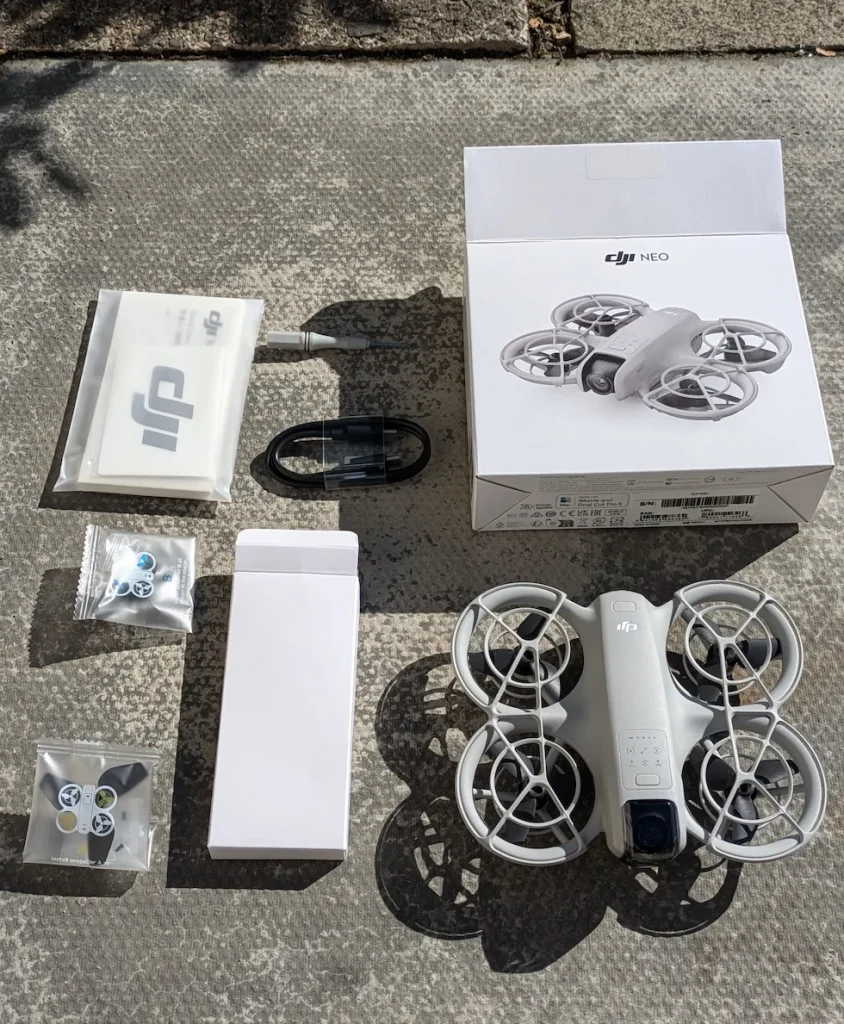
Another advantage of the Neo is its durability. If you’re flying in tight spaces or still honing your piloting skills, you’ll appreciate the Neo’s robust build. It can withstand minor bumps and collisions, giving you peace of mind as you learn the ropes.
While the Neo may not offer professional-grade video quality, it’s more than sufficient for most beginners and hobbyists. If you’re not planning on using your drone for commercial purposes, the Neo’s video capabilities will likely meet your needs.
Lastly, the Neo offers FPV (First Person View) capabilities, which can greatly enhance your flying experience. This feature allows you to see what your drone sees in real-time, giving you a unique perspective and helping you capture better shots.
DJI NEO Is Best For
- Beginners who prioritise ease of use
- Those who want automated tracking and flight modes
- Users who need a more durable drone
- People who don’t require professional-grade video quality
- People who want hands free drone controls
I’d pick the Mini 2 SE for making awesome YouTube videos
As a content creator, I’d choose the DJI Mini 2 SE over the Neo. The Mini 2 SE offers better image quality, which is crucial for producing engaging content that stands out on YouTube or social media.
While both drones are budget-friendly, the Mini 2 SE’s superior camera capabilities make it the better choice for vloggers and content creators who want to capture stunning aerial footage without breaking the bank.
One of the key advantages of the Mini 2 SE is its longer flight time. This means I can spend more time in the air getting those perfect shots, resulting in more diverse and interesting content for my viewers. The extended flight duration also allows for more complex shots and sequences, giving my videos a professional edge.
As someone who travels frequently to capture unique content, I appreciate the Mini 2 SE’s portability. Its compact size makes it easy to pack and carry, ensuring I never miss an opportunity to get that perfect aerial shot, no matter where my adventures take me.
While the Neo might be great for beginners, I prefer the Mini 2 SE’s traditional drone design and manual control options. This gives me more creative freedom and allows me to fine-tune my shots for the best possible results.
The ability to have precise control over the drone’s movements and camera settings is invaluable when creating high-quality YouTube content.
DJI Mini 2 SE Is Best For
- Users who prioritize image quality
- Those who need longer flight times
- Content creators and vloggers on a budget
- Users who prefer manual control and traditional drone design
Conclusion
After comparing these drones, I’d recommend the DJI Mini 2 SE for most people. It’s got longer flight time, better video quality, and more portability. While the DJI Neo is great for beginners, the Mini 2 SE offers more bang for your buck. It’s faster, steadier in wind, and has a longer range. Unless you’re a complete novice looking for the easiest flying experience, the Mini 2 SE is the way to go for better overall performance and video capabilities.

