
Flying a drone at night in the UK isn’t off-limits, but you’ll need to follow specific CAA regulations to keep it legal. You must equip your aircraft with proper lighting and maintain visual line of sight throughout your flight—both more challenging after dark.
Night operations offer unique opportunities for photography and exploration, yet they come with increased safety concerns and visibility limitations.
Want to know exactly what you’ll need before taking to the night sky?
30 Second Summary
- Night flying is permitted in the UK provided you maintain Visual Line of Sight and use proper lighting.
- Anti-collision lights visible from three statute miles away are mandatory for night operations.
- Standard UK drone regulations, including the 400 feet height restriction, still apply during nighttime flights.
- Thorough daytime site reconnaissance is essential to identify potential hazards before night operations.
- Night flying presents visibility challenges affecting depth perception and obstacle awareness.

Yes, You Can Fly a Drone at Night in the UK with Proper Lighting and Visual Line of Sight
Although many drone enthusiasts assume night flying is prohibited, you can legally operate your drone after dark in the UK. The Civil Aviation Authority’s CAP722 guidance doesn’t restrict drone night operations, provided you maintain Visual Line of Sight (VLOS) throughout your flight.
Night flight safety depends on your ability to constantly see your aircraft and the surrounding airspace. You’ll need to equip your drone with appropriate lighting to ensure visibility in darkness.
Drone lighting requirements aren’t explicitly detailed in regulations, but your lights must be sufficient to maintain VLOS at all times.
Anti-Collision Lights Visible from Three Miles Away Are Essential for Night Drone Operations
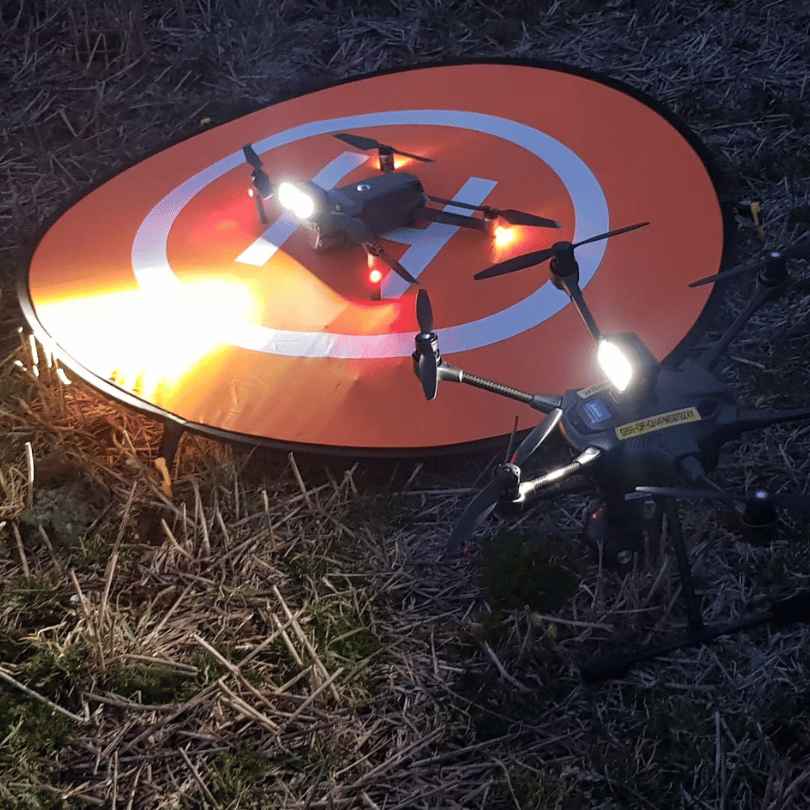
Flying your drone at night requires more than just basic lighting—you’ll need anti-collision lights visible from three statute miles away.
UK drone laws specifically mandate at least one green flashing light that’s clearly visible from a reasonable distance.
These lights aren’t optional—they’re essential for night flight safety, ensuring your drone remains visible against the dark sky. Proper anti-collision technology prevents potential accidents by allowing others to spot your aircraft from afar.
Products like the VIFLY Strobe utilize high-intensity LEDs to provide the required 360° visibility that meets regulatory standards. When choosing lights for your night operations, ensure they comply with the three-mile visibility requirement.
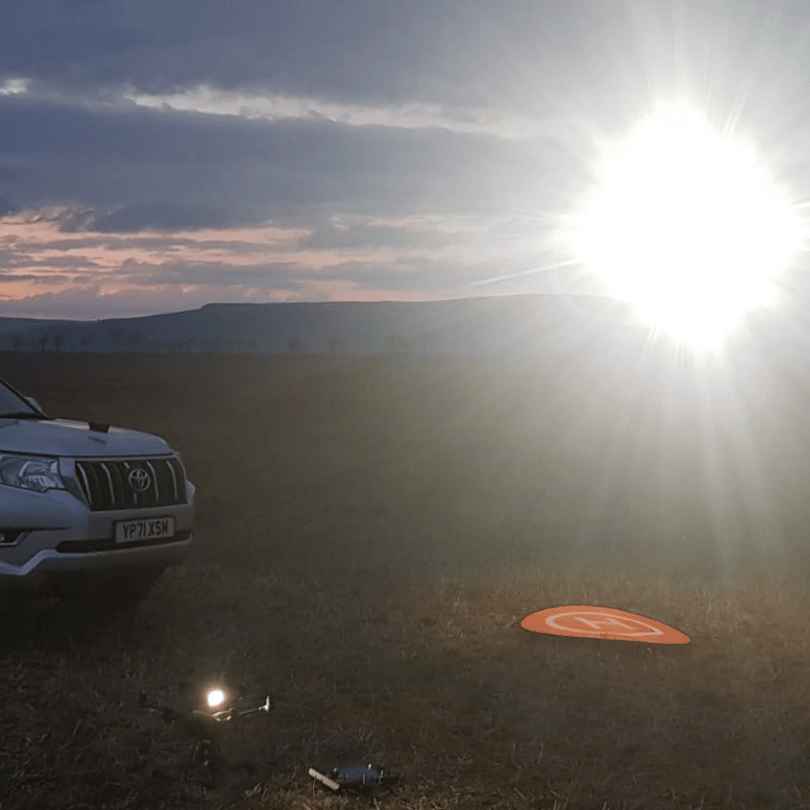
Drone Night Flying Presents Unique Challenges Including Reduced Visibility and Obstacle Detection
While daylight drone flights present their own set of challenges, night operations magnify these difficulties significantly through drastically reduced visibility.
You’ll find your ability to maintain visual line of sight severely compromised after dark, with your drone becoming harder to track at much shorter distances than during daytime flights.
Your night vision introduces further complications, affecting your depth perception, color recognition, and size judgment.
Common obstacles like power lines and tree branches that you might easily spot during daylight become nearly invisible hazards. This diminished obstacle awareness increases your risk of collisions and crashes.
When flying at night, you’re essentially operating with limited sensory information, making it crucial to plan your route carefully, fly in familiar areas, and maintain lower altitudes and speeds than you normally would during daylight hours.
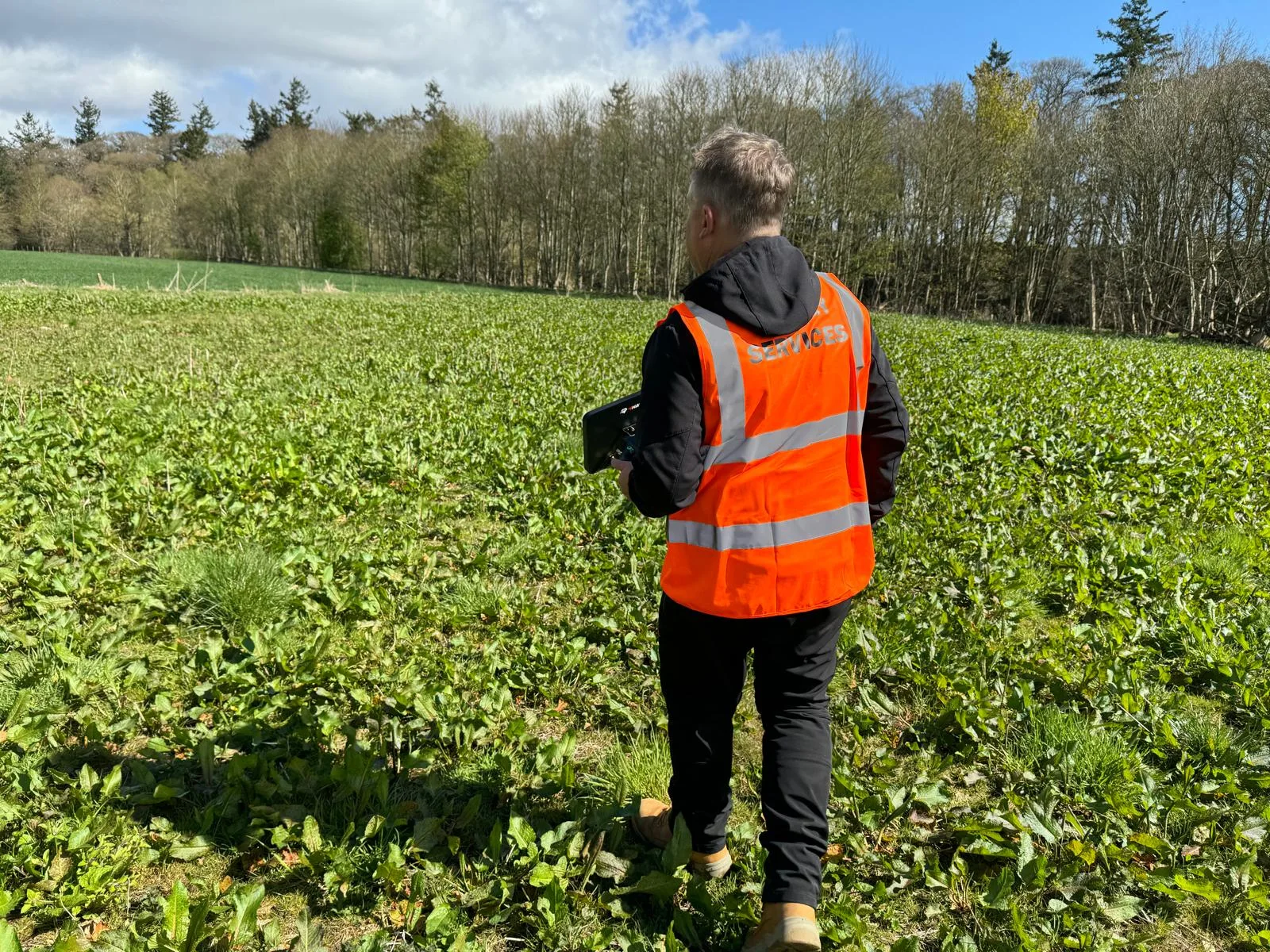
Thorough Preparation and Site Reconnaissance During Daylight Hours Improves Night Flight Safety
Because successful night drone operations hinge on thorough advance planning, you should scout your intended flight area during daylight hours before attempting any nighttime flights.
Create a detailed site mapping of the area, identifying all potential hazards like trees, power lines, and tall structures that may be difficult to spot in darkness.
Include these elements in your pre-flight checklist:
- Safe cruising altitudes
- Emergency landing zones
- Flight paths that avoid obstacles
Plan to fly at higher altitudes when possible, as this provides better clearance from unlighted obstacles.
Don’t forget to fully charge your batteries before night operations, as cooler temperatures can significantly reduce their performance. Thorough preparation minimizes risks and ensures you’re not surprised by hazards that become nearly invisible after sunset.
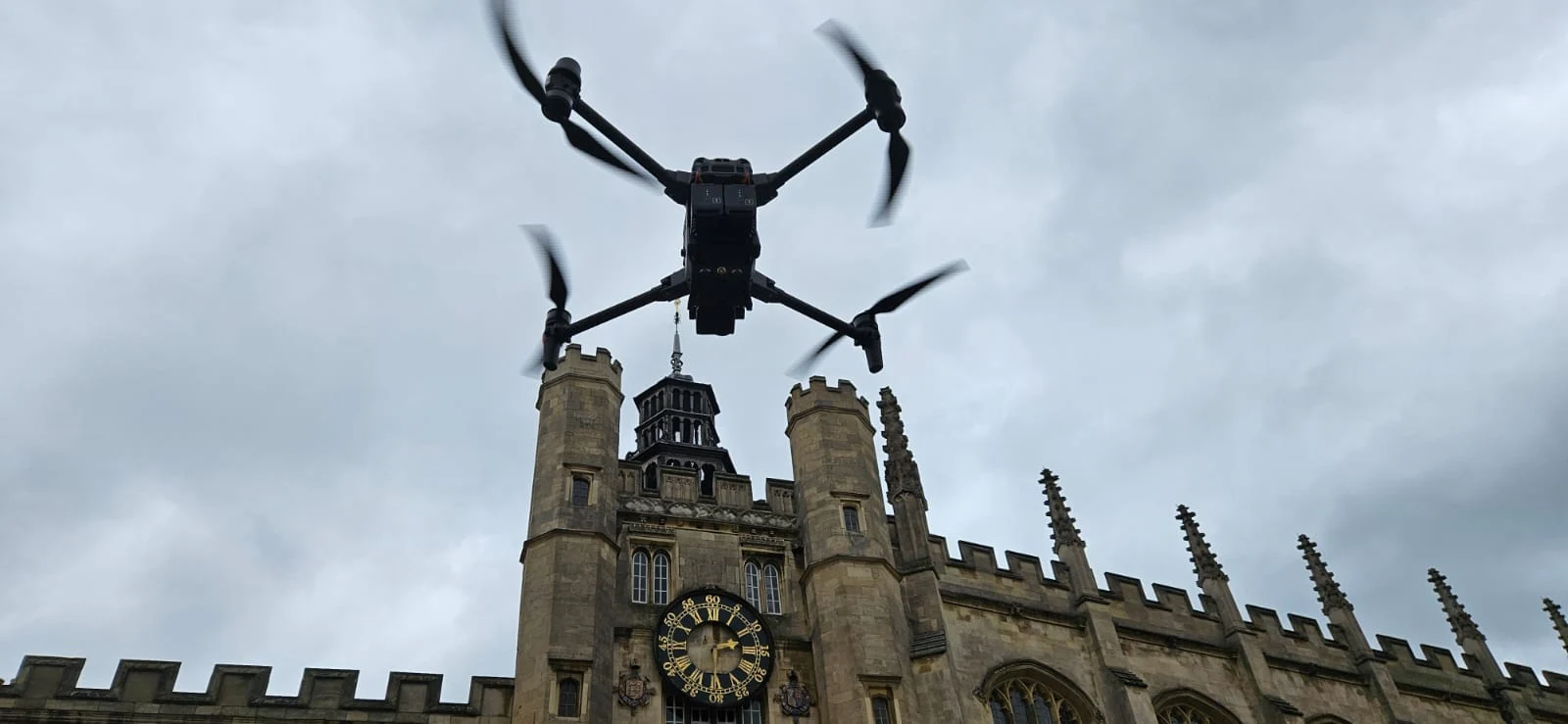
Standard Drone Regulations Still Apply During Night Operations Including Height Restrictions
Despite the change in lighting conditions, all standard UK drone regulations remain firmly in place for night operations.
You must continue to observe the 400 feet Above Ground Level (AGL) height limitations, maintain visual line of sight with your aircraft, and secure proper authorization for controlled airspace flights.
The darkness doesn’t exempt you from these fundamental operational guidelines. While the UK’s “open category” doesn’t specifically prohibit nighttime flights, you should approach them with additional caution.
If you’re applying for operational authorizations that include night flying, your operations manual should feature a dedicated section addressing night operations specifically.
Remember that these regulations aren’t arbitrary restrictions but essential safety protocols designed to prevent accidents, protect airspace integrity, and ensure responsible drone operation regardless of when you choose to fly.
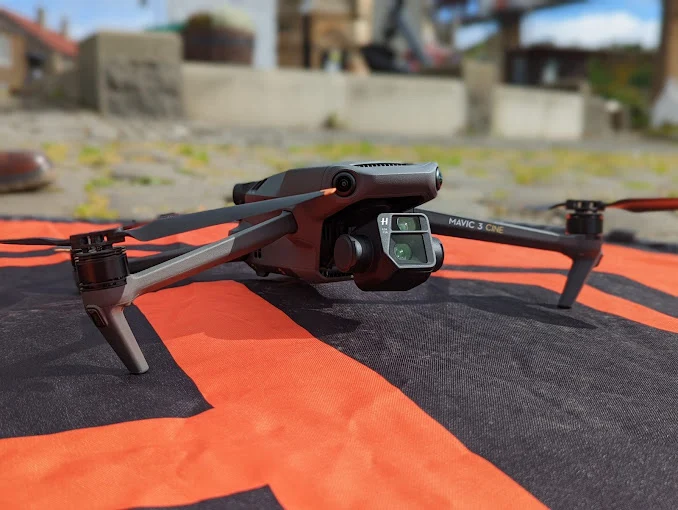
Ready for Nighttime Drone Photography? We Can Help!
If you’re hesitant about navigating these complexities, why not hire our professional drone service instead?
Our experienced drone pilots handle all the regulatory requirements and safety precautions, delivering exceptional footage without the stress.
We’re available for both direct client work and white-label services, meaning you can still offer nighttime drone capabilities to your customers without the investment in specialized equipment or training.
Contact us today to discuss how we can help with your nighttime aerial photography and videography needs.

