
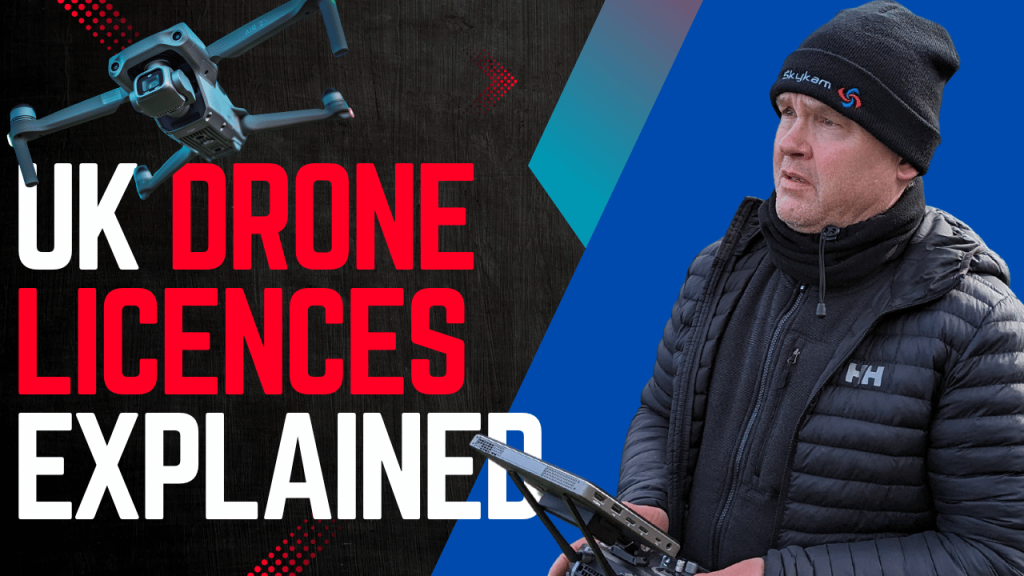
To legally fly a drone in the UK, you’ll need specific licenses depending on your drone’s weight and intended use. For drones over 250g, you must obtain a Flyer ID by passing an online theory test. If your drone has a camera, regardless of weight, you’ll also need an Operator ID.
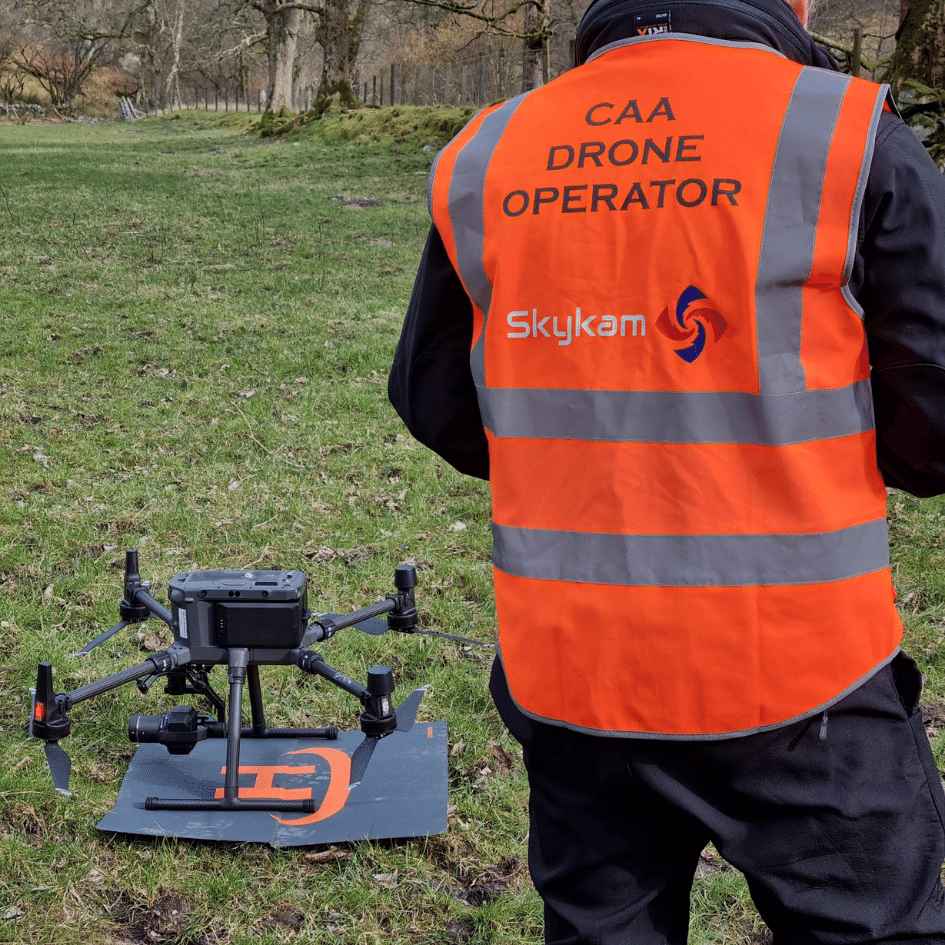
For more advanced operations, consider the A2 Certificate of Competency or the General Visual Line of Sight Certificate.
| Drone Weight/Class | Licence Required | Examples of Eligible Drones |
|---|---|---|
| < 250g (C0) | Flyer ID | DJI Mini series, Autel Nano series |
| < 500g (C1) | Flyer ID + A2 CofC | DJI Mavic Air 2, Autel EVO Lite+ |
| < 2kg (C2) | Flyer ID + A2 CofC | DJI Mavic 3 series, Autel EVO II series |
| 2kg > 25kg | GVC + Operational Authorization | DJI Matrice, DJI M350 RTK |
Commercial operators may require an Operational Authorisation. Always follow the Drone Code, respect privacy laws, and guarantee proper insurance coverage.
Understanding these requirements is indispensable for safe and legal drone operation in the UK.
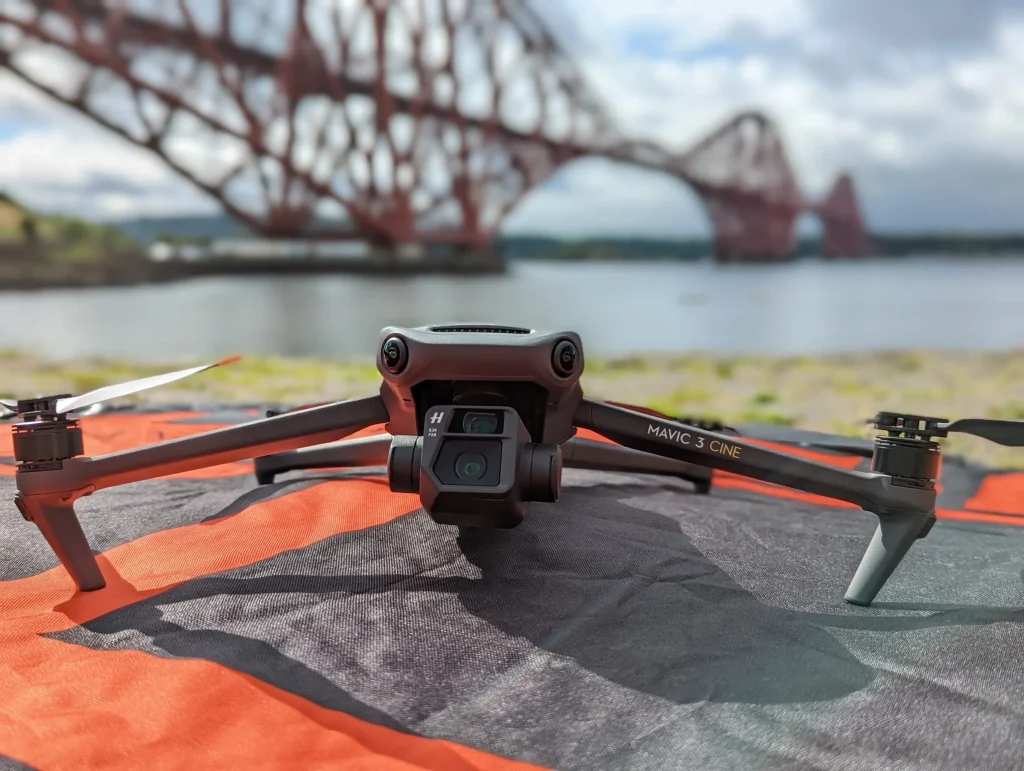
Flyer ID
To fly a drone weighing over 250g in the UK – you’ll need a Flyer ID – which you can obtain by passing a basic online theory test through the Civil Aviation Authority (CAA).
This ID demonstrates your knowledge of how to fly safely and legally, ensuring you’re aware of the rules and regulations governing drone operation.
To get your Flyer ID, you’ll need to register on the CAA website and take the online theory test.
The test consists of 40 multiple-choice questions, and you’ll need to answer at least 30 correctly to pass.
Don’t worry if you don’t succeed on your first attempt; you can retake the test as many times as needed.
There’s no time limit for completing the test, but be aware that your session will expire after 90 minutes of inactivity.
Once you’ve passed the test, you’ll receive a digital Flyer ID certificate.
This certificate is free to renew, and you won’t need to take a practical flight test.
It’s crucial to understand that the Flyer ID is only available through the CAA, so be cautious of any third-party websites claiming to offer this certification.
The online theory test covers essential topics related to safe and legal drone operation. By preparing for and passing this test, you’ll gain valuable knowledge that will help you fly your drone responsibly.
Remember, the Flyer ID is a legal requirement for operating drones over 250g, so make sure you obtain yours before taking to the skies.
Operator ID
While the Flyer ID demonstrates your knowledge, you’ll also need an Operator ID if you’re responsible for a drone with a camera, regardless of its weight.
This requirement applies to anyone who owns or operates a camera-equipped drone, guaranteeing proper registration with the Civil Aviation Authority (CAA).
To obtain your Operator ID, you must be at least 18 years old.
The process is straightforward: visit the CAA website, register your details, and pay the £11.13 fee.
Once completed, you’ll receive a digital Operator ID that’s valid for one year. You’ll need to renew it annually to keep flying legally.
Unlike the Flyer ID, there’s no test involved in getting your Operator ID.
It’s simply a matter of registration and payment.
However, it’s imperative to display this ID on your drone(s) for identification purposes.
Remember, you can only obtain an Operator ID directly from the CAA.
There are no third-party sellers or alternative sources. This guarantees the legitimacy of your registration and helps maintain proper oversight of drone operations in the UK.
When you receive your Operator ID, you’ll get a digital version that you can use to label your drone(s). Make sure to affix it securely and visibly on each of your camera-equipped drones.
A2 Certificate of Competency (A2 CofC)
If you’re looking to fly your drone in more challenging scenarios, you’ll want to ponder obtaining the A2 Certificate of Competency (A2 CofC). This qualification allows you to operate in the A2 subcategory of the Open category, giving you more flexibility in your drone flights.
To get your A2 CofC, you’ll need to complete a training course and pass a qualification exam.
The process involves an online theory course, which typically takes about 4-5 hours of video learning. You’ll then need to pass a 30-question multiple-choice theory exam.
It’s a closed book test, and you’ll have 75 minutes to complete it.
The A2 CofC is valid for 5 years and costs approximately £99.
You can purchase it from CAA-approved Recognized Assessment Entities (RAEs). Various drone training schools, such as UAVHub, Drone School UK, and UAVHUB, offer these courses.
To get started, simply book a course online with an approved provider.
One of the main benefits of the A2 CofC is that it allows you to fly closer to uninvolved people compared to just having a Flyer ID.
You’ll also need to complete a period of practical flight training, which can be self-monitored or guided by an instructor.
However, there’s no formal practical flight assessment required.
General Visual Line of Sight Certificate (GVC)
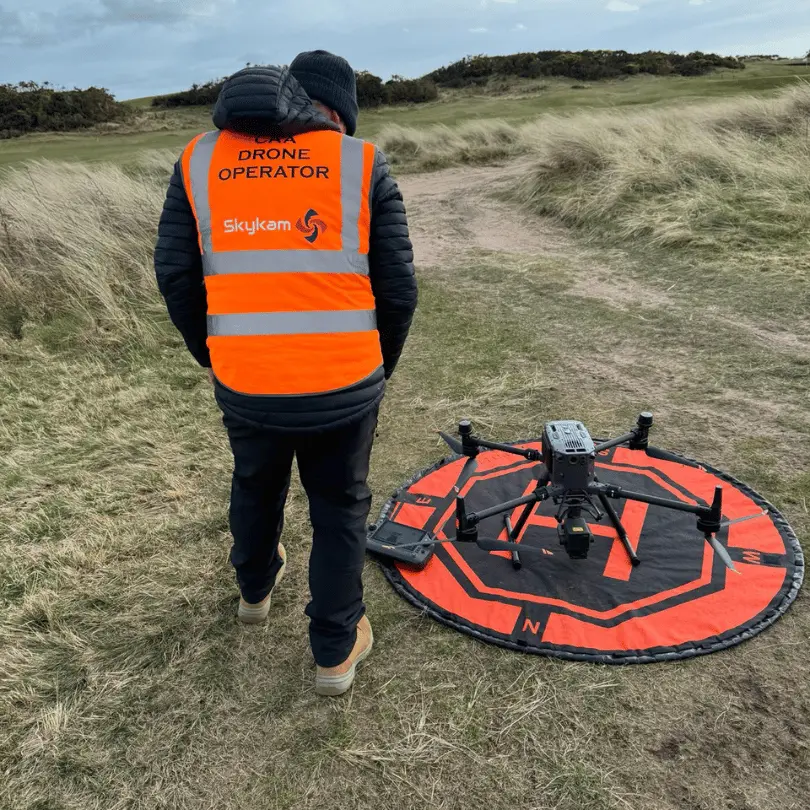
For those seeking to operate drones in more complex scenarios, especially for commercial purposes, the General Visual Line of Sight Certificate (GVC) is often the next step up from the A2 CofC.
This certification is essential if you’re planning to apply for an Operational Authorisation in the Specific category.
To obtain your GVC, you’ll need to complete both theoretical and practical flight tests.
These assessments are designed to guarantee you’re capable of handling more challenging drone operations.
The good news is that once you’ve earned your GVC, it’s valid for five years.
You can acquire your GVC from CAA-approved Recognized Assessment Entities (RAEs). Various drone training schools, such as UAVHub, Coptrz, and Drone Pilot Academy, offer these courses.
To get started, simply book a course online with an approved provider.
The cost of GVC courses typically ranges from £299 to £379.
While this might seem steep, it’s an investment in your professional development as a drone operator.
The course package usually includes a theory course, practical flight assessment, and a certificate upon successful completion.
When you’re ready to take the plunge, research different providers to find the best fit for your needs and budget.
Remember, the GVC is aimed at commercial operators who plan to fly large drones in more complex scenarios.
If this aligns with your goals, it’s definitely worth considering.
With a GVC in hand, you’ll be well-equipped to take on more advanced drone operations and expand your professional opportunities.
Operational Authorisation
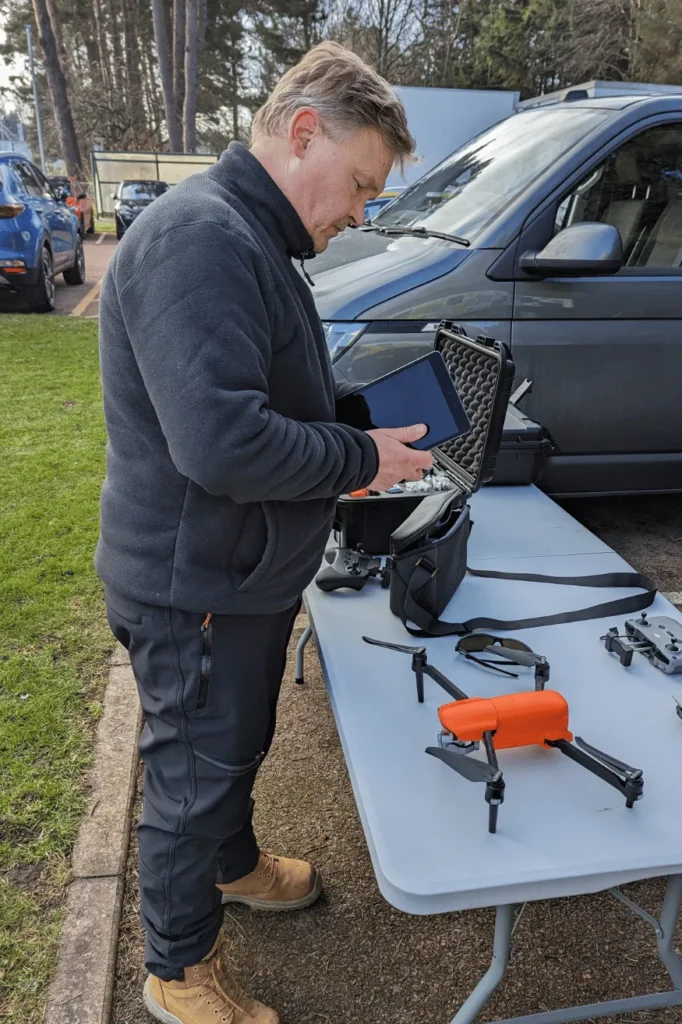
Once you’ve obtained your GVC, you’ll need an Operational Authorisation to fly drones in the Specific category, which covers operations beyond the scope of Open category rules.
This authorisation replaces the old Permission for Commercial Operations (PfCO) and is essential for conducting more complex drone operations.
To apply for an Operational Authorisation, you’ll need to hold a valid GVC qualification.
This verifies that you have the necessary knowledge and skills to operate drones safely in more challenging scenarios.
The authorisation costs £234 per year and is valid for 12 months from the date of issue.
When you apply for an Operational Authorisation, you’ll need to provide details about your intended drone operations, including the type of drones you’ll be using, the locations where you’ll be flying, and any specific risks associated with your planned activities.
The Civil Aviation Authority (CAA) will review your application and may request additional information or clarification before granting the authorisation.
It’s important to note that the Operational Authorisation is specific to the operations you’ve outlined in your application.
If you need to conduct different types of drone operations or fly in new locations, you may need to update your authorisation or apply for a new one.
Remember to renew your Operational Authorisation before it expires to maintain continuous compliance with UK drone regulations.
Keep your authorisation documentation with you whenever you’re operating your drone, as you may need to present it to authorities if requested.
I Have A DJI Mini 2, 3 or 4. What Drone Licence Do I Need In The UK?
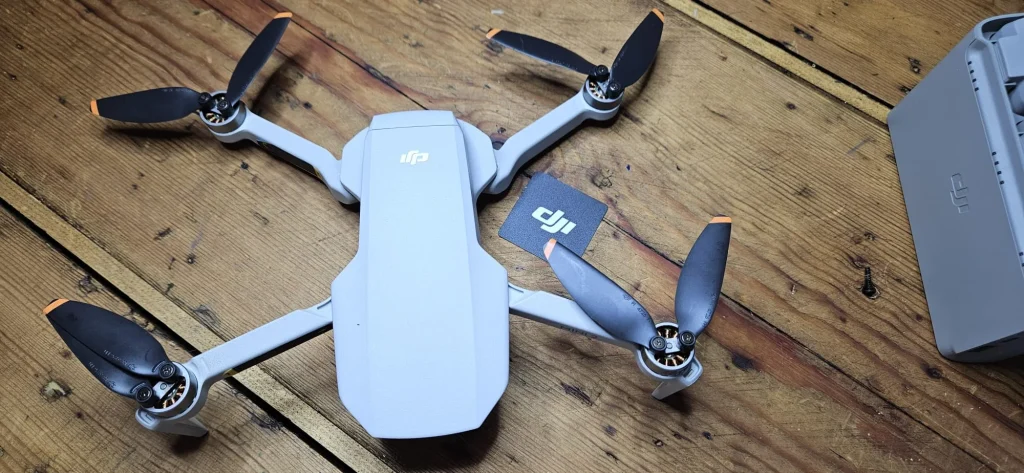
Owners of DJI Mini 2, 3, or 4 drones need to understand the specific licensing requirements in the UK.
If you have one of these popular lightweight drones, you’ll need to obtain an Operator ID. This is because these models are equipped with cameras, which require registration with the Civil Aviation Authority (CAA).
The Operator ID costs £11.13 and is valid for one year. To get this ID, you must be at least 18 years old. Once you have your Operator ID, you’ll need to register your drone with the CAA.
It’s essential to follow all relevant drone flying rules and regulations to guarantee safe and legal operation.
Interestingly, you don’t legally need a Flyer ID for these drones as they weigh less than 250g.
However, the CAA strongly recommends getting one anyway.
The Flyer ID is free and valid for five years. It provides a valuable overview of the rules for safe and legal flying, which can be beneficial for all drone pilots.
To summarize, here’s what you need if you have a DJI Mini in the UK to do:
- Obtain an Operator ID (£11.13, valid for 1 year)
- Register your drone with the CAA
- Follow all drone flying regulations
- Consider getting a Flyer ID (recommended, but not legally required)
Do I Need A Specific Licence For Commercial Drone Work In The UK?
While hobbyist drone pilots have specific requirements, you might wonder about the rules for commercial drone work in the UK.
As of December 31, 2020, there’s no longer a specific ‘drone licence‘ required for commercial drone use in the UK. However, this doesn’t mean you can simply start flying for business purposes without any preparations.
If you’re planning to use your drone commercially, you’ll need to comply with several regulations and obtain necessary certifications. These requirements depend on your specific drone and intended use.
For most commercial operations, you’ll need to register as a drone operator with the Civil Aviation Authority (CAA) and pass an online theory test to get your Flyer ID.
Depending on your drone’s classification and your intended operations, you may also need to complete additional training or assessments.
Here’s what you need to do:
- Follow the Drone Code at all times.
- Respect privacy laws when operating your drone.
- Guarantee you have appropriate insurance coverage for commercial operations.
- Obtain the required certifications based on your drone’s weight and planned usage.
It’s essential to understand that while there’s no specific ‘commercial drone licence,’ you’re still responsible for operating safely and legally.
If you’re unsure about your specific situation, it’s best to contact the CAA directly or seek professional advice.
Conclusion
Understanding UK drone licences is pivotal for safe and legal flying. You’ll need to determine which licences apply to your drone and intended use.
For most recreational flyers, a Flyer ID and Operator ID will suffice. If you’re planning commercial work or more complex flights, you may need additional certifications.
Always check the latest regulations, as they can change. Remember, responsible drone use guarantees everyone’s safety and the continued growth of this exciting technology.

