
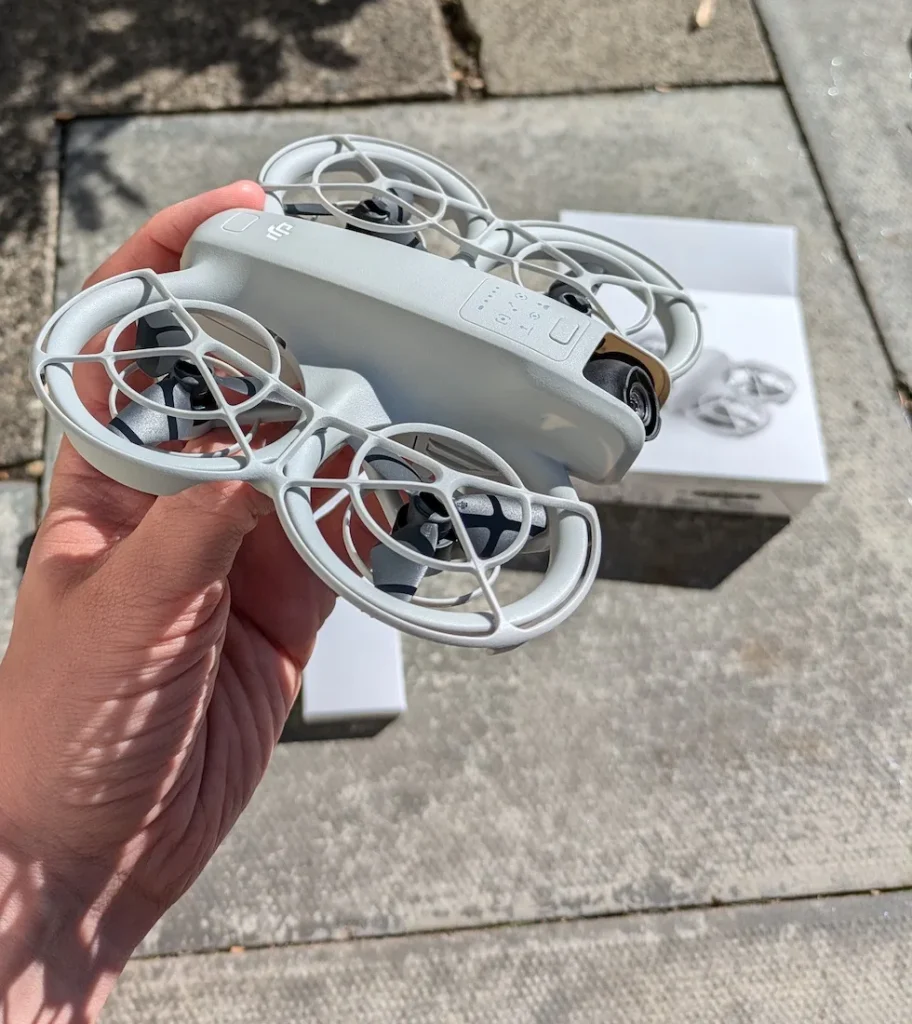

Your DJI Neo isn’t waterproof, so you’ll need to be extra careful when flying near water or in wet conditions. The drone lacks an official IP rating for water resistance, making it vulnerable to moisture damage. Even a small amount of water can harm its sensitive electronics. Don’t fly your Neo over water bodies or in the rain, as this could lead to crashes and irreparable damage.
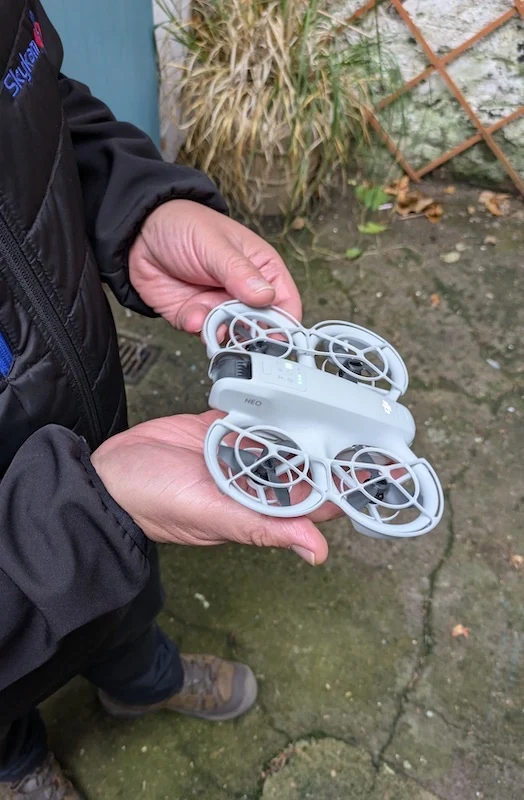
If your drone does get wet, immediately power it off, remove the battery, and follow proper drying procedures.
While it’s best to avoid water altogether, there are steps you can take to protect your investment and enjoy worry-free flights.
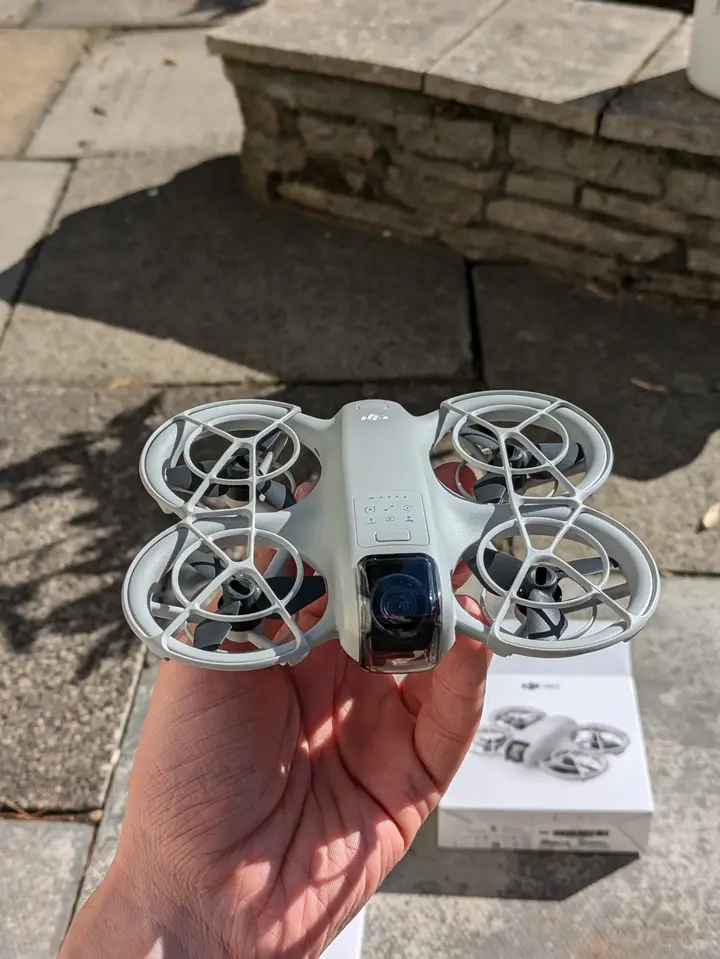
DJI NEO is NOT Waterproof
DJI’s Neo drone lacks an official waterproof or water-resistant rating, leaving it vulnerable to moisture damage. This absence of an IP rating means the Neo isn’t certified to withstand water or dust ingress to any specific standard.
Like most consumer DJI drones, the Neo hasn’t been designed with water protection in mind, making it susceptible to potential harm from exposure to moisture and water.
Without an IP rating, you shouldn’t fly your Neo in rainy, wet, or dusty conditions.
Water droplets or fine particles could potentially infiltrate the drone’s body and wreak havoc on its internal electronics and sensitive components. Even a small amount of moisture can lead to significant damage, potentially rendering your drone inoperable.
It’s important to understand that the Neo’s lack of waterproofing isn’t an oversight but rather a common characteristic among consumer drones.
DJI hasn’t designed the Neo for use in challenging weather conditions or environments where water exposure is likely. Instead, it’s intended for use in dry, clear conditions to guarantee proper performance and longevity.
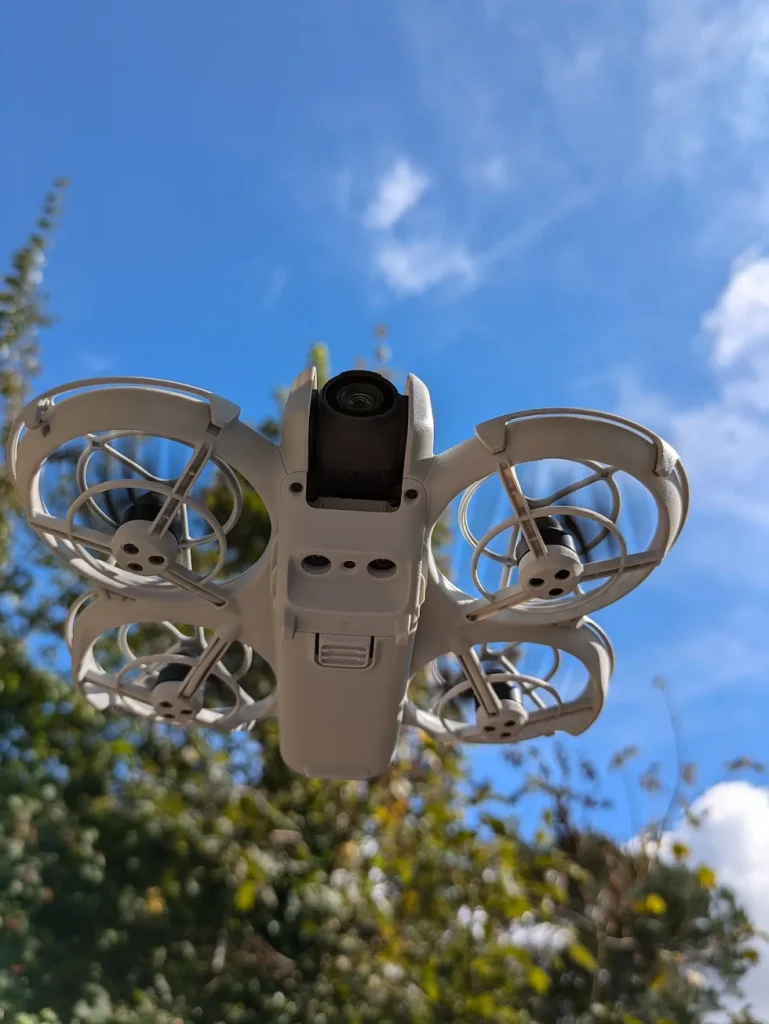
You should not fly DJI neo over water
First, the drone’s downward vision positioning system may malfunction over reflective surfaces like water, causing erratic behavior or loss of control. The light reflecting off the water can confuse the sensors, compromising stability.
Second, if your Neo accidentally lands or crashes in water, moisture can quickly damage its sensitive internal components, potentially destroying the drone if not dried immediately.
To safeguard, the Neo’s lightweight design makes it vulnerable to wind gusts and air currents over open water. A sudden gust could cause you to lose control and crash your drone.
To protect your investment and confirm safe flights, it’s best to keep your DJI Neo away from water.
Do Not Fly DJI NEO In The Rain
When you fly the Neo in rainy conditions, you’re exposing it to potential water damage. Moisture can seep into essential components like motors, batteries, and other electronic parts. This infiltration can lead to short circuits and corrosion, which could ultimately destroy your drone.
While the Neo’s compact design with closed compartments offers some protection, it’s still vulnerable to direct rain exposure.
It’s important to note that water damage resulting from flying in rainy conditions is likely not covered under DJI’s warranty. This means you’d be responsible for any repairs or replacement costs if your drone is damaged due to rain exposure.
DJI explicitly warns against operating the Neo in severe weather conditions, including rain.
They advise not to fly when it’s rainy, smoggy, or when visibility is lower than 100 meters. Additionally, you shouldn’t fly in wind speeds exceeding 8 m/s, snow, or fog.
To protect your investment and preserve the longevity of your DJI Neo, always check weather conditions before flying. If there’s any possibility of rain or other adverse weather, it’s best to postpone your flight. Remember, the safety of your drone should always be your top priority.
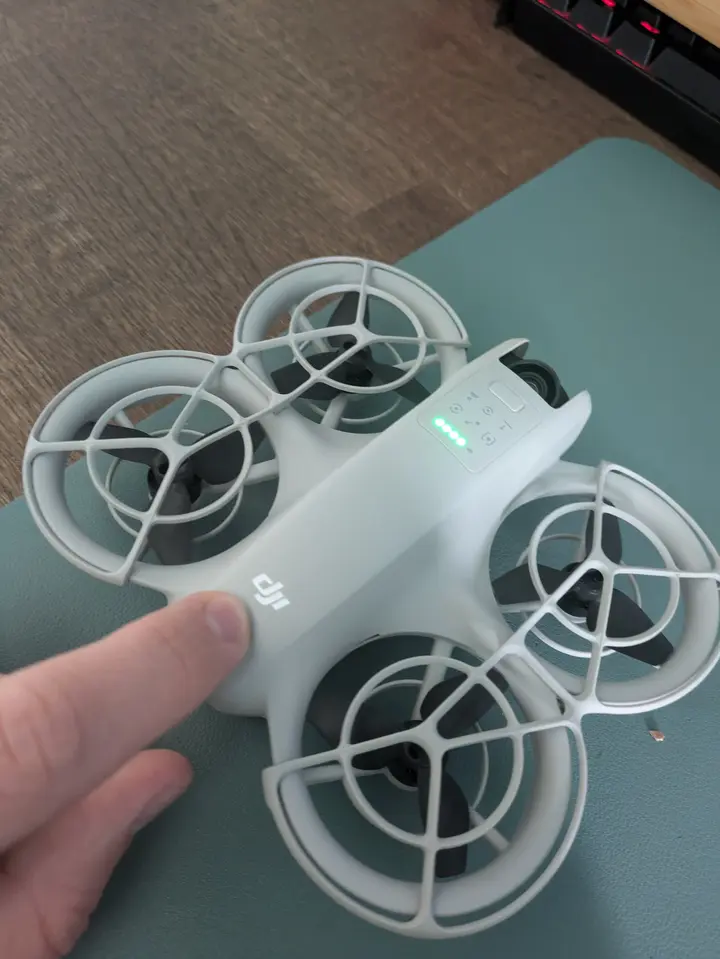
What To Do If Your DJI Neo Does Get Wet
If your DJI Neo gets wet, you’ll need to act quickly. First, power off the device and gently wipe it dry with a soft, absorbent cloth. After thorough drying, carefully inspect the drone for any visible damage and test its functionality before attempting to fly.
Immediate Response
In case of an accidental dunk, your immediate response can make all the difference for your DJI Neo. The first vital step is to power off the drone immediately and remove the battery. This quick action prevents potential short circuits that could cause further damage to your device.
If your DJI Neo has taken a saltwater plunge, it’s indispensable to rinse it thoroughly with fresh water. This step helps remove corrosive salt residue that could otherwise wreak havoc on your drone’s components.
However, if your drone fell into freshwater, you can skip this rinsing step.
Next, if you’re comfortable with the process, consider disassembling your DJI Neo. Remove detachable components like the camera and gimbal. This step allows for better air circulation, which is essential for effective drying.
By exposing more surfaces to the air, you increase the chances of thoroughly drying out your drone.
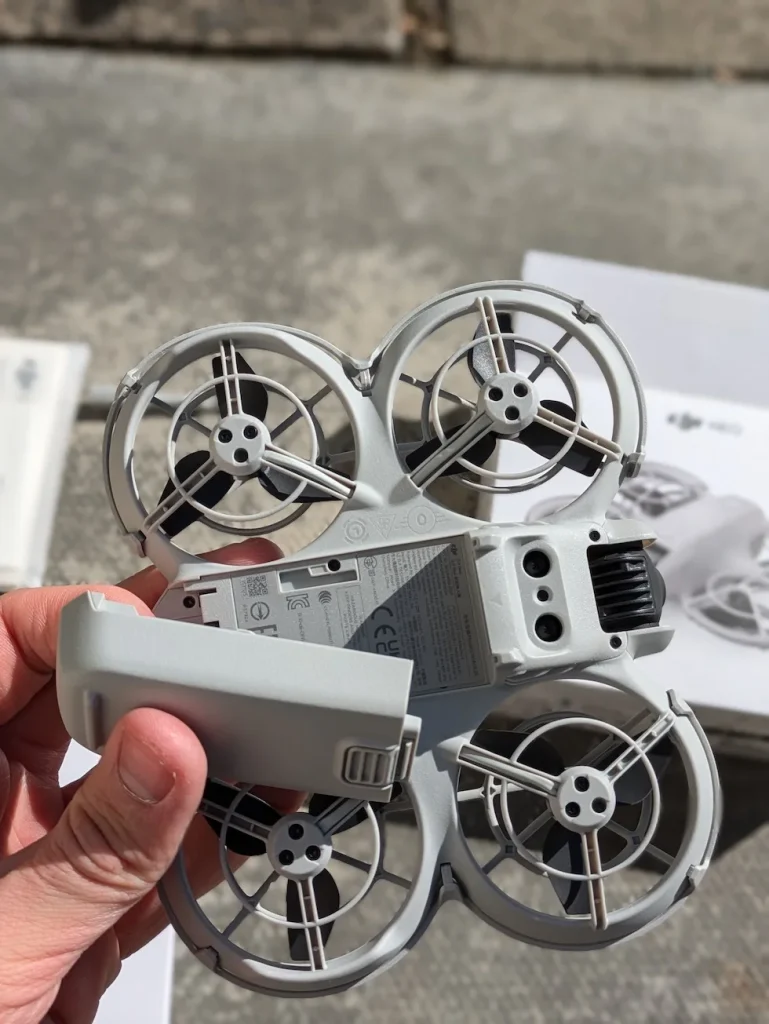
Drying Process
The drying process is a critical step in salvaging your water-logged DJI Neo. After wiping down the exterior with a clean, dry microfiber cloth to remove surface moisture, you’ll need to focus on thoroughly drying the internal components.
Place the disassembled drone parts in a warm, dry, well-ventilated area for at least 24-48 hours.
Avoid using direct heat sources like hair dryers, as they can cause damage to sensitive electronics. To speed up the drying process, you have several options.
You can use a fan to improve air circulation around the components, which will help evaporate moisture more quickly. Alternatively, place your drone in a sealed container with silica gel desiccant packets, which will absorb moisture from the air.
For more aggressive drying methods, you can submerge the components in rubbing alcohol, which will displace water and evaporate quickly. Another option is to bury your drone in uncooked rice or crystal kitty litter, both of which are excellent at absorbing moisture.
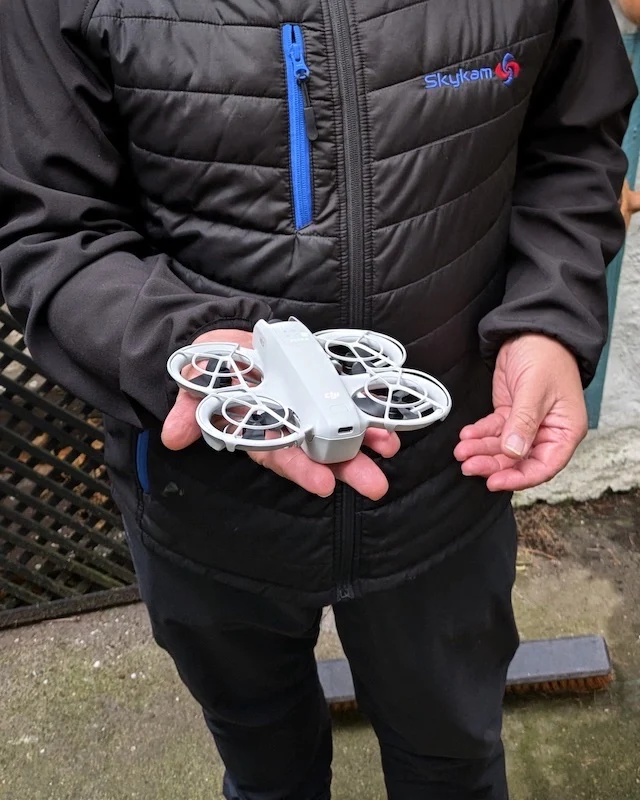
Post-Drying Inspection & Testing
After patiently allowing your DJI Neo to dry, you’ll need to perform a thorough post-drying inspection and test.
Begin by visually examining the drone and its components for any signs of corrosion, damage, or trapped moisture. Look closely at all surfaces, paying particular attention to connectors, joints, and crevices where water might’ve lingered.
Once you’re satisfied with the visual inspection, it’s time to reassemble your drone.
Carefully put all the parts back together, confirming everything fits snugly and securely. Now, reinsert the battery or, if you prefer, use a different one to be extra cautious.
Find a safe area to conduct your power-on test. Turn on the drone and observe its behavior. If it doesn’t power up or you notice any unusual functioning, stop immediately.
Don’t attempt to fly it, as this could lead to further damage. In such cases, you’ll need to troubleshoot further or seek professional repair services.
However, if your DJI Neo powers on normally, you’re almost ready to resume normal use. Perform a short hover test to verify that all systems are working properly.
This final check will guarantee your drone is safe to fly again.
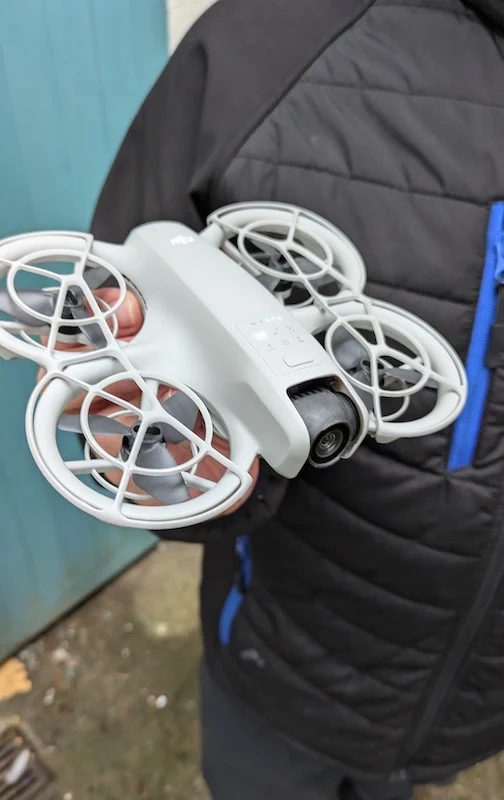
Worst Case, DJI Care Refresh Covers Your NEO For Water Damage
DJI Care Refresh comes in as your safety net. This thorough coverage plan offers peace of mind for drone enthusiasts like you who might encounter unexpected water-related mishaps.
DJI Care Refresh is designed to protect your investment against accidental damage, including water damage. Whether your Neo takes an unplanned dip in fresh water or gets caught in a saltwater splash, you’re covered.
The plan allows for up to two replacement units within a 12-month period, ensuring you’re not left high and dry if something goes wrong.
If your Neo suffers water damage, you don’t have to worry about the hefty cost of a full replacement. Instead, you can get a replacement unit for a small fee under the DJI Care Refresh plan. This applies regardless of whether the damage occurs in fresh or salt water, giving you the freedom to fly with confidence in various environments.
Having DJI Care Refresh as a backup plan is a smart move for any drone pilot. It provides an extra layer of protection against the unexpected, allowing you to focus on capturing amazing aerial footage without constant worry about potential water damage.
In the worst-case scenario, where water damage does occur, you can rest assured that your DJI Care Refresh plan has you covered, minimizing both financial loss and downtime.
Conclusion
You’ve learned that the DJI NEO isn’t waterproof, so you shouldn’t fly it over water or in the rain. If your NEO does get wet, act quickly to minimize damage.
While it’s best to avoid water exposure altogether, you’re covered for water damage if you have DJI Care Refresh. Remember, prevention is key. Keep your drone dry and safe to guarantee many flights to come.
Always prioritize your NEO’s well-being for the best aerial experiences.

