
Drones are more popular than ever in the UK, used by hobbyists and professionals alike for photography, surveying, and fun. But a common question arises: can you legally fly a drone over someone’s private property?
The answer requires navigating a mix of aviation regulations, property law, and privacy rules.
In this comprehensive guide, we break down the key aspects – from the Civil Aviation Authority’s Drone Code to landowner rights and privacy laws – all focused on UK drone laws. Whether you’re a hobbyist pilot or a commercial operator, this guide will help you understand the do’s and don’ts of flying a drone over private property in the UK.
30 Second Summary
Yes, you can legally fly a drone over private property in the UK as long as you comply with Civil Aviation Authority (CAA) regulations, such as maintaining safe distances from people and respecting privacy rights. However, you must obtain the landowner’s permission if you wish to take off or land your drone on their property, as doing so without consent could be considered trespassing. Additionally, if your drone is equipped with a camera and collects personal data, you must adhere to privacy laws, including informing individuals and complying with data protection regulations like GDPR.
Private Property Law and Landowner Rights Vs Drone Pilots
When it comes to drones over private property or land, one tricky area is understanding the rights of landowners versus the rights of drone operators in the air.
Homeowners often assume “it’s my property, so I own the airspace above it” – but the legal reality is more nuanced.
Who Owns the Air Above Private Land? (Trespass vs. Airspace Rights)
There’s a long-standing legal principle (from old Latin law) that said “Cuius est solum, eius est usque ad coelum et ad inferos” – meaning whoever owns the soil owns up to the sky and down to hell.
However, this absolute view no longer applies in modern law. If it did, every airplane flying over your house would be committing trespass!
The pivotal case in the UK is Bernstein of Leigh v Skyviews & General Ltd (1978). In that case, a company had flown over a landowner’s estate to take aerial photos and the landowner (Baron Bernstein) sued for trespass.
The court decided landowners’ rights extend only to the height necessary for the ordinary use and enjoyment of their land, and the structures upon it – but not unlimited into the air.
In plain terms, you own your lower airspace – the area you might reasonably use (for buildings, chimneys, trees, etc., or to enjoy privacy in your garden) – but you do not own the higher airspace above your property in any exclusive way.
This means a drone flying high overhead of private property, well above the rooftops, is not automatically trespassing just because it’s in “your air”.
UK statute law backs this up: Section 76(1) of the Civil Aviation Act 1982 provides that no action for trespass or nuisance lies for the flight of an aircraft (which includes drones) “over any property at a height above the ground, which, having regard to wind, weather and all the circumstances is reasonable”.
As long as a drone is flying at a reasonable height and in accordance with aviation laws, the landowner typically cannot sue for trespass or nuisance simply because it’s overhead.
However, what’s “reasonable” height is not strictly defined and could depend on context.
A drone buzzing 2 meters above someone’s lawn is clearly not reasonable; 60 meters up passing over might be deemed reasonable. The courts have not fully tested drones under this rule yet, so there is a grey area.
But generally, the lower your drone flies over private property, and the more it interferes with the owner’s ordinary use, the more likely it could be trespass or nuisance.
Trespass in property law is the unjustifiable interference with land. A drone physically invading the immediate airspace of land (e.g. hovering at low altitude over someone’s garden without permission) could constitute trespass.
There’s a precedent in analogous cases – e.g., in Laiqat v Majid (2005) a property owner succeeded in a trespass claim for a neighbor’s kitchen extractor fan that protruded 8 inches into his airspace; the court held that relatively low-level airspace was part of the property’s dominion.
By extension, a drone that routinely skims through the space just above someone’s private property or over a fenced boundary might be trespassing if it’s within the “private sphere” the owner is using.
Nuisance is another legal claim – it’s about continuous or unreasonable interference with someone’s use or enjoyment of their land.
If a drone flies over private property frequently, making noise, or hovering and causing distress, the landowner could claim it as a nuisance (even if at a height that might not count as literal trespass).
For example, if every evening your drone is buzzing over a neighbour’s patio during their dinner, they could argue it’s interfering with their enjoyment of the property – a potential nuisance.
The Gorvin law firm notes: if your neighbour “no longer feels comfortable on their own property as a result of you regularly flying your drone over… their home,” they may have grounds to claim nuisance and seek an injunction to stop you.
In other words, excessive or harassing use of a drone over someone’s land can lead to legal action, even if one single overflight at a high altitude might not.
Permission For Drones To Take Off or Land on Private Land
While flying above someone’s land at a respectful height might not be trespass, actually entering or landing on their land is another matter.
If you take off or land your drone on private property without the owner’s consent, that is a physical entry and likely trespass. Drone operators must obtain the landowner’s permission to launch or land on their property.
For instance, you cannot just walk into a farmer field and launch your drone without consent – you’d be trespassing on the land.
Similarly, retrieving a drone that accidentally lands in someone’s garden should be done with permission (or law enforcement help if needed), not by hopping the fence uninvited.
It’s worth noting that some public and private landowners have explicit policies against drone take-offs/landings (we’ll cover examples like the National Trust in a later section).
Always ensure you have the right to be on the ground from where you operate. If you don’t, find a public take-off point or get permission in writing.
When Could Flying A Drone Over Private Property Be Illegal UK?
Complying with aviation rules (height, distance, etc.) and flying at a reasonable altitude over private property is generally legal.
The landowner does not “own” that navigable airspace and cannot simply forbid you from passing over.
As the National Trust itself admitted in a 2023 statement, while they can ban drone take-offs from their land, “they have no control over the airspace above, which is regulated by the CAA… [the Trust] cannot legally stop drone flights over its land”.
Airspace is a public highway of sorts.
However you could be flying a drone illegally over private property if:
Flying Low Or Causing a Disturbance
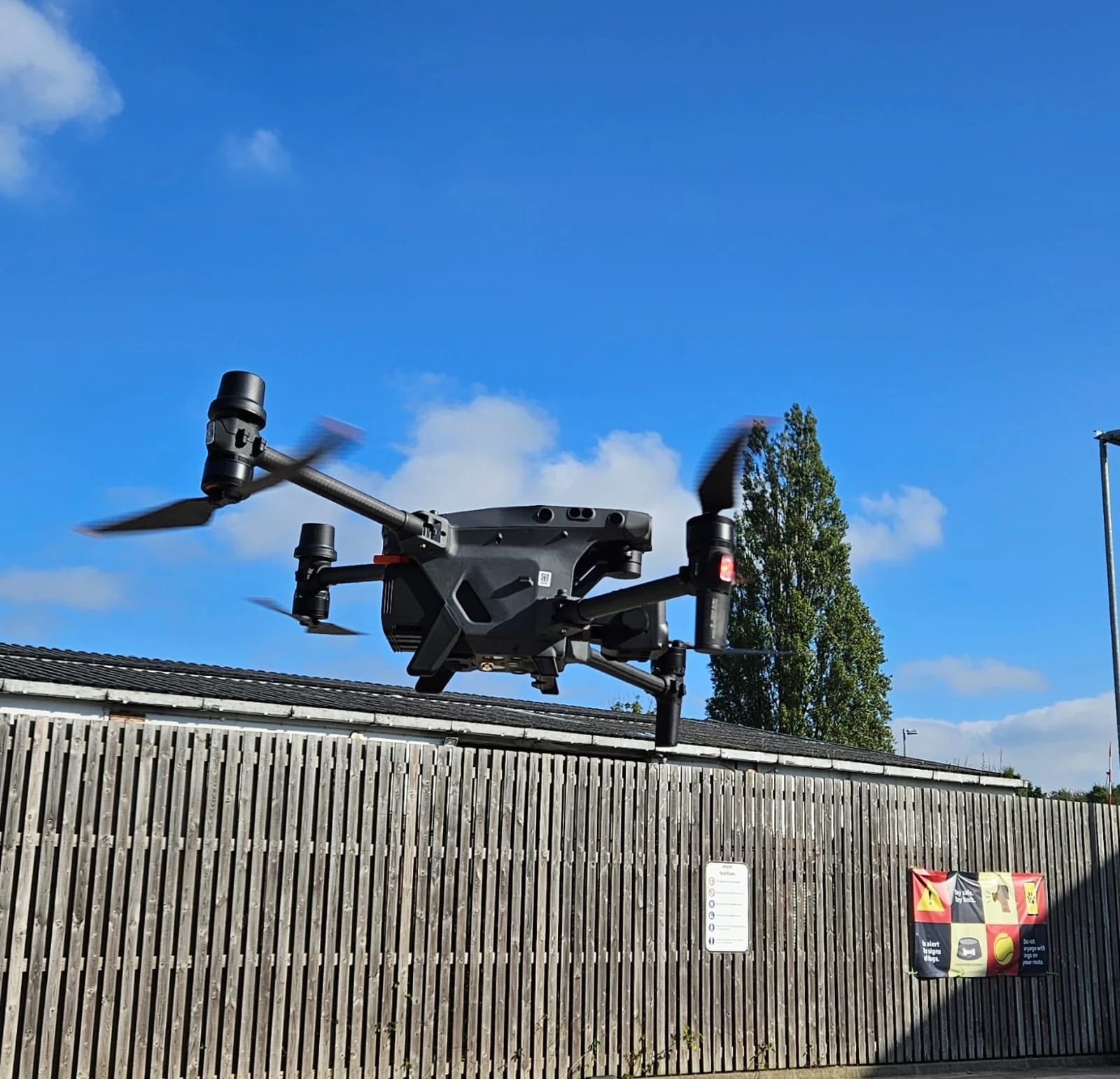
However, if you fly very low or cause disturbance, you may violate civil laws like trespass or nuisance. There’s no fixed altitude defined as the boundary, but the closer to the ground and the more disruptive, the riskier.
Hovering 5m over someone’s garden repeatedly could very likely be considered an intrusion.
Even at higher altitudes, deliberately circling one house over and over could be deemed a nuisance or even harassment (more on privacy/harassment shortly).
Drone Causes Damage or Injury
If you cause damage or injury, you face legal consequences. Under Section 76(2) of the Civil Aviation Act, drone owners/operators are strictly liable for any damage their drone causes to people or property on the ground.
“Strictly liable” means the affected property owner doesn’t even need to prove you were negligent – if your drone crashes through a window or injures someone, you (as operator) are on the hook to compensate for it, period.
Always have control of your drone to prevent accidents; consider insurance for liability coverage given this strict rule.
Reckless Flying of a Drone
Reckless or dangerous flying over someone’s property can also breach criminal law. The Air Navigation Order has a provision (Article 241) making it an offense to recklessly or negligently cause or permit an aircraft (drone) to endanger any person or property.
So, if you fly in a way that puts people at risk (zooming low over a patio where people are sitting, for example), you could be committing a criminal offense beyond just a civil trespass.
The CAA emphasizes this general duty of care: you must never put anyone in danger with your drone.
Practical tip: If you plan to overfly private property, stay as high as legally allowed and keep moving. A quick transit at 100m altitude is less likely to bother anyone (and is more clearly “reasonable” use of airspace) than a prolonged hover at 20m.
Also, whenever feasible, communicate with the landowner/occupants ahead of time.
While not legally required at safe heights, a courteous heads-up can prevent misunderstandings – for example, letting your neighbour know, “I’ll be taking some aerial photos of my roof tomorrow around noon, the drone will only be overhead briefly.”
This can build trust and avoid a scenario where the neighbor is tempted to claim you’re “spying” or call the police. Good relationships can go a long way in avoiding legal headaches.
Lastly, never resort to “self-help” if you’re on the other side – e.g., a landowner annoyed by a drone should not attempt to shoot it down or knock it out of the sky.
Not only is that dangerous and likely illegal (destruction of property, endangering an aircraft), but as noted, the proper response is through legal channels (police, CAA, or civil court) rather than taking matters into one’s own hands.
Drones And Private Property Privacy and Data Protection Laws
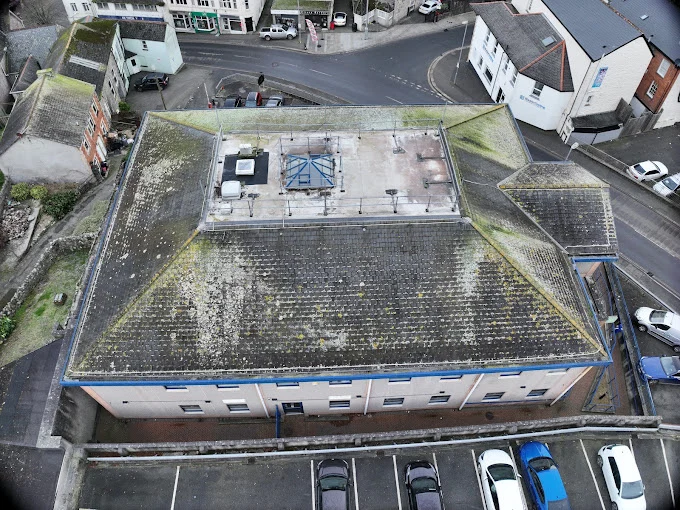
Beyond safety and trespass concerns, drones flying over private property raise privacy issues. Many drones carry cameras capable of recording high-resolution videos or images.
Understandably, people get uneasy about a camera drone hovering near their home or looking into their garden.
In the UK, privacy is protected by laws like the GDPR/Data Protection Act 2018 and the Protection from Harassment Act 1997, among others. Drone users need to be mindful of these when flying near others’ property.
Drone Cameras, GDPR, and the Data Protection Act
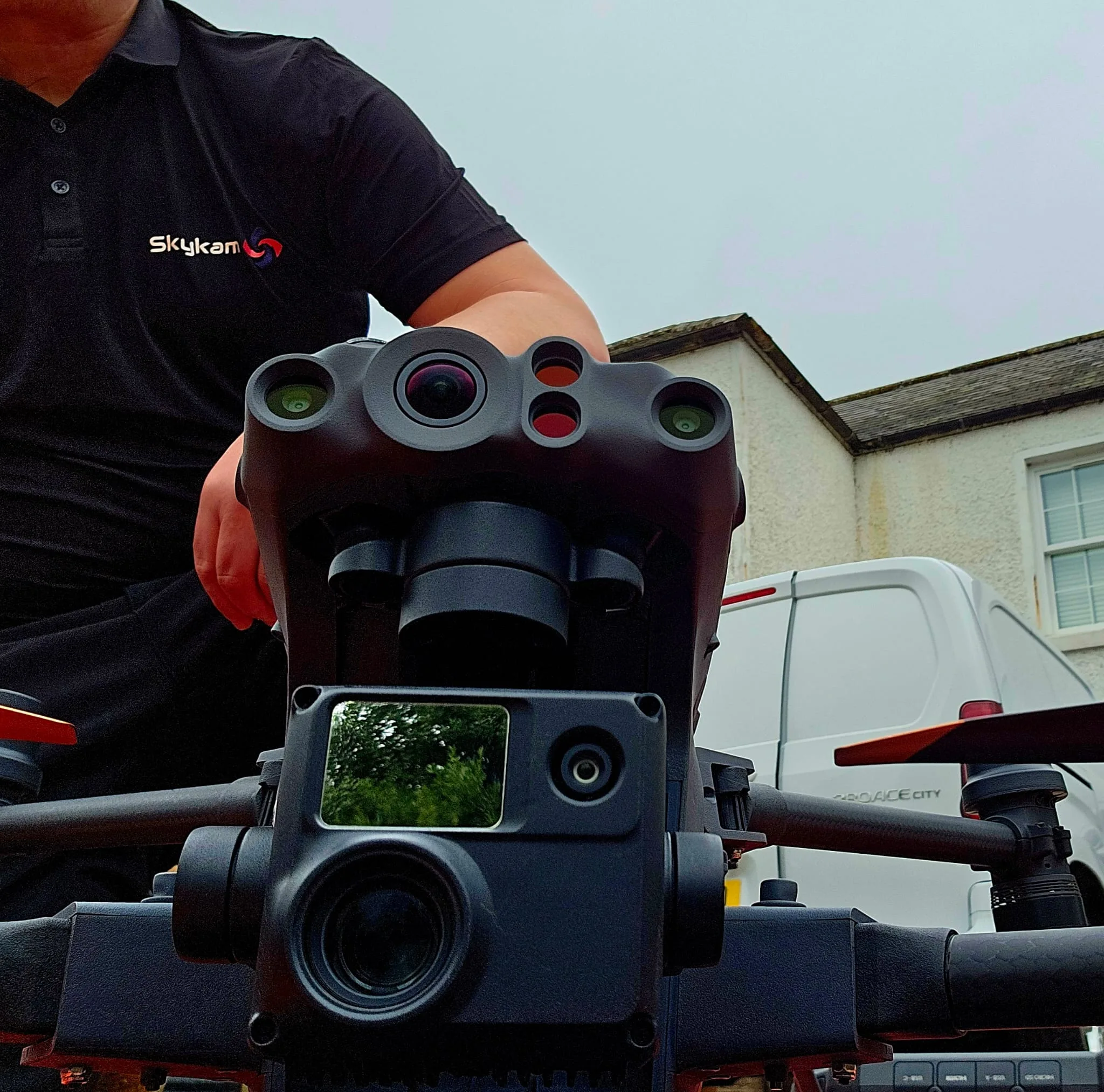
If your drone is equipped with a camera and you’re recording footage, you may be collecting personal data (images of individuals, their activities, their car number plates, etc.).
Under the UK General Data Protection Regulation (GDPR) and Data Protection Act 2018, anyone who processes personal data must comply with certain principles (lawfulness, transparency, data minimization, etc.) and respect individuals’ rights.
This typically applies to businesses and organizations using drones – e.g., a company filming properties or events with a drone is definitely subject to data protection law.
They would be considered a data controller for the footage they collect.
What about hobbyists or recreational flyers?
There is a concept of a “domestic or household exemption” in data protection law – basically, if you’re a private individual processing data purely for personal, family, or household activities, GDPR may not apply.
However, be very careful: the Information Commissioner’s Office (ICO) guidance says that if your camera captures images beyond the boundary of your own home and garden, even as a private individual, the personal data you collect may not be exempt.
A European Court case (relating to home CCTV) decided that filming even partially on a public space or another’s property takes you out of the purely personal realm.
In practice, this means if you fly a camera drone over your neighbourhood and record your neighbours or passers-by, you could be considered a data controller under the UK law.
For commercial or professional drone operators, it’s clear-cut – you must comply with GDPR.
This involves steps like: having a lawful basis for filming (e.g. legitimate interests), not collecting more footage than necessary, informing people if appropriate (signage or notices if doing regular surveillance), keeping the footage secure, and handling any requests (like if someone asks for a copy of their data or for it to be deleted).
For instance, a roof inspection company using drones should warn residents that filming is happening and ensure videos are stored safely and not kept longer than needed.
For hobbyists, while you might not register with the ICO as a data controller, you should respect privacy as if you were bound by those principles.
That means: avoid capturing identifiable people if you can. Don’t hover a drone over someone’s backyard where they have an expectation of privacy (sunbathing, etc.).
If you unintentionally film a neighbour, don’t publish that footage online without their consent or blurring them out.
Remember that posting videos to YouTube or social media is not “personal household use” – once you share it publicly, it likely falls under data protection rules.
A UK law firm noted that the ICO updated its CCTV Code of Practice to include drones (UAS) – recording people without their consent can be a direct violation of the Data Protection Act in many cases.
The ICO’s CCTV guidance treats drone footage similarly to CCTV: if you capture people outside your property, you should justify it and probably put up a notice, etc.
While average drone hobbyists aren’t putting up signs, the takeaway is to be transparent and minimal with any recording.
If a neighbour asks “Were you recording me with your drone?” be honest and offer to delete footage if it caused concern (assuming you have no legitimate need for it).
Being respectful of privacy can ward off formal complaints.
Harassment and Voyeurism
If a drone is used to deliberately intrude on someone’s privacy or private property, the operator could run afoul of other laws.
The Protection from Harassment Act 1997 makes it illegal to pursue a course of conduct which amounts to harassment of someone (causing alarm or distress).
Using a drone to repeatedly spy on or stalk someone could be deemed harassment.
For example, if a person flies a drone to hover outside a specific bedroom window every evening, or constantly over a neighbour’s garden filming them, that’s not just a casual flight – it’s targeted behaviour that could lead to both criminal charges and civil injunctions.
In a recent case (Fairhurst v Woodard, 2021 – involving home CCTV and audio recording), a neighbour’s extensive surveillance of another was found by the court to constitute harassment and also a breach of the Data Protection Act.
While that case was about CCTV cameras on a house, the principle would likely extend to drones: intrusive and unjustified video surveillance of someone can be harassment, and victims can seek restraining orders or damages.
Relatedly, there are privacy torts (like misuse of private information) and even potential criminal offenses if a drone is used for voyeurism.
The Sexual Offences Act 2003, for instance, has provisions against voyeurism (e.g., filming someone doing a private act without consent for sexual gratification).
So spying into someone’s bathroom or bedroom with a drone camera is absolutely illegal. Even outside of such extreme scenarios, peeping on people where they expect privacy is unethical and risky.
Best Practices for Privacy
For drone operators:
- Plan your flight path to avoid hovering over homes or gardens where people might be present. If you need to film a property (say, for real estate), try to do it when occupants are not visible, or inform them ahead of time.
- Use the camera responsibly: If your drone has a gimbal, you could angle the camera away from neighbouring properties until you’re over the intended spot. Don’t zoom in on people through windows – that’s plainly intrusive.
- Inform people if appropriate: For instance, if you’re a farmer mapping fields with a drone that will incidentally pass over a few back gardens on the boundary, consider giving those neighbours a courtesy notice (“I’ll be surveying my field with a drone tomorrow around 10 AM, it will pass over briefly. Please let me know if you have concerns.”). This transparency can alleviate the feeling of “being spied on”.
- Secure your footage: If you record videos, keep them on a secure device. If it’s not needed, delete it. Especially if it accidentally captured sensitive moments of others, be responsible with that data.
- Know the ICO guidance: The ICO (Information Commissioner’s Office) provides guidance on drones and privacy. In short, they urge drone users to be open and fair with how they collect images, and to respect individuals’ privacy rights. If someone complains to you or asks for footage of themselves to be deleted, handle it seriously – under law, individuals do have the right to demand their personal data be erased or not processed further in many circumstances.
From the property owner’s perspective: If you believe a drone is infringing on your privacy – e.g., regularly filming you or your private property – you can take action.
The first step might be to talk to the drone operator if known, express your concerns. They might not realize they were causing distress.
If that fails or if the drone use is clearly invasive, you can report it. This could be to the police (if harassment or voyeurism is suspected) or to the ICO (if it’s a data protection violation, such as a business using drones improperly).
In fact, Citizens Advice recommends that if you have concerns about a neighbour’s use of CCTV or drones, you should consult the ICO’s guidance or report it to them.
The ICO can investigate misuse of personal data by drone recordings.
Remember, UK law doesn’t yet have a single “drone privacy act” specifically for private drone use, but it leverages existing laws (harassment, data protection, trespass/nuisance) to address issues.
As a drone pilot, it’s wise to assume you are being watched while you watch others – i.e., any misuse could be recorded or reported and you could face legal consequences after the fact.
By flying respectfully, you not only avoid breaking the law but also help improve the public perception of drones as a hobby or tool.
Penalties and Enforcement for Non-Compliance Of Flying A Drone Over Private Property UK
Understanding the rules is one thing – but what happens if you break them? The UK has been ramping up enforcement of drone laws in recent years.
There are fines, and even criminal charges, that can result from illegal drone flights, including those over private property if they violate the rules we’ve discussed.
In this section, we outline the potential penalties and how drone laws are enforced by the CAA, police, and local authorities.
Fines and Criminal Offenses
Violations of the Air Navigation Order 2016 – which contains most of the drone rules – are criminal offenses.
Flying without proper registration or IDs
As mentioned, not having a required Operator ID or Flyer ID can lead to a fine up to £1,000. This is usually handled as a summary offense (like a ticket or magistrate fine).
The CAA made it clear when registration became mandatory that pilots caught without proof of registration after 30 November 2019 could face a £1,000 fine.
Breaching no-fly zones (e.g. airport FRZ)
This is taken very seriously. For instance, flying inside an airport’s restricted zone without permission could lead to a large fine and/or up to 5 years imprisonment in the most egregious cases (especially if aircraft safety was risked).
Even lesser infractions, like flying above 400 ft or beyond line of sight, can result in prosecution.
In one notable case, a drone pilot was prosecuted for flying in central London and near buildings; he was fined £1,800 and had his drone confiscated.
In another, a filmmaker who flew over Hyde Park during an event (violating congested area rules and no permission) was fined £1,125 after pleading guilty to breaching the Air Navigation Order.
These cases show courts do impose significant fines for rule-breaking.
Dangerous flying and endangerment
If your drone use is deemed to endanger people or property, you could be charged under ANO Article 241 or other safety laws.
While each case varies, consider that the maximum penalties can be severe (the 5-year prison term is typically for endangering an aircraft, but a drone falling on someone could theoretically lead to charges like battery or other offenses as well).
At the very least, a dangerous flying charge will come with a fine and likely a ban on drone ownership for a period.
For example, the hobbyist in Nottingham who flew drones over football stadiums and near Buckingham Palace not only got fined £1,800 but was also banned from owning or operating drones for two years by the court.
Privacy violations and harassment
These might not result in fines by the CAA, but could result in other legal consequences. If someone uses a drone to harass, a court can issue a restraining order or injunction.
Under the Protection from Harassment Act, breaches can lead to criminal records and even imprisonment for repeated harassment.
Privacy breaches under the Data Protection Act could lead the ICO to issue enforcement notices or fines (the ICO can fine organizations up to millions for serious GDPR breaches, though this is more likely for companies than individuals).
Common fine levels
Many routine drone offenses (like flying over people, in a congested area, or without line of sight) have been dealt with by fines in the £200 to £1,000 range on first offense when no harm was caused, often prosecuted in Magistrates’ court.
More serious or repeat offenses push into the higher hundreds or thousands.
And where flights caused substantial risk (like a near-miss with an aircraft or drone use during a critical incident), the courts have not hesitated to consider custodial sentences.
Reporting A Drone Flying Over Private Property
For completeness, if you as a drone pilot or any member of the public witness someone flying a drone dangerously or unlawfully over private private property (say, a drone swooping low over people or near an airport without clearance), you should report it.
The CAA advises calling the police on 101 to report drone misuse.
You can also report incidents to the CAA via their website (“Report a drone incident” form on caa.co.uk) – particularly useful if you have video evidence or the drone’s registration number.
Reporting helps authorities take action against reckless flyers who give responsible pilots a bad name.
In summary, the UK backs up its drone regulations with enforcement. Penalties range from modest fines for administrative oversights to severe fines and even imprisonment for endangering safety.
As long as you follow the rules and use common sense, you’re unlikely to ever face these consequences.
But knowing they exist should encourage every drone operator to take the rules seriously.
The goal is not to punish hobbyists – it’s to ensure public safety and privacy, and to keep the skies open for all by preventing high-profile incidents that could lead to even stricter laws.
Ethical and Social Considerations For Flying A Drone Over Private Property
Laws and rules aside, there’s a simple truth: flying a drone near people’s private homes can be socially sensitive. Even if you are flying legally, neighbours or passers-by might feel uncomfortable or annoyed.
Responsible drone pilots consider the ethical aspect of their activities and aim to be good ambassadors for the drone community.
In this section, we cover some social etiquette tips and ethical considerations to keep in mind when flying over or near private property.
Respecting Privacy and Peace of Mind
Put yourself in the shoes of a property owner seeing a drone overhead.
They might wonder: “Is that drone filming me? Who is controlling it? Is it safe?” These concerns are natural.
As a pilot, you can alleviate them by being transparent and respectful:
Avoid “peeping” behaviors
Don’t hover at low altitudes over someone’s back garden or next to windows. Even if you have no ill intent, that kind of hovering can feel very intrusive to someone below.
As the saying goes, perception is reality – if it looks like you might be spying, people will assume you are. Keep a respectful height and don’t linger over one spot if it’s a private home.
Limit frequency of flights in the same area
If you fly frequently in your neighbourhood, neighbors may feel continually monitored or disturbed. Try not to overfly the same house repeatedly day after day.
Mix up locations or talk to neighbours to establish a comfort level. Some communities have a Facebook or WhatsApp group – it might be worth mentioning there
“Hey, I’ve started a drone hobby, I sometimes fly around 7pm to get landscape photos. Let me know if it ever bothers you.”
A little communication can preempt suspicion.
No sneaking around
Don’t try to fly covertly where you’re likely to be noticed anyway. For example, launching from behind a bush into a residential area might actually arouse more suspicion (people see the drone but not you).
It’s often better to be visible with your controller – if someone can see you on the ground, they know who to approach if they have an issue. An unknown drone with an unseen operator is far more unnerving.
Safety Courtesy
Beyond privacy, consider the safety comfort of others. People who aren’t familiar with drones might fear that “if it falls, will it hit me?” or “could it crash into my kid’s play area?”.
Adhere strictly to the safety distances we discussed – not just for legal reasons, but to ensure people feel safe.
If you notice someone in their garden, maybe angle away or gain altitude so they see it moving off rather than coming toward them.
Never fly over someone’s roof at a height where a malfunctioning drone could free-fall into their property. While you might not always know if someone is in a house, err on the side of caution.
Many pilots choose to not overfly houses at all, instead flying perimeter routes (like along property lines or over roads) to minimise worst-case scenarios of a drop.
Noise and Disturbance
Most camera drones have a distinct buzzing sound. While not extremely loud, in a quiet suburban area the noise can draw attention. You should be mindful of times of day and the duration of flights.
A 5-minute flight likely won’t bother most, but a 30-minute continuous hovering might irritate someone trying to enjoy their afternoon in the garden.
If you need a longer flight for some reason, consider doing it when fewer people are around outdoors.
If someone approaches you upset about noise or saying the drone is scaring their pet, take it seriously. You could adjust by flying higher (noise dissipates with distance) or relocating your takeoff spot further from their property.
“Can vs Should” – Exercising Restraint
Legally, you might be allowed to fly a drone over private property, but ethically you might choose not to in certain scenarios.
For example, you see a family wedding party in a neighbour’s garden – technically you could fly 50m away at 60m height and not break rules, but it could be seen as intrusive or at least impolite to do so at that moment.
Perhaps wait until the gathering is over before you do your planned flight in the area, or fly in a completely different direction.
The drone community often uses the phrase “Don’t be that guy” – meaning, don’t be the pilot whose irresponsible or discourteous flight becomes the next day’s viral news or the talk of the town, prompting calls for “banning drones”.
Every time a drone pilot causes a stir, it harms the hobby’s reputation and gives weight to those who want stricter regulations.
On the flip side, when people see a respectful pilot who asks permission and even shows them the cool footage after, it builds goodwill.
Engaging with the Public
If you fly near private properties, chances are eventually someone will ask you about it. When that happens, be polite, explain what you’re doing.
If you’ve taken a nice photo of the neighborhood or a scenic shot, show it to them – often their concern turns to fascination when they see it’s not focused on them specifically.
Make sure to mention you’re following the CAA Drone Code (many people don’t know there are strict rules; hearing that you’re licensed/registered and sticking to 120m/50m etc. can reassure them you’re not a rogue spy device).
In cases where someone is very upset, stay calm.
You can suggest they read the CAA guidance or even provide them a link. But avoid being confrontational (“I have the right to fly here!” etc.), as that will escalate the situation.
It’s better to de-escalate and perhaps decide to land and move elsewhere if someone is really agitated – you can always fly another time, and it’s not worth a heated conflict.
Remember, from an ethical standpoint, the goal is to be a positive influence and not cause distress even if unintentionally.
In summary, ethical drone flying means considering others’ perspectives, minimizing intrusion, and communicating openly. By doing so, you not only avoid upsetting people but also help ensure that drones remain welcome in our shared skies.
Social license to operate is almost as important as the legal license – if too many people misuse drones, public pressure could lead to stricter laws that affect everyone.
So it’s in every pilot’s interest to fly considerately.
Precedents and Future Laws Drones Flying Over Private Property In UK
In UK law, we don’t yet have a High Court or Supreme Court case squarely on “drone trespass” or “drone nuisance”.
It’s likely only a matter of time before a significant drone privacy case or a trespass case goes to a higher court given the growing use of drones.
For now, these examples guide us:
- Brief, high-altitude flyovers (with no harm done) are generally tolerated and within the law.
- Low, intrusive, or dangerous flights lead to enforcement and legal action (fines, etc.).
- Persistent privacy invasion by drone is likely unlawful and will be treated seriously by courts/police.
As drone operators, we should learn from these examples: stay on the right side of the line to avoid becoming the next case study in a negative way.
And as concerned property owners, know that the law does provide remedies if a drone truly oversteps bounds.
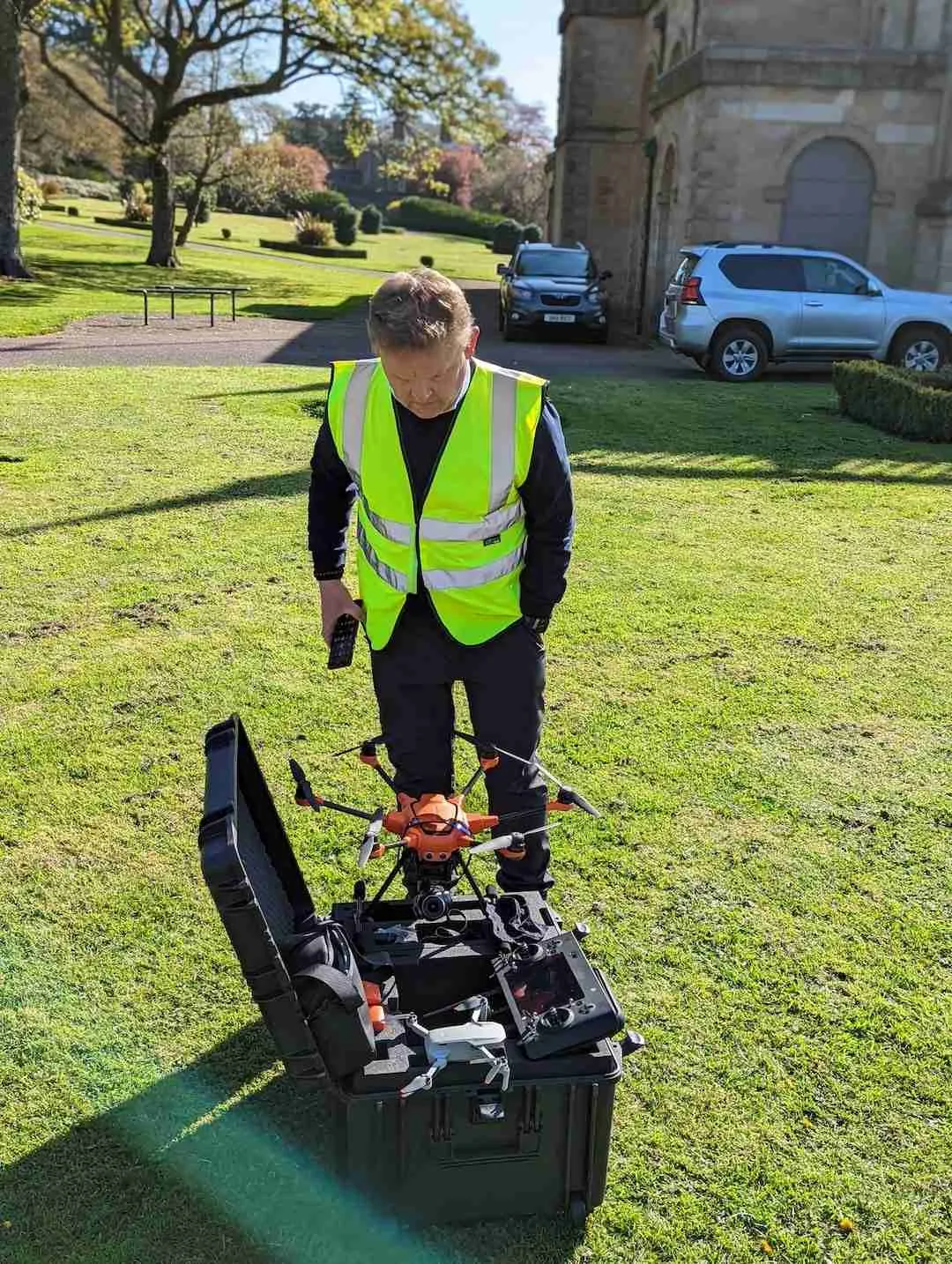
FAQ: Drones and Private Property in the UK
Finally, let’s address some of the most Frequently Asked Questions that arise about flying drones over private property in the UK:
Can my neighbor fly a drone over my garden without my permission?
The Civil Aviation Act 1982 even says an aircraft can fly over property at a reasonable height without it being trespass. However, your neighbor must still respect safety and privacy rules.
They shouldn’t fly within 50m of you or your home if you’re present, and certainly not over you or in a harassing manner. If they are just passing high overhead with a small drone, that’s likely legal.
But if they are constantly buzzing low over your patio, that could constitute nuisance or harassment, and you could potentially take action. In short: occasional responsible overflight is allowed, but excessive or intrusive drone use is not.
If it bothers you, talk to your neighbor – they may be willing to avoid overflying your property. If they refuse and continue in a way that disturbs you, you can contact the police or the CAA with your concerns.
What should I do if I think a drone is spying on me or my property?
They might not realize you feel spied on. If the drone is repeatedly recording you (peering into windows, etc.), this could be harassment or a privacy violation.
Do not attempt to knock it down (that could be illegal damage or unsafe). Instead, contact the authorities. You can call the police on 101 to report a potential harassment or voyeurism incident involving a drone. The police can investigate and have the power to order the operator to stop.
Additionally, you can report the issue to the Information Commissioner’s Office (ICO) if you believe personal data (images of you) are being collected improperly. The ICO can investigate civilian drone misuse under data protection laws. In extreme cases where you fear for your safety or it’s used for stalking, dial 999.
Remember, you do have rights – the law can treat intrusive drone surveillance as harassment (as analogous cases have shown). Take notes of each incident (dates, times) to build your case.
Most importantly, don’t panic – most of the time, a drone seen briefly isn’t spying, but if you’re consistently targeted, the law is on your side to stop it.
I’m a drone pilot – what should I do if someone accuses me of invading their privacy or trespassing private property?
You can mention that UK law allows overflight in the airspace, but you understand their concerns. Offer to show them what you filmed – transparency can diffuse suspicion. If you realize you unintentionally captured something private, offer to delete it. Educate them about the Drone Code you’re following.
Most reasonable people, once informed, will be okay. If they remain very upset, it might be wise to apologize for discomfort caused and simply avoid flying near their property in the future (even if you believe you’re right – being a good neighbor might trump being technically correct).
However, if they threaten you or your equipment, prioritize safety – you can involve the police if someone is attempting to harm you or confiscate your drone unlawfully. Always have your documentation (Flyer ID, etc.) to show you’re a licensed/legit operator – it adds credibility to your case that you know what you’re doing
Are there any proposals for new UK laws that might change the rules on flying over private property?
Future changes might include remote ID requirements (broadcasting drone ID digitally) which can address “mystery drone” issues. There’s also ongoing discussion about police using technology to safely disable rogue drones. But specifically for privacy and property, there hasn’t been a new statutory law – the approach has been to apply existing laws (privacy, nuisance) to drones.
Keep an eye on CAA updates or news, as the law can evolve if drone incidents increase. For instance, if courts find current laws insufficient to handle a certain scenario, Parliament might step in. So far, though, the combination of aviation rules and general laws has been used to manage conflicts.
Always ensure you’re up-to-date – as a pilot, join communities or follow official channels; as a property owner, watch news or government announcements on drone regulation.
Hopefully this FAQ clarifies common points of confusion.
The key is balancing rights – drone users have the right to enjoy their hobby or work within legal bounds, and property owners have rights to safety and privacy.
UK law is striving to balance these, and understanding the nuances helps everyone coexist more peacefully.
Sources and Further Reading
For those who want to delve deeper into UK drone laws, privacy regulations, and best practice guidance, here are some authoritative sources and useful references:
- UK Civil Aviation Authority – Drone & Model Aircraft Code: The official Drone Code published by the CAA, which outlines all the rules for flying in the Open category (heights, distances, etc.). (Website: caa.co.uk/dronecode). This should be every drone pilot’s primary guide.
- CAA Registration Requirements: Details on who needs a Flyer ID or Operator ID based on drone weight and camera presence. Clarifies the <250g exceptions and legal obligations, with an easy table.
- Civil Aviation Act 1982 – Section 76: The legislation text that provides immunity from trespass for reasonable flights and imposes strict liability for damage. Available on legislation.gov.uk. This is more for legal enthusiasts wanting the exact wording.
- Air Navigation Order 2016 (as amended): The law containing drone operational rules (e.g., Article 94, 95, 241). CAP 393 is the CAA publication of ANO.
- Information Commissioner’s Office (ICO) – CCTV and Drones Guidance: The ICO’s guidance on using cameras (including drones) in compliance with data protection law. (Website: ico.org.uk, search “drones CCTV code”). Great for understanding privacy obligations if your drone has a camera.
- “Navigating the skies: UAVs and air rights over private property” – Michelmores Law: An insightful article by a UK law firm that discusses landowner air rights, trespass, and nuisance in relation to drones. It references the Bernstein case and Section 76 of the CAA 1982. Useful for grasping the property law perspective in lay terms.
- Gorvins Solicitors Blog – “Rise in Drones Leading to Neighbour Disputes”: Explores the common neighbour complaints (spying, nuisance) and legal recourse. (Website: gorvins.com, News & Blog section). Provides context to how rapidly increasing drone ownership has impacted residential areas.
- UK Defence Journal – “National Trust admits it can’t ban drone flights over its land”: News piece explaining the National Trust’s policy vs. actual legal abilityukdefencejournal.org.uk. Good for understanding private landowner limits regarding airspace.
- London Evening Standard – “Hackney filmmaker fined… for flying illegal drone over Hyde Park”: News article on the Hyde Park incident. Illustrates practical enforcement of rules in an urban setting.
- House of Lords EU Committee Report on Civilian Drones (2015): An older but interesting read that influenced UK drone policy (it called for registration and more education). Shows the policy background, though some recommendations were superseded by new regulations.
- BMFA (British Model Flying Association) and FPV UK: If you fly models or FPV drones, these associations have their own handbooks and exemptions (like Article 16 Authorization) which allow certain operations (e.g. FPV racing in designated clubs) with relaxed rules. Check their websites for specifics if relevant to you.
- Operation Foreverwing Announcement (NPCC): Police press releases or CAA announcements about Operation Foreverwing (2021) which detail the police’s approach to drone enforcement. Helpful to know how enforcement is coordinated.
- Citizen’s Advice – Neighbour disputes (CCTV & drones): The Citizen’s Advice page touches on drone concerns and points readers to the ICO for privacy issues. Good for understanding your options as a concerned neighbour.
By consulting these sources, you can get the official line straight from the regulators, as well as interpretations from legal experts and examples from news events.
The regulatory environment for drones is dynamic, so keeping an eye on updates is wise. The above resources will equip you with both the letter of the law and practical insights, ensuring you fly your drone over private property in UK with confidence and compliance.

