

Your drone’s erratic flight can stem from several issues. Calibration problems with sensors like the compass, IMU, and GPS can affect stability. Uneven weight distribution, often caused by adding accessories, disrupts balance. Damaged or incorrectly installed propellers lead to poor performance. Faulty motors or wind interference can cause drift.
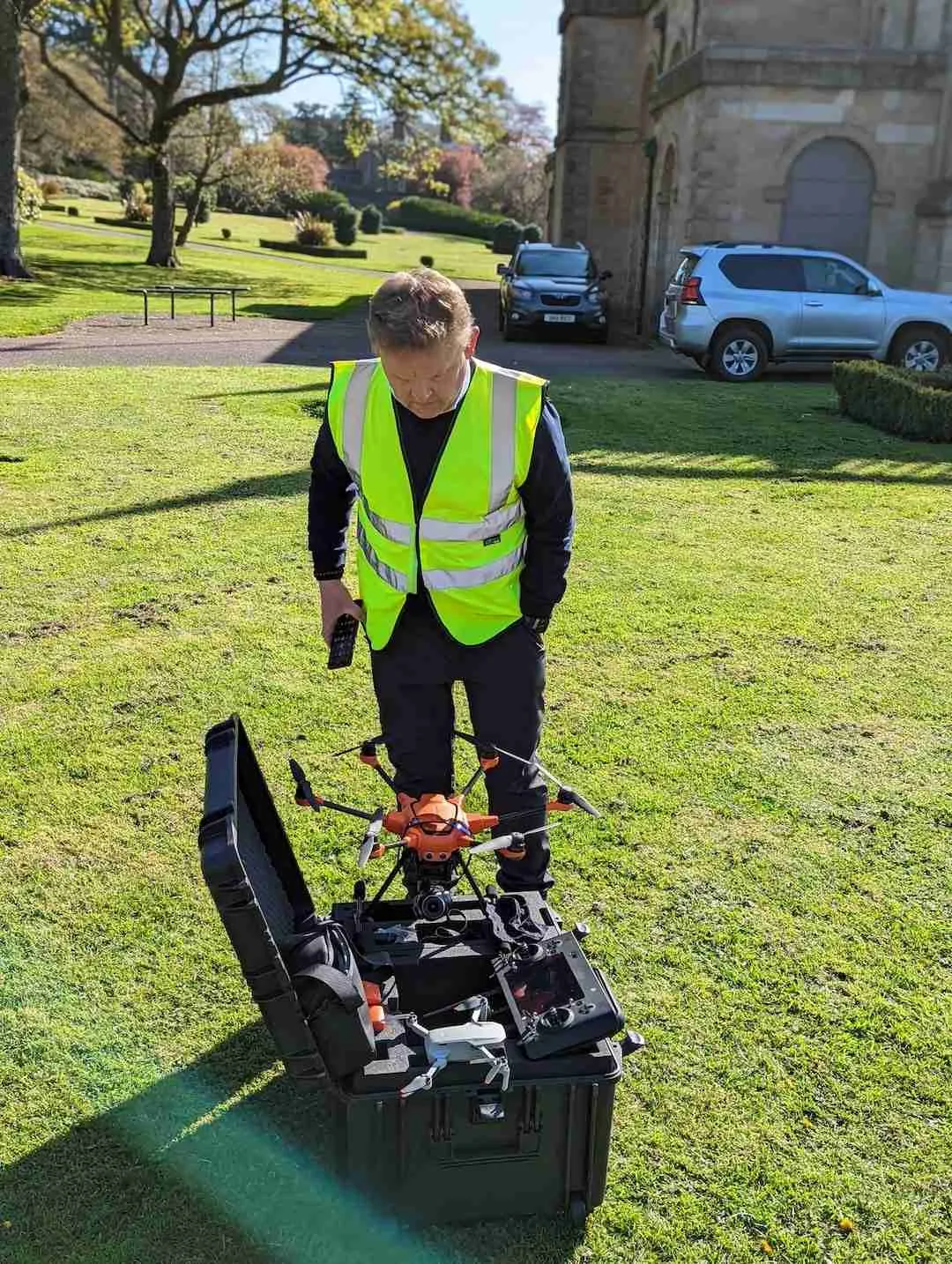
Guarantee your controller is properly calibrated and check for any firmware or software glitches. Structural damage to the drone’s frame can also impact flight.
Regular maintenance, including sensor recalibration and propeller inspection, is essential for straight flight.
By addressing these factors, you’ll be on your way to smoother, more controlled drone operation.
Calibration problems
If your drone isn’t flying straight, calibration issues are likely the culprit. The sensors in your drone play an essential role in its stability and flight performance. When these sensors aren’t properly calibrated, your drone may drift or fly erratically, making it difficult to control.
There are three main sensors you need to focus on: the compass, the Inertial Measurement Unit (IMU), and the GPS (if your drone has one).
The compass helps your drone determine its orientation, the IMU measures acceleration and rotation, and the GPS provides location data.
If any of these sensors are off, your drone’s flight path will be affected.
To guarantee smooth, straight flight, you should calibrate these sensors before each flight. This process typically involves following specific steps provided by your drone’s manufacturer.
For example, you might need to rotate your drone in different directions to calibrate the compass or place it on a level surface to calibrate the IMU. By regularly recalibrating your drone’s sensors, you can often resolve issues with straight flight and improve overall performance.
Uneven weight distribution
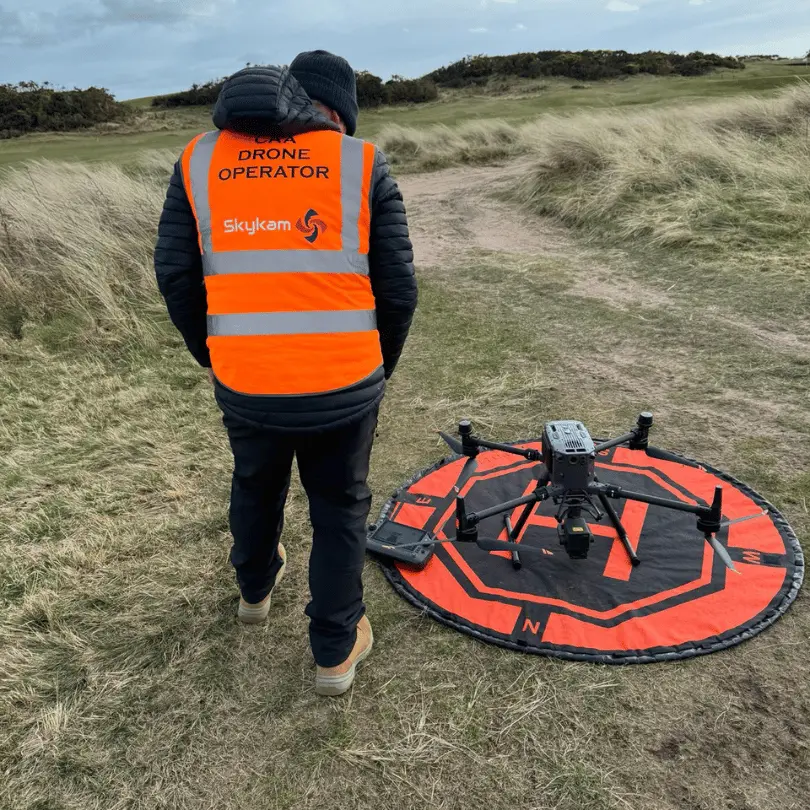
Uneven weight distribution can throw your drone off balance, causing it to veer off course during flight. This issue often arises when you’ve added accessories or modified your drone’s original configuration.
If you’ve attached a camera, extended drone battery, or any other payload to your aircraft, you’ll need to be mindful of how it affects the overall balance.
To guarantee your drone flies straight, it’s vital to distribute the weight as evenly as possible across its frame. Start by examining your drone’s current setup. Look for any obvious imbalances, such as attachments that are considerably heavier on one side.
If you’ve added a camera, consider using a gimbal that allows for better weight distribution. For other accessories, try to position them as close to the drone’s center of gravity as possible.
Propeller issues
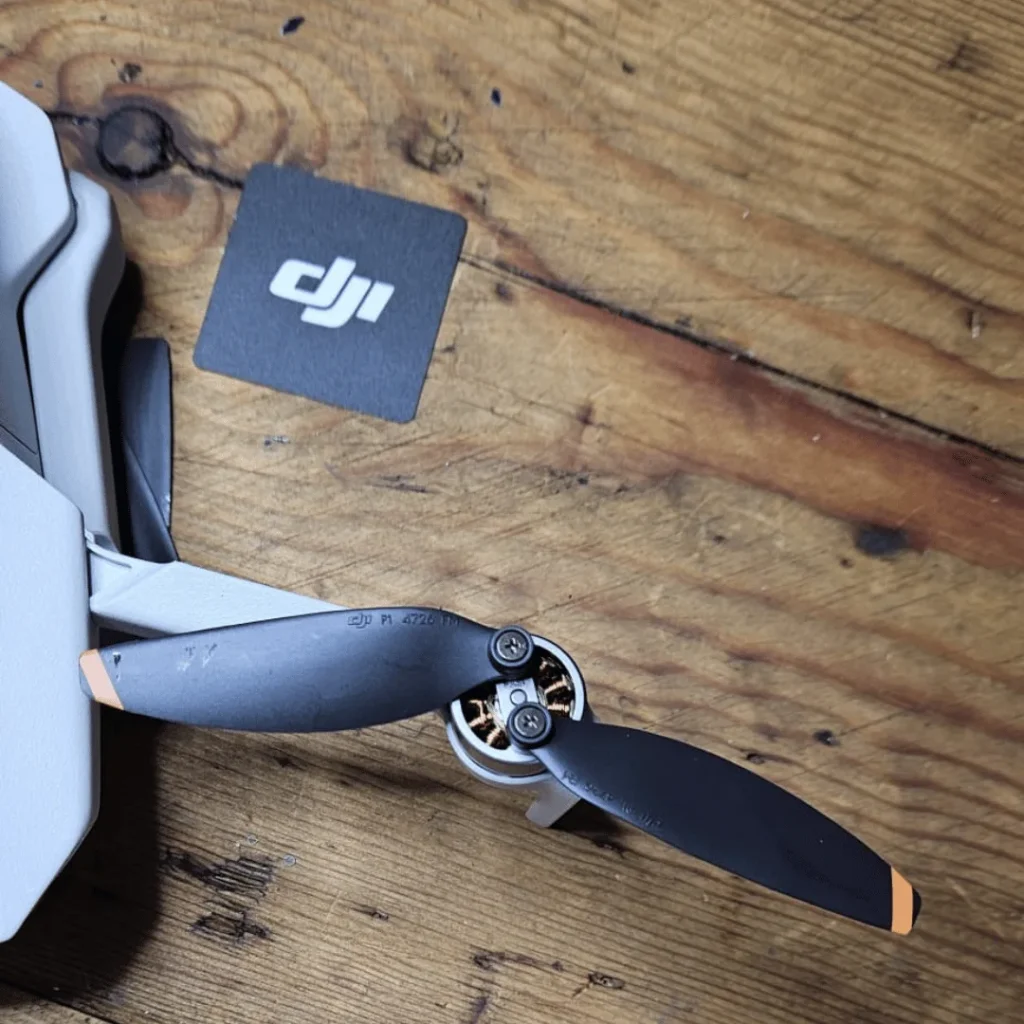
While weight distribution is important, propeller issues can also substantially impact your drone’s ability to fly straight. Your drone’s propellers play a vital role in its flight performance, and any problems with them can lead to erratic behavior.
If you’re experiencing difficulty flying in a straight line, it’s necessary to inspect your propellers carefully.
First, check each propeller for signs of damage. Look for cracks, chips, or bends that could affect their balance and performance. Even minor damage can cause significant flight issues.
Next, make sure that all propellers are tightened correctly and securely attached to the motors. Loose propellers can create instability during flight.
It’s also essential to verify that each propeller is installed in the correct orientation and position. Some drones require specific propellers for each motor, so double-check your drone’s manual for proper placement instructions. Incorrectly installed propellers can cause your drone to fly erratically or even crash.
Motor problems
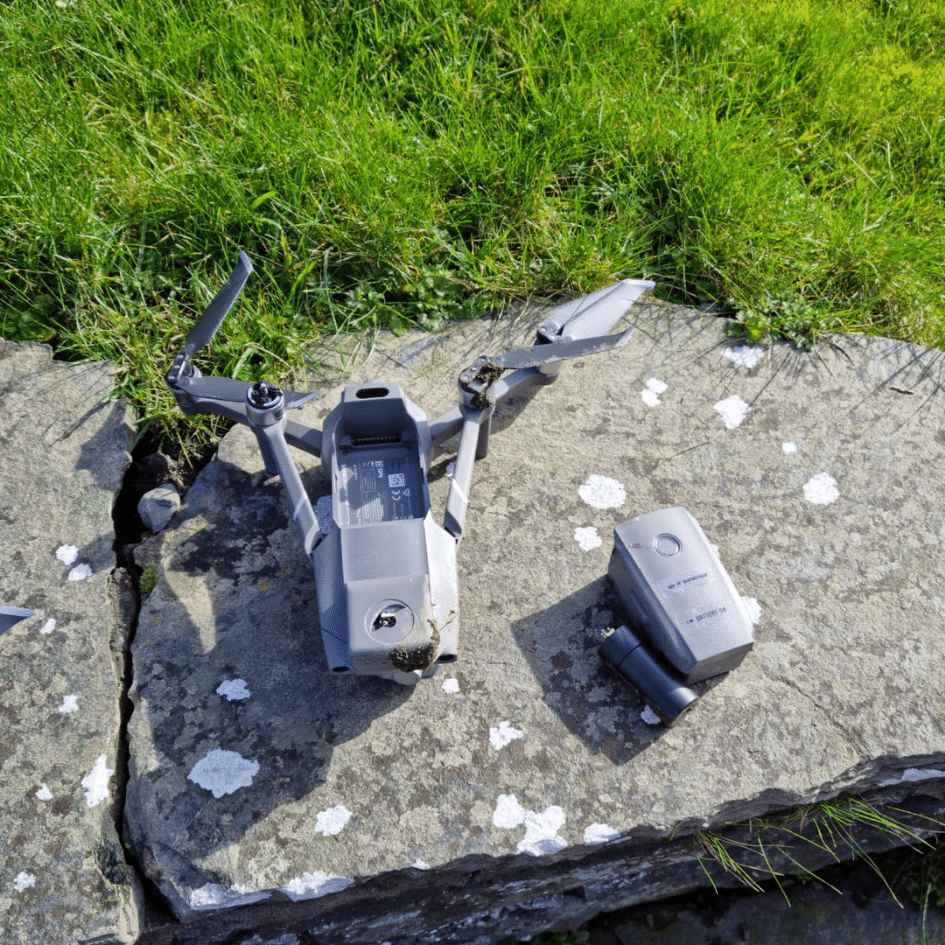
Faulty motors can be another culprit behind your drone’s inability to fly straight. When one or more motors aren’t functioning correctly or are spinning at different speeds, it can cause your drone to fly unevenly.
This imbalance in motor performance can lead to unpredictable flight patterns and make it challenging to maintain a straight course.
To address this issue, you’ll need to inspect your drone’s motors carefully. Look for any visible signs of damage, such as cracks, dents, or loose components.
It’s also vital to make certain that the motors are clean and free from any debris that might impede their performance.
Dust, dirt, or small particles can accumulate over time and affect the motors’ ability to spin smoothly and consistently.
If you notice any issues during your inspection, you may need to clean the motors thoroughly or consider replacing them if the damage is significant.
Regular maintenance of your drone’s motors is essential for ideal performance. By keeping them in good condition, you’ll help make certain that your drone flies straight and responds accurately to your controls, providing a better overall flying experience.
Wind interference
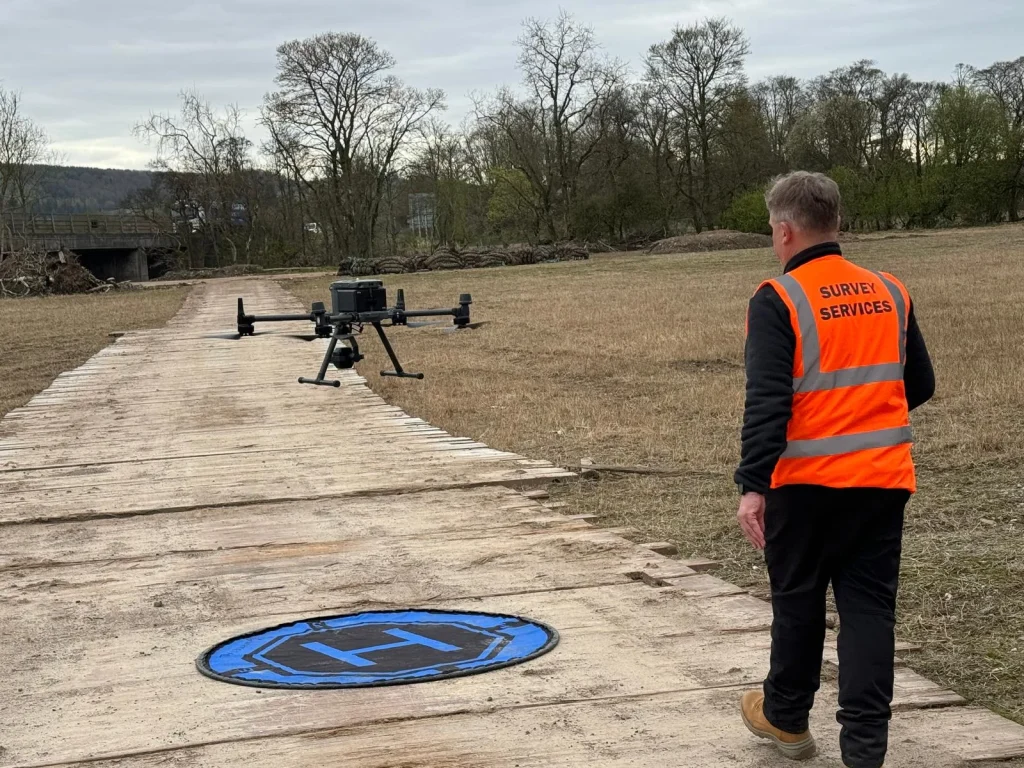
During windy conditions, you’ll often find your drone struggling to maintain a straight flight path. This is particularly true for lighter drone models, which are more susceptible to wind interference.
Strong or gusty winds can drastically impact your drone’s ability to fly in the direction you intend, causing it to drift or veer off course.
To mitigate the effects of wind on your drone’s flight, you have a few options. First, consider flying in calmer weather conditions when possible. Early mornings or late evenings often offer more stable air, making it easier to control your drone.
If you must fly in windy conditions, you’ll need to adjust your flight style. This might involve compensating for wind drift by flying slightly into the wind or making more frequent course corrections.
Additionally, some drones have wind resistance features or modes that can help stabilize flight in breezy conditions. Familiarize yourself with your drone’s capabilities and settings to make the most of these features.
Controller calibration
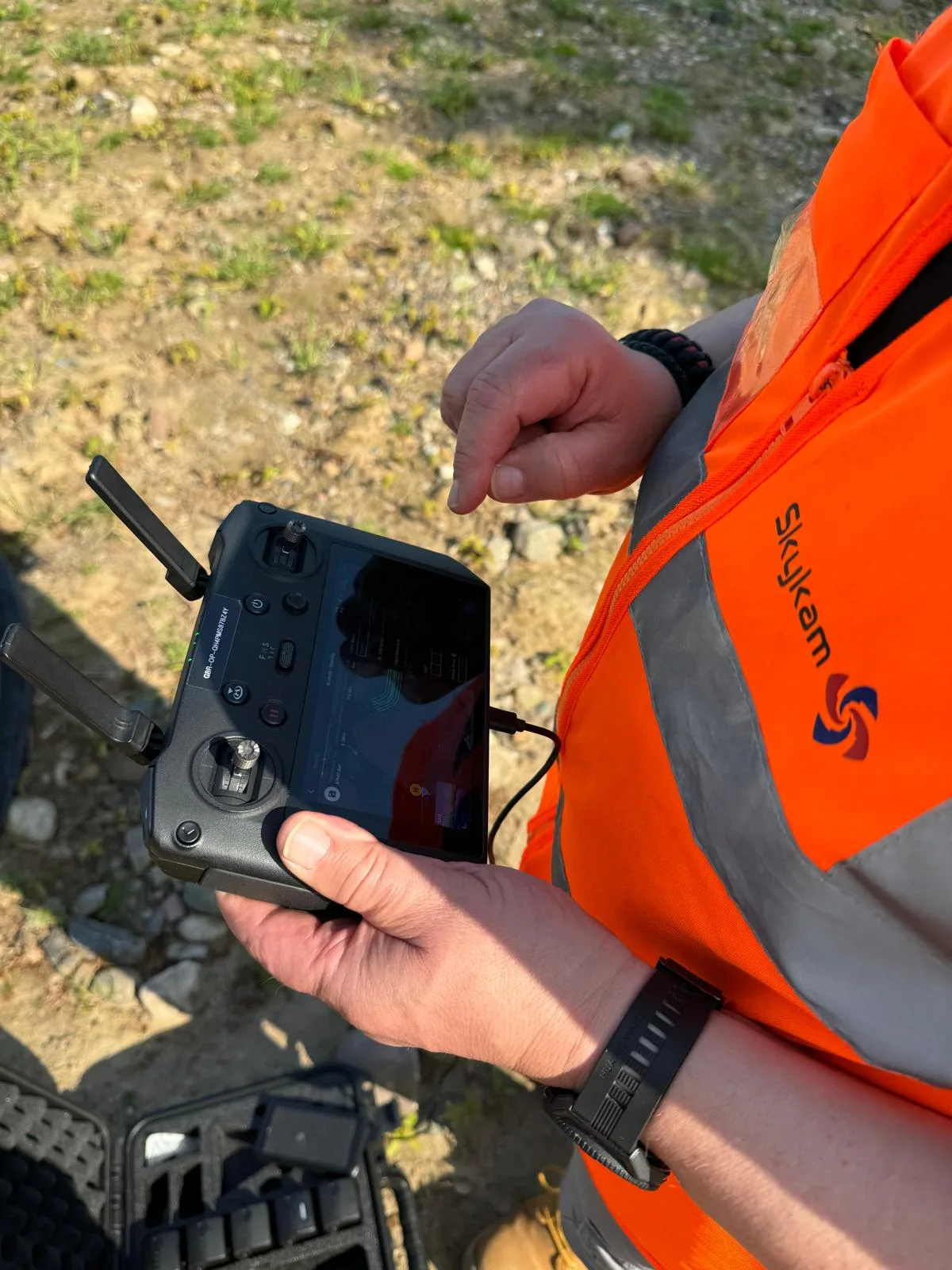
When your drone isn’t flying straight, the problem mightn’t be with the aircraft itself but with your controller. It’s crucial to ponder that your controller may need calibration, which can drastically impact your drone’s flight performance.
Calibration guarantees that the controller’s inputs accurately translate to the drone’s movements, maintaining precise control during flight.
To verify if your controller needs calibration, pay attention to the position of the control sticks when you’re not touching them.
They should naturally return to the center position when released. If they don’t, or if you notice any drift in your drone’s movement when the sticks are centered, it’s time to calibrate.
Most modern drone controllers have built-in calibration procedures that you can access through the drone’s app or the controller’s settings menu. Follow the manufacturer’s instructions carefully to properly calibrate your controller.
Regular calibration of your controller is a good practice, especially if you’ve experienced any bumps or drops that might’ve affected its internal components.
By keeping your controller properly calibrated, you’ll guarantee more accurate and stable flights, reducing the chances of your drone veering off course unexpectedly.
Firmware and software issues
While controller calibration is important, your drone’s erratic flight could also stem from firmware or software issues that are often overlooked. Firmware, the software that controls your drone’s hardware, plays a pivotal role in its performance.
Outdated firmware can lead to various flight problems, including difficulty maintaining a straight path.
To address this issue, you’ll want to check for firmware updates regularly. Most drone manufacturers provide easy-to-use drone apps or software for updating your device.
It’s indispensable to keep both your drone and controller updated to guarantee they’re working in sync. When updating, follow the manufacturer’s instructions carefully to avoid any complications.
Software conflicts can also cause flight issues. If you’ve recently installed new apps or made changes to your drone’s settings, these could be interfering with its normal operation.
Try reverting any recent changes or uninstalling newly added apps to see if this resolves the problem.
If issues persist, consider performing a factory reset on your drone, but be sure to back up any important data first. Remember, keeping your drone’s software and firmware up-to-date is paramount for peak performance and straight flight.
Structural damage
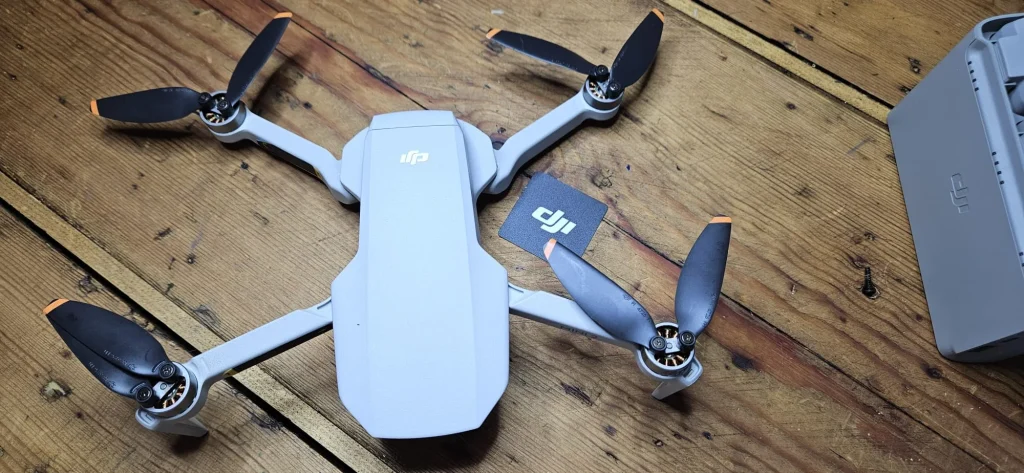
Beyond software issues, structural damage can notably impact your drone’s ability to fly straight. Any physical harm to your drone’s frame or components can critically alter its flight characteristics, making it difficult to maintain a straight path.
It’s vital to routinely inspect your drone for signs of damage or loose parts, as even minor issues can lead to erratic flight behavior. When examining your drone, pay close attention to the frame, propellers, motors, and any external sensors.
Look for cracks, dents, or bends in the frame that could affect its balance or rigidity.
Check the propellers for chips, cracks, or warping, as damaged blades can cause vibrations and uneven lift. Ensure all motors are securely attached and spinning freely without any unusual sounds. Examine the landing gear, camera mount, and any other attachments for stability and proper alignment.
If you notice any damage, it’s indispensable to address it promptly. Depending on the severity, you may need to replace parts or seek professional repair.
Flying with a damaged drone can lead to further complications and potentially dangerous situations. By maintaining your drone’s structural integrity, you’ll help ensure it flies straight and performs as expected.
Conclusion
If your drone isn’t flying straight, you’ve got several potential issues to address.
Check your calibration settings, guarantee even weight distribution, and inspect your propellers and motors.
Don’t forget to evaluate wind interference and controller calibration.
Firmware and software problems can also cause erratic flight, so update when necessary.
Finally, examine your drone for any structural damage.
By methodically working through these factors, you’ll likely identify and resolve the issue, getting your drone back on a steady flight path.

