
Your drone footage may be choppy due to several factors. Incorrect frame rate settings, mismatched shutter speeds, or low-quality SD cards can cause stuttering and dropped frames. Outdated firmware or software conflicts might also lead to processing issues. Environmental conditions, like strong winds, can shake your drone and create unstable video.
To address these problems, guarantee your camera settings are optimized, use high-quality SD cards, keep your drone’s software up-to-date, and fly in calm conditions.
Post-processing techniques, such as software stabilization and frame interpolation, can help smooth out choppy footage.
By understanding these causes and implementing solutions, you’ll be on your way to capturing smoother, more professional-looking drone videos.
Common Causes of Choppy Footage
If you’re experiencing choppy footage from your drone, several common issues could be at play.
Your frame rate settings might be incorrect, your shutter speed could be off, or you might’ve problems with your SD card’s write speed.
Additionally, software or firmware issues on your drone or environmental factors, such as strong winds or electromagnetic interference, can contribute to less-than-smooth video capture.
Incorrect frame rate settings
Your drone’s frame rate settings play an essential role in determining the smoothness of your footage. When you’re experiencing choppy video, it’s often due to a mismatch between the frame rate you’ve set for recording and the frame rate used during playback.
This discrepancy can cause your footage to appear jerky or stuttering, even if the original recording was smooth.
To avoid this issue, it’s pivotal to understand the relationship between your drone’s recording frame rate and your playback device’s capabilities.
Most drones offer various frame rate options, such as 24fps, 30fps, or 60fps.
It’s important to choose a frame rate that’s compatible with your intended playback method.
For instance, if you’re planning to view your footage on a standard TV, which typically displays at 30fps, recording at 60fps might result in choppy playback.
Similarly, if you’re aiming for a cinematic look, you might want to stick to 24fps.
Always verify that your editing software and playback devices can handle the frame rate you’ve chosen for recording.
By aligning these settings, you’ll considerably reduce the chances of experiencing choppy drone footage.
Shutter speed issues
Shutter speed plays a pivotal role in determining the smoothness of your drone footage. If you’re experiencing choppy video, it’s possible that your shutter speed is too fast for your chosen frame rate.
This mismatch can lead to a stuttering effect that’s noticeable when you play back your footage.
To avoid this issue, it’s important to understand the 180-degree shutter rule. This guideline suggests that your shutter speed should be about double your frame rate.
For example, if you’re filming at 30 frames per second (fps), you’ll want to set your shutter speed to around 1/60th of a second.
This ratio helps create natural-looking motion blur between frames, resulting in smoother video playback.
If your shutter speed is considerably faster than what the 180-degree rule recommends, such as 1/1000th of a second for 30 fps footage, each frame becomes an extremely crisp, distinct image.
While this might sound desirable, it actually creates a jarring effect when the frames are played in sequence.
The result is footage that looks choppy or stuttery, lacking the fluid motion you’re aiming for in your drone videos.
SD card problems
Another often overlooked culprit behind choppy drone footage is the SD card you’re using to store your videos.
The quality and performance of your SD card can considerably impact the smoothness of your recordings. If you’re experiencing choppy playback, it’s worth investigating whether your SD card is up to the task.
When you’re capturing high-resolution video with your drone, you’re dealing with large amounts of data that need to be written quickly and efficiently.
A slow SD card can’t keep up with the incoming data stream, leading to dropped frames or corrupted files.
This results in footage that appears choppy or jerky when played back.
Additionally, faulty SD cards can cause intermittent recording issues, further compromising the quality of your videos.
To avoid these problems, invest in a high-quality, high-speed SD card that’s compatible with your drone’s specifications. Look for cards with fast write speeds and sufficient storage capacity for your needs.
Regularly format your SD card and replace it if you notice any signs of degradation or unreliability.
By ensuring you’re using a suitable, properly functioning SD card, you can eliminate one of the common causes of choppy drone footage.
Software or firmware issues
Software and firmware issues can be sneaky culprits behind choppy drone footage, often catching pilots off guard.
These problems may not be immediately apparent, but they can greatly impact the quality of your aerial videos. Outdated firmware, in particular, can cause your drone’s camera to struggle with processing and recording smooth footage.
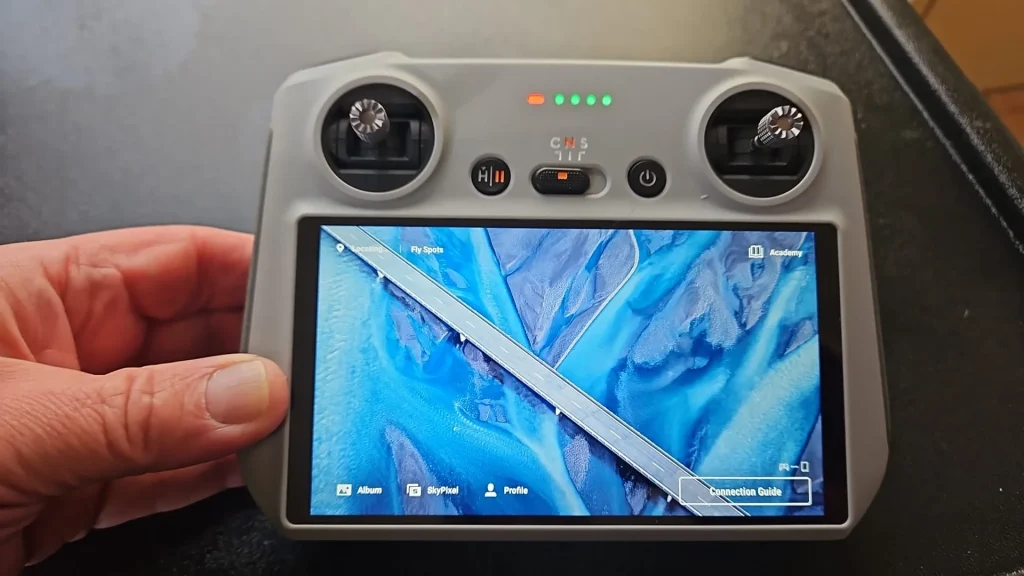
It’s vital to regularly check for and install any available firmware updates for your drone and its components.
Software conflicts can also lead to choppy footage.
This might occur if you’re using third-party apps or software that isn’t fully compatible with your drone’s operating system.
To avoid this, stick to the manufacturer’s recommended software for flight control and video editing.
If you’ve recently updated your drone’s firmware or installed new software, and you notice your footage has become choppy, consider rolling back to a previous version that worked well.
Additionally, make sure that your drone’s internal software settings are optimized for smooth video capture.
This may include adjusting frame rates, resolution, and bitrates to match your drone’s capabilities and your memory card’s write speed.
By addressing these software and firmware issues, you can dramatically improve the quality of your drone footage.
Environmental factors
While software issues can be tricky, environmental factors often play a more visible role in causing choppy drone footage.
One of the most important environmental factors you’ll encounter is wind. Strong winds can buffet your drone, making it difficult to maintain a steady position in the air.
This constant movement translates directly to your footage, resulting in shaky or jerky video that’s far from the smooth, cinematic shots you’re aiming for.
Another environmental factor to ponder is the speed at which you’re flying your drone.
Rapid movements, whether caused by wind or your own control inputs, can lead to choppy footage.
When you move your drone too quickly, the camera may struggle to adjust and stabilize, leading to abrupt changes in the frame that appear choppy when played back.
To mitigate these issues, try flying your drone on calmer days with less wind.
If you must fly in windy conditions, move your drone more slowly and deliberately. Use gentle, gradual movements when changing direction or altitude.
By being mindful of these environmental factors and adjusting your flying technique accordingly, you can dramatically improve the stability of your drone footage.
Improve Hardware and Software
To improve your drone footage quality, you’ll need to focus on both hardware and software upgrades.
Consider using a gimbal, which stabilizes your camera and reduces shakiness, resulting in smoother video.
It’s also pivotal to regularly update your drone’s firmware, as manufacturers often release improvements that can enhance video performance, and don’t forget to invest in a fast SD card, which can prevent dropped frames and guarantee your footage is recorded smoothly.
Use a gimbal
A drone’s gimbal is your secret weapon for achieving smooth, stable footage. This motorized stabilization system counteracts the natural movements and vibrations of your drone, ensuring your camera remains level and steady throughout your flight.
If you’re experiencing choppy footage, it’s crucial to make sure your gimbal is functioning correctly and properly calibrated.
Most modern DJI drones come equipped with built-in gimbals, which is a significant advantage for aerial videographers. These integrated systems are designed to work seamlessly with your drone’s camera, providing optimal stabilization.
However, even the best gimbals need proper maintenance and occasional calibration to perform at their best.
To get the most out of your gimbal, start by checking its physical condition. Look for any signs of damage or loose parts.
Next, ensure it’s clean and free from debris that could interfere with its movement.
Regularly update your drone’s firmware, as these updates often include improvements for gimbal performance.
If you’re still experiencing issues, consult your drone’s manual for specific calibration instructions.
Post-Processing Techniques
You can considerably improve choppy drone footage through post-processing techniques.
Software stabilization tools can smooth out shaky videos, while frame interpolation can add extra frames to create a more fluid motion.
Additionally, adjusting the playback speed of your footage can help mask choppiness, allowing you to create a more polished final product.
Software stabilization
Software stabilization offers a powerful post-processing solution to smooth out choppy drone footage. If you’re struggling with shaky or uneven video, this technique can considerably improve the quality of your final product.
By using specialized video editing software, you can apply algorithms that analyze and correct the motion in your footage, resulting in smoother, more professional-looking shots.
To start, you’ll need to choose a suitable video editing program. Popular options include DaVinci Resolve, Adobe Premiere Pro, and Final Cut Pro.
These software packages come with built-in stabilization tools that are specifically designed to address issues like camera shake and sudden movements.
Once you’ve imported your drone footage into the software, you can apply the stabilization effect to your clips. The software will then work to reduce unwanted motion, creating a more stable and visually appealing result.
It’s crucial to keep in mind that while software stabilization can greatly improve your footage, it’s not a substitute for good flying technique.
For best results, combine careful piloting with post-processing stabilization to achieve the smoothest possible drone footage.
Frame interpolation
Frame interpolation, a cutting-edge post-processing technique, can work wonders in smoothing out choppy drone footage by generating additional frames between existing ones.
This method effectively increases the frame rate of your video, resulting in smoother motion and a more polished final product.
Software like Topaz Video AI utilizes artificial intelligence to analyze your footage and create these intermediate frames, seamlessly blending them with the original content.
When you apply frame interpolation to your choppy drone footage, you’re crucially filling in the gaps between the frames you’ve captured.
This process helps to reduce the jerky or stuttering appearance that often plagues low frame rate videos.
The software examines the movement and details in your existing frames, then intelligently predicts and generates new frames that logically fit between them.
The result is a more fluid and natural-looking video that can dramatically enhance the viewing experience.
It’s noteworthy that while frame interpolation can greatly improve the smoothness of your footage, it’s not a substitute for capturing high-quality, stable footage in the first place.
However, it’s an exceptional tool for refining and enhancing your drone videos in post-production.
Adjust playback speed
Tweaking the playback speed of your drone footage can be a surprisingly effective trick to smooth out choppy sequences.
When you’re faced with footage that appears jerky or uneven, slightly increasing the playback speed can help mask these imperfections.
This technique works by reducing the time between frames, which can make changes appear smoother to the human eye.
To implement this method, you’ll want to experiment with speeds between 1.3x and 1.5x the original pace. These subtle increases are often enough to improve the overall flow without making the footage appear unnaturally fast.
It’s crucial to remember that this technique won’t fix severely choppy footage, but it can be a useful tool for minor imperfections.
When adjusting playback speed, pay close attention to any audio in your footage, as it will also be affected.
You may need to separate the audio track and adjust it independently to maintain natural sound. Additionally, be mindful of how increased speed might impact the mood or intended pacing of your video.
Use this technique carefully, and always preview your results to confirm the adjustments enhance rather than detract from your final product.
Flying Techniques
To improve your drone footage, you’ll need to master several flying techniques.
Focus on executing smooth, deliberate movements with your drone, and try to combine different types of movement for more dynamic shots.
It’s vital to maintain a consistent altitude during your flight, and always consider wind conditions, which can greatly affect your drone’s stability and the resulting footage quality.
Smooth movements
In order to capture smooth drone footage, you’ll need to master the art of gentle, controlled flying. The key to achieving this is to operate your drone with slow, steady movements, avoiding any abrupt changes in direction or speed.
When you fly your drone smoothly, you’re less likely to introduce unwanted jitters or shakiness into your footage.
To accomplish this, focus on making gradual adjustments to your drone’s position and speed. Instead of quickly pushing the control sticks to their maximum, apply gentle pressure and increase it gradually as needed.
This approach allows for more precise control and smoother shifts between movements.
When changing direction, do so in a fluid, arcing motion rather than sharp turns. Practice maintaining a consistent speed throughout your flight, as sudden accelerations or decelerations can result in choppy footage.
Combine movements
Building on the concept of smooth movements, you’ll want to master the art of combining different motions for even more dynamic and fluid drone footage.
This combination creates a more natural and cinematic feel to your shots, reducing the choppy appearance that can plague amateur drone videos.
When you’re flying your drone, try to think in terms of fluid, continuous motion rather than abrupt changes in direction.
For example, as you move your drone sideways, gradually introduce a forward or backward element to the flight path.
This approach allows you to capture a wider range of scenery while maintaining a smooth, professional look.
It’s important to practice these combined movements regularly, as they require a certain level of coordination and finesse.
Start with slow, gentle movements and gradually increase your speed and complexity as you become more comfortable.
Remember, the goal is to create footage that flows seamlessly, guiding the viewer’s eye through the scene without jarring shifts or sudden alterations in viewpoint.
One effective technique is to merge horizontal movement with forward or backward motion, rather than relying solely on hard pans.
Maintain consistent altitude
Maintaining a consistent altitude is critical for capturing smooth, professional-looking drone footage.
When you fly your drone at a steady height, you’re helping to keep your shots stable and reducing unwanted jitters or jumps in your video.
This technique is especially important when you’re filming landscapes, buildings, or any subject that requires a steady perspective.
To maintain a consistent altitude, you’ll need to focus on your drone’s controls and pay attention to its height readings.
Many modern drones come equipped with altitude hold features, which can help you keep your drone at a fixed height automatically. If your drone doesn’t have this feature, you’ll need to manually adjust the throttle to maintain your desired altitude.
Practice is key to mastering this skill.
Start by flying your drone at a set altitude of less than 400 feet and try to keep it there as you move horizontally.
As you become more comfortable, you can experiment with gradual changes in altitude to add dynamic elements to your footage.
Remember, sudden changes in height can make your footage appear choppy, so aim for smooth, controlled movements when adjusting your drone’s altitude.
Consider wind conditions
While keeping your drone at a steady altitude is important, you’ll also need to factor in wind conditions for smooth footage. Wind can substantially impact your drone’s stability and movement, leading to choppy or shaky video.
To mitigate this issue, try to fly your drone on calm days when possible. This will give you the best chance of capturing smooth, professional-looking footage.
However, if you must fly your drone in windy conditions, you’ll need to adjust your flying technique. First, be aware of wind direction and strength.
Fly into the wind when possible, as this will give your drone more stability. When flying with the wind, reduce your speed to maintain control.
You may also need to increase your drone’s responsiveness in the settings to compensate for wind gusts.
Additionally, consider using a lower frame rate when filming in windy conditions, as this can help smooth out some of the choppiness in post-processing.
Remember, practice makes perfect.
The more you fly in various wind conditions, the better you’ll become at adjusting your technique to capture smoother footage, regardless of the weather.
Conclusion
You’ve now learned several ways to improve your drone footage quality.
By adjusting camera settings, upgrading hardware and software, applying post-processing techniques, and refining your flying skills, you can greatly reduce choppiness.
Remember, smooth footage often results from a combination of these approaches.
Don’t be discouraged if your first attempts aren’t perfect; practice and experimentation are key.
With persistence and the right techniques, you’ll soon be capturing professional-looking, smooth drone videos that you’ll be proud to share.

