
The use of drones has surged in the UK in recent years, with hundreds of thousands of registered drone operators as of 2025. These unmanned aerial vehicles are employed for hobbies, photography, and commercial purposes, increasingly filling UK airspace.
Alongside their benefits, drones have raised public concerns about privacy, safety, and property rights.
Homeowners often worry about drones hovering over their gardens or near windows, feeling their privacy is invaded. This has led some frustrated individuals to wonder if they can take matters into their own hands by shooting down a drone.
30 Second Summary
- It is illegal under UK criminal and aviation law to shoot down or interfere with a drone, even over private property
- Shooting a drone can result in charges for criminal damage, firearms offences, and loss of firearm licenses
- Interfering with a drone, legally considered an aircraft, can lead to severe aviation law penalties including imprisonment for endangering an aircraft
- Property ownership grants limited airspace rights and does not permit shooting down drones potentially flying legally overhead
- Report concerning drone activity regarding privacy or safety to the police via 101 or 999 instead of attempting to disable it yourself
No You Can’t Shoot Down A Drone
Attempting to shoot down a drone is strongly illegal under UK law. Both criminal law and aviation regulations prohibit destroying or interfering with drones, regardless of whether they are over private property. In essence, a drone is considered property and an aircraft, so any vigilante action against it can lead to serious legal consequences.
Criminal Implications
From a criminal law perspective, destroying someone else’s drone amounts to criminal damage.
A drone is the owner’s property, and intentionally damaging it (such as by shooting it) is no different than smashing a car or camera belonging to someone else.
Media personality Richard Madeley once admitted he considered shooting down a drone over his garden, but, as he put it, “the words ‘criminal damage’ whispered in my ear” – he wisely realized it could land him in trouble with police.
Law firms echo this warning: knocking a drone out of the sky could result in an arrest for criminal damage.
Legal Consequences of Criminal Damage
In the UK, criminal damage is an offence that can carry up to 10 years’ imprisonment if prosecuted on indictment, depending on the severity and value of damage.
Moreover, discharging a firearm in a non-emergency situation introduces additional offenses.
Firing a gun into the air is extremely risky – a missed shot could endanger people or other property, and even a successful hit will send the drone crashing down unpredictably.
Firearms Offenses
Because of these dangers, someone who shoots at a drone may face firearms charges such as possession of a firearm with intent to cause fear or violence.
In a 2019 incident in Kent, for example, a 49-year-old man was arrested after allegedly shooting a drone, on suspicion of criminal damage and possession of a firearm with intent.
In short, using a weapon against a drone is not a lawful option for a private citizen. These are serious charges. At a minimum, the shooter would likely lose any firearms license and could be prosecuted under firearm laws.
Civil Aviation Authority (CAA) Regulations
In the eyes of aviation law, drones are classified as aircraft.
The UK Civil Aviation Authority (CAA) and the Air Navigation Order 2016 (ANO 2016) impose rules that treat interference with any aircraft – manned or unmanned – as a serious offense.
It is illegal to shoot down any unmanned aircraft (drone) flying over your property, and doing so could lead to charges of endangering an aircraft.
The law essentially equates shooting at a drone to shooting at a full-sized airplane.
| Year | Recorded Drone Incidents | Notes |
|---|---|---|
| 2014 | 283 | Drones were a novelty; few complaints ([Drone complaints surge as annoyance grows |
| 2015 | 1,237 | Surge in reports (about 4× higher than 2014) ([Drone complaints surge as annoyance grows |
| 2016 | 3,456 | Triple the 2015 figure (~10 reports per day) ([Drone complaints surge as annoyance grows |
| 2022 | 5,000+ (est.) | Continued growth (extrapolated, as usage expanded)¹ |
Section 240 of ANO 2016
Section 240 of the ANO 2016 states that no person shall recklessly or negligently act in a way likely to endanger an aircraft.
Even a small drone qualifies as an aircraft in this context. A person who causes a drone to crash could be viewed as endangering it.
In practice, police and prosecutors have indeed considered this charge – for instance, a UK law firm notes you could be charged under ANO 2016 for shooting down a drone.
Severe Penalties For Under Aviation Law
The penalties under aviation law are severe.
| Offense | Penalty |
|---|---|
| Endangering the safety of an aircraft (Article 240 of ANO 2016) | Up to 5 years’ imprisonment and an unlimited fine |
| Causing an aircraft (including a drone) to endanger people or property (Article 241) | Up to 2 years’ imprisonment and an unlimited fine |
The UK Drone and Model Aircraft Code (the CAA’s official guidance) reinforces this. If you endanger the safety of an aircraft, you could go to prison for five years. In short, taking potshots at a drone isn’t just a minor rule break – it’s treated as a serious crime.
No Special Exemptions for Property Owners
It’s worth noting that the law does not give property owners any special exemption to shoot down drones.
The skies are not a legal Wild West. Interfering with a drone in flight is unlawful, no matter where it is.
The Metropolitan Police and aviation authorities advise that you cannot shoot down or damage a drone, even if it’s over your house or land. Doing so can result in multiple charges – criminal damage, firearm offenses, and endangering an aircraft – each of which carries hefty penalties.
The combination of these laws makes it abundantly clear that residents must not resort to shooting at drones.
Property Rights and Airspace
Many homeowners feel that “it’s my property, so I should control what’s above it.”
While you do have some rights to the airspace immediately above your land, those rights are limited. UK law does not grant unlimited ownership of the skies. This means a drone flying overhead is not necessarily trespassing, and property owners have very constrained legal justification to remove it themselves.
Extent of Property Ownership
There is a longstanding legal principle (often cited in Latin as cuius est solum eius est usque ad coelum et ad infernos) that whoever owns the land owns it “up to the heavens.”
However, modern law has qualified this principle. In England and Wales, landowners own the airspace only to the height necessary for the ordinary use and enjoyment of their land.
Above that, your ownership interest diminishes. This principle was established in the case Bernstein v. Skyviews & General Ltd [1978], where a High Court judge recognized that to accommodate aviation, an owner’s rights must be restricted to a reasonable height.
In practical terms, you control the air immediately above your garden (for instance, to prevent overhanging structures or branches), but you don’t have a say over aircraft cruising dozens of meters overhead.
Drones often operate in that grey zone of low-altitude airspace. If a drone is extremely low over your garden—say, below your rooftop level—it might infringe on your private space.
Property owners could potentially claim trespass or nuisance if a drone flies so low and so frequently that it interferes with the use and enjoyment of their land.
For example, a drone peeping into bedroom windows or repeatedly buzzing a backyard could be argued as a harassment or privacy nuisance. But these are civil matters to be handled by courts, not self-help by shooting.
Importantly, a one-time flyover at a reasonable height is unlikely to qualify as trespass.
There is no recognized right to shoot down a drone for “trespassing” in the air, because legally the drone may well be in public airspace.
Air Navigation Order and Drone Regulations
Airspace in the UK is regulated by the government (through the CAA), not by individual landowners. The Air Navigation Order (ANO) and related regulations (like the Drone Code) set the rules for where and how drones can fly.
Property owners must understand that drones are allowed to fly over private property as long as the operators follow the rules.
For instance, under the CAA’s Drone and Model Aircraft Code, a drone generally should not fly within 50 meters of people or property that aren’t under the pilot’s control, particularly for drones with cameras or above a certain weight (this was the old rule under ANO Article 95).
This effectively creates a buffer of airspace near the ground where random drones shouldn’t come too close to homes.
In fact, a drone flying over your house at a height above 50 meters is likely not breaking any law by that location alone (assuming it’s not a large crowd or sensitive area).
So if you see a drone high overhead, it may well be operating legally in open airspace.
There are also geographic restrictions set by law.
Drones must stay out of Flight Restricted Zones near airports and not fly above 400 feet (120m) in altitude without special permission.
These rules are all aimed at safety.
For the property owner, it means that while you might feel the air above your home is yours, in reality, it’s part of a shared national airspace governed by CAA rules.
If a drone operator is following those rules, they are within their rights to fly, even over private land.
Your permission is not required for a transit overflight at a lawful altitude.
Owning property does not grant permission to shoot down aircraft above it – and that includes drones.
UK law balances the rights by giving landowners protection against truly intrusive low-flying interference (via civil action for nuisance or privacy violations). However, all decisions about who can fly where are made by regulation, not by the homeowner.
If a drone is truly invading privacy (e.g., hovering low and filming you), that is a matter to report to authorities under existing laws (data protection, harassment, etc.), rather than an excuse to employ force.
The bottom line is that a homeowner does not have a license to defend their “airspace” with violence.
Any attempt to do so runs afoul of both property law and aviation law.
Case Studies of Drones Being Shot Down in the UK
Real-world examples in the UK show how authorities handle individuals shooting down drones – reinforcing that it’s treated as a crime. While such incidents have been relatively rare (drones are still a newer phenomenon), a couple of high-profile cases illustrate the legal consequences one can face.
2019, Kent – Fox Hunt Saboteurs’ Drone
In February 2019, during a fox hunt on the Isle of Sheppey (Kent), hunt saboteurs were using a drone to film the hunt.
A member of the hunt allegedly shot the drone out of the sky with a shotgun. The drone sustained damage but managed to return to its operator with video evidence.
Following a police investigation, a 49-year-old huntsman was arrested on suspicion of criminal damage and possession of a firearm with intent in connection with the incident.
This individual was held in custody as the investigation proceeded.
As of the latest updates from that time, he was facing the possibility of charges for the damage to the drone and the reckless use of a firearm.
The case demonstrated that even in a rural scenario (and despite any provocations by activists), one cannot legally shoot a drone – the immediate result was a criminal arrest.
2023, Cumbria – Drone Shot in Restricted Airspace
On 17 May 2023, an incident occurred in Barrow-in-Furness, Cumbria, that gained the attention of the Air Accidents Investigation Branch (AAIB).
A hobbyist pilot was flying a small DJI Mini 2 drone about 30 m above a private property to film some classic cars, not realizing the area fell within a no-fly zone of a nearby airfield.
A person on the ground spotted the drone, photographed it, and called someone – then returned with a shotgun and shot the drone down, causing it to crash.
The AAIB report noted the drone was destroyed (multiple propellers, legs, and camera damaged), and police opened an investigation into the shooting.
This appears to be the first documented case of a drone being shot down in the UK that was significant enough to involve air safety investigators.
While specific charges were not immediately reported, it’s clear the shooter could face the same kinds of allegations – criminal damage and endangering an aircraft – especially since the incident occurred in regulated airspace.
In other words, even if someone thought they were defending property or enforcing an airfield’s no-fly zone, taking a drone down with a gun prompted a serious law enforcement response.
It’s telling that as of recent years, few (if any) people have actually been convicted in the UK for shooting down a drone, mainly because most understand it’s unlawful.
The above cases, however, show that those who try will likely be arrested and investigated under multiple laws.
UK drone laws are still evolving, and case law is in its infancy.
But the trajectory is clear: authorities do not look kindly on “drone vigilantism.”
If anything, these incidents may set precedents in court once they conclude, potentially resulting in heavy fines or prison terms that will serve as warnings to others.
Until then, the safest assumption is that shooting a drone will bring the police to your door rather than solving any problem.
Recommended Actions for Concerned Property Owners
For property owners troubled by drones repeatedly flying over their land, the advice is to avoid “self-help” measures and instead use legal channels.
While it can be frustrating to feel observed or intruded upon, taking matters into your own hands by disabling a drone is likely to land you in legal trouble.
Do Not Attempt to Disable the Drone
Do not attempt to shoot down, jam, or physically interfere with the drone.
As explained, using force (guns, slingshots, water hoses, signal jammers, etc.) is illegal. You could cause injury or damage, and you would be the one held liable.
The drone itself could crash uncontrollably, endangering people or property below. Any deliberate damage you do can be prosecuted.
In short, vigilante action is off the table.
The CAA’s Drone Code makes it clear you must not endanger aircraft, and interfering with a drone can have serious consequences for you and those around you.
No matter how annoyed you are, resist the temptation to take out the drone yourself.
Reporting to Authorities
If a drone is causing concern – for example, hovering low over your yard or peering into windows – report it to the authorities instead of intervening directly.
In the UK, you can call 101, the non-emergency police number, to report issues with drone activity.
Explain what you observed: the time, the drone’s location, how it was operating, and why it concerned you (safety, privacy, etc.).
The police can assess whether any laws (such as the drone regulations or other offenses like harassment) are being broken.
Many commercial drone pilots actually log their flight plans with local authorities, so police might even be able to confirm if a legitimate flight was scheduled in your area.
If the drone’s operation is unauthorized or dangerous, the police can investigate and take action.
It’s also wise to document the incidents if a drone repeatedly trespasses.
Keep a log of dates and times, and if possible, take photos or videos of the drone (without putting yourself in harm’s way).
This evidence can help authorities identify the drone or its operator.
The police may involve the CAA if necessary, especially if aviation laws are being broken.
If the situation is urgent – for instance, a drone is endangering people (flying near crowds or near an airport flight path) – you should call 999 as an emergency.
But for most nuisance or privacy concerns, 101 is the appropriate channel.
Remember that attempting to disable the drone is not a legal solution; involving law enforcement is the proper course.
Engaging with Drone Operators
Sometimes the simplest resolution is to communicate with the drone’s operator, if you can find them.
Many drone incidents are caused by hobbyists or neighbors who may not realize they are worrying others.
If you can see where the drone operator is (for example, a neighbor in line-of-sight of the drone), it may help to politely express your concerns.
For example, let them know that the drone flying low over your garden made you uncomfortable and ask if they could avoid your property.
Often, a respectful request can resolve the issue – the operator might adjust their flight path or timing once they know it’s bothering someone.
However, use common sense and caution in approaching someone.
Do not confront anyone aggressively or enter into a conflict.
If you feel unsafe approaching the operator (or if you cannot locate them), stick to reporting to the police.
In some cases, if the drone is operated by a company or for a known purpose (real estate photography, utility inspection, etc.), you could contact the company to lodge a complaint.
Additionally, if you suspect the drone is being used for illicit purposes (like burglary scouting or voyeurism), definitely involve the police rather than dealing with it yourself.
Seeking Legal Remedies
Property owners concerned about ongoing drone intrusions can seek advice on civil remedies.
For instance, if a neighbor persistently flies a drone low over your home to harass you, there might be grounds for an anti-social behavior complaint or an injunction.
But these are last resorts to be pursued with legal counsel.
In most cases, working cooperatively or through official channels will solve the problem.
The key takeaway: do not resort to force or illegal deterrents.
Protect your rights by legal means – document the issue and let the authorities handle any rule-breakers.
Potential Legal Reforms and Future Changes
As drone technology evolves and becomes commonplace, UK laws are continually adapting to balance privacy, safety, and innovation.
The current legal framework (criminal damage laws, the Air Navigation Order, data protection laws, etc.) covers many situations, but there are growing calls to update and refine the rules to address drones more specifically.
Here are some potential legal reforms and trends that may shape the near future.
| Offense | Law / Regulation | Maximum Penalties |
|---|---|---|
| Criminal Damage (destroying property, e.g. shooting down a drone) | Criminal Damage Act 1971, s.1 | Up to 10 years’ imprisonment on indictment (for high-value or serious damage); and/or an unlimited fine.¹ |
| Endangering an Aircraft (by reckless act) | Air Navigation Order 2016, Article 240 (ANO 2016) | Up to 5 years’ imprisonment and/or an unlimited fine. (Indictable offense – treated very seriously due to aviation safety.) |
| Endangering Persons/Property with an Aircraft (e.g. causing a drone to crash) | Air Navigation Order 2016, Article 241 | Up to 2 years’ imprisonment and/or an unlimited fine |
| Firearms Offenses (e.g. discharging a gun in public, possession with intent) | Firearms Act 1968 (various sections) | Varies by specific offense; can range up to 5–14 years’ imprisonment (and mandatory license revocation).² For example, possessing a firearm with intent to cause fear of violence carries up to 10 years. |
Strengthening Privacy Protections
There is recognition that drones pose unique privacy challenges – they can hover and record in ways that traditional cameras cannot.
Currently, if a drone with a camera is spying on someone, it may breach laws like the Data Protection Act or the Protection from Harassment Act. However, these laws are not drone-specific.
Lawmakers have discussed creating more explicit regulations around drone surveillance.
For example, requiring “geo-fencing” technology that prevents drones from entering certain private areas or heightening penalties for using drones to snoop.
The UK Information Commissioner’s Office (ICO) has issued guidance to drone users about respecting privacy, and there are calls for tighter rules if those guidelines aren’t followed.
In Parliament, questions have been raised about whether existing privacy and harassment laws are sufficient to stop nuisance drone filming.
We may see proposals that explicitly label intrusive drone photography as a distinct offense, giving homeowners clearer recourse if they are being watched or recorded from above.
Drone Registration and Remote ID
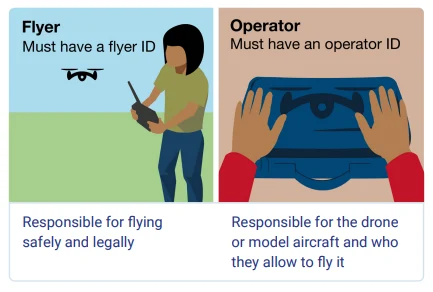
The UK already introduced mandatory drone registration in 2019.
Anyone flying drones above a certain weight or with a camera must register with the CAA and pass a basic test.
By 2023, over half a million UK drone users had registered.
Building on this, one anticipated change is the implementation of remote identification requirements.
This would mean drones broadcast an electronic ID or code that law enforcement (and perhaps the public) can use to identify the operator in real time.
Remote ID is being rolled out in other countries and was part of EU drone regulations.
The UK is looking at similar measures to make it easier to trace drones to their pilots.
If enacted, this could help property owners – instead of guessing who is flying over your house, authorities could quickly identify the drone’s owner and hold them accountable for any misuse.
It’s a reform aimed at preventing anonymous misuse of drones.
Enhanced Police Powers
In response to high-profile incidents like the Gatwick Airport drone disruption in 2018, the government has moved to give police greater authority in dealing with rogue drones.
A new law, the Air Traffic Management and Unmanned Aircraft Act 2021, has granted police the power to ground drones, seize drones, and fine operators for certain offenses.
For example, officers can require a drone to be landed and demand to see the operator’s registration documents.
They can also issue fixed penalty notices for minor drone infractions (avoiding the need for a full prosecution).
Looking ahead, these powers might be expanded or used more aggressively as drone use grows.
The government has consulted on measures like on-the-spot fines and electronically disabling drones that are being misused.
The “Drones Bill” proposals included enabling police to use counter-drone technology (jammers or capture devices) at sensitive locations and even setting age limits for drone operators.
All this is geared towards deterrence – making sure would-be irresponsible operators know they can be quickly caught and penalized.
Clarifying Airspace Rights
Another area of potential development is clarifying the grey zone of low-altitude airspace rights.
Some legal experts have suggested the UK might introduce a concept of “property air rights” up to a certain height – not to allow shooting drones, but to make it easier for landowners to claim nuisance if that airspace is regularly invaded.
This could involve updating civil aviation laws to define how close a drone can come to private dwellings without permission.
As of now, the 50-meter rule in the Drone Code is a guideline for pilots but not a hard-and-fast statute for all situations.
Future regulations might reconcile these into clearer law, for instance by codifying minimum overflight heights in residential areas.
The aim would be to balance drone usage with reasonable privacy expectations, so that people feel their gardens are not free game for constant overflight.
Public Education and Sentiment
Legal reforms often follow public sentiment.
Surveys have shown mixed feelings about drones – people acknowledge their benefits (for commerce, photography, deliveries, etc.) but also express unease about being watched or the potential for accidents.
This public pressure is influencing policymakers.
We might see campaigns to educate both drone users and the general public on mutual respect: drone pilots being taught to avoid homes to respect privacy, and the public being informed about what drones can and cannot do legally.
If drone-related complaints continue to rise, politicians may feel compelled to tighten laws.
Already by 2016, UK police were receiving thousands of drone complaints a year (nearly 3,500 in 2016, triple the year before).
As drones become “commonplace by 2030” (as envisioned by UK authorities), expect ongoing tweaks to the law to ensure safety and privacy keep pace with technology.
Final Words
The legal landscape is moving toward greater regulation of drone operations rather than granting new rights to landowners to attack drones.
We are likely to see more robust enforcement (remote ID, police powers) and possibly new privacy safeguards.
But it’s almost certain that shooting down drones will remain illegal.
Policymakers are focused on integrating drones into society in a safe, privacy-conscious way – which means better rules for operators and better tools for authorities, not a free hand for individuals to take down drones.
Property owners can hope for clearer laws that discourage drone misuse over private land.
But any such changes will still require going through law enforcement and courts, not personal force.

