
In 2024, you can’t legally shoot down a drone in the USA, even if it’s flying over your property. Drones are protected under the Aircraft Sabotage Act, and shooting one down can result in severe penalties, including fines and up to 20 years in prison. The FAA controls all airspace, not property owners.
Instead of taking matters into your own hands, you should contact local law enforcement, file a complaint with the FAA, or try to speak with the drone operator.
Posting ‘No Drone Zone‘ signs might help deter unwanted flights. Remember, attempting to shoot down a drone isn’t a lawful solution to privacy concerns.
There are safer, legal alternatives to explore.
Shooting Drones Is Illegal Under Aircraft Sabotage Act
Three key points you need to know: shooting down drones is illegal, carries severe penalties, and applies even if the drone’s over your property.
Under federal law, drones are classified as aircraft, which means they’re protected by the Aircraft Sabotage Act. This law makes it illegal to willfully damage, destroy, or disable a drone, interfere with its operation, or place destructive devices on it. You’re also prohibited from attempting any of these actions.
If you violate this law, you could face serious consequences, including fines, up to 20 years in prison, or both.
It’s imperative to understand that these penalties apply regardless of where the drone is flying, even if it’s over your private property. The law doesn’t consider the drone operator’s intentions or any perceived privacy violations.
As a property owner, you might feel frustrated if a drone is trespassing or invading your privacy.
However, it’s essential to know that taking matters into your own hands by shooting down or interfering with the drone is illegal.
You must seek legal alternatives to address any drone-related issues, as the federal statute applies broadly to protect all aircraft in U.S. airspace.
FAA Controls Your Airspace, Not Property Owners
Contrary to what you might believe, you don’t own the airspace above your property – the FAA does.
This federal agency has complete jurisdiction over all airspace in the United States, including the area directly above your land. This means that even if a drone is hovering over your backyard, you don’t have the legal right to control that airspace or interfere with the drone’s flight.
The FAA’s authority extends from the ground up, covering everything from the lowest altitudes to the upper reaches of the atmosphere.
This control is vital for maintaining safe and organized air traffic, including commercial flights, private planes, and unmanned aircraft like drones.
As a property owner, your rights are limited to the surface of your land and any structures on it.
You can’t legally prevent aircraft, including drones, from flying over your property as long as they’re complying with FAA regulations.
This might seem unfair, but it’s a necessary measure to guarantee consistent air traffic management across the country.
Understanding this distinction is imperative for property owners who might be tempted to take action against drones they perceive as trespassing.
Local US Laws Prevent You Shooting At Drones
While the FAA’s control over airspace is clear, it’s important to understand that local laws also play a role in regulating actions against drones.
When considering shooting down a drone, you need to be aware of both federal and local regulations.
For instance, in Texas, municipalities have the authority to regulate firearm discharge within city limits. Many Texas cities have implemented ordinances that prohibit or restrict the use of firearms in populated areas.
These local laws often have exceptions for self-defense situations or at approved shooting ranges, but they generally don’t allow for shooting at drones.
Legal Alternatives To Shooting Down A Drone
If you’re concerned about a drone flying near your property, you have several legal options to address the issue without resorting to shooting it down.
You can start by contacting local law enforcement, filing a complaint with the FAA, or attempting to speak with the drone operator directly.
Additionally, you might consider posting ‘No Drone Zone‘ signs on your property or pursuing civil trespassing claims if the situation persists.
Contact Local Law Enforcement
One of the most effective and legal ways to address concerns about a drone is to contact your local law enforcement agency.
When you encounter a drone that’s causing distress or seems to be operating illegally, don’t hesitate to call the police. They’re trained to handle such situations and can investigate the matter professionally.
When you contact law enforcement, be prepared to provide specific details about the incident. Describe the drone’s appearance, size, and behavior.
Mention the date, time, and location of the sighting.
If possible, try to determine the direction the drone came from or where it went.
This information can help officers locate the operator.
File FAA Complaint
Filing a complaint with the Federal Aviation Administration (FAA) offers a legal and effective way to address drone-related concerns without resorting to dangerous or illegal actions like shooting them down.
To file a complaint, you’ll need to gather essential information about the incident, including the date, time, location, and a description of the drone and its activities.
If possible, capture photos or videos of the drone and note any identifying features or markings.
You can report the incident online through the FAA’s drone complaint website or call their Aviation Safety Hotline at 1-866-835-5322. When filing your complaint, provide a detailed description of how the drone violated federal regulations and any safety concerns you have.
Be sure to include your contact information so the FAA can follow up if needed.
After submitting your complaint, make note of any reference number provided and follow up if you don’t receive a response.
Remember, the FAA primarily focuses on safety violations.
For privacy concerns, it may be more appropriate to contact local law enforcement. Always report immediate safety threats to local authorities first.
Speak to Drone Operator
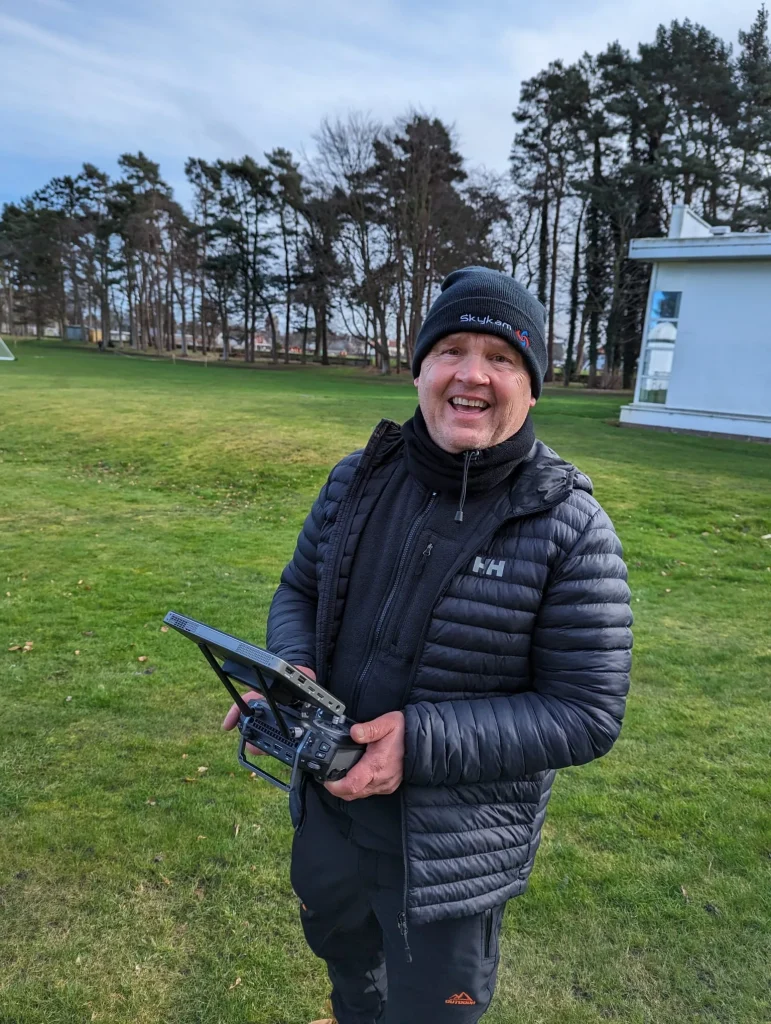
Before resorting to official complaints, it’s often best to address the issue directly by speaking with the drone operator.
If you can safely locate the person controlling the drone nearby, approach them politely and introduce yourself.
It’s important not to trespass or put yourself in danger while doing so.
When you approach the operator, greet them calmly and express your concerns clearly.
Explain that you’ve noticed their drone flying over your property and that you’re worried about your privacy and safety.
Request respectfully that they avoid flying over your house or keep their drone away from your property.
If necessary, you can explain potential consequences, such as contacting authorities if the flights continue.
However, it’s vital to remain calm and avoid making threats.
You might offer a compromise, such as agreeing on specific flight times if they need to fly nearby.
If the operator is uncooperative or the situation escalates, it’s best to end the conversation and consider other legal options, such as filing an FAA complaint.
Post “No Drone Zone” Signs
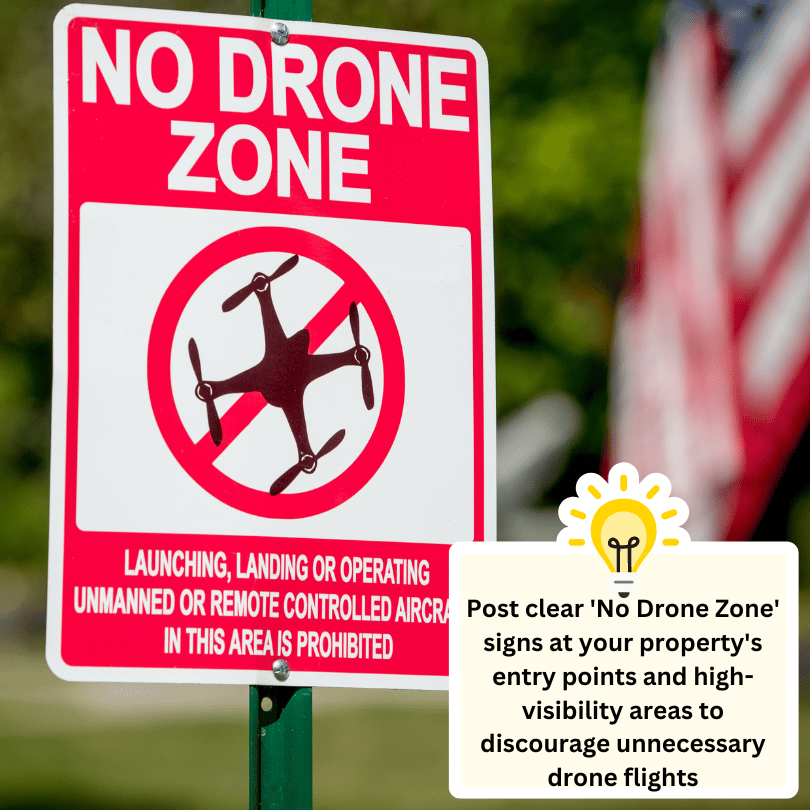
Posting ‘No Drone Zone‘ signs on your property can serve as a visual deterrent to drone operators, even though these signs aren’t legally enforceable. As a private property owner, you don’t have the legal authority to establish official no-fly zones for drones over your land.
However, these signs can still be an effective way to communicate your preferences to drone pilots.
While the signs don’t carry any legal weight, they can influence responsible drone operators who may choose to respect your wishes out of courtesy. I
t’s important to understand that drones are legally allowed to fly over your private property, as long as they comply with FAA regulations and local laws. Your signs won’t prevent this, but they can discourage unnecessary drone flights.
When creating these signs, make sure they’re visible and clearly state ‘No Drone Zone‘ or similar wording.
Place them at entry points to your property or areas where drone activity is most likely.
Remember, while you can’t enforce these zones, many drone pilots are considerate and will avoid flying over properties with such signage.
This approach offers a non-confrontational way to potentially reduce unwanted drone presence without resorting to illegal actions like shooting them down.
Privacy Concerns: Document and Seek Legal Advice
When faced with privacy concerns due to drone activity over your property, you’ll need to document the incidents and seek legal advice to protect your rights effectively.
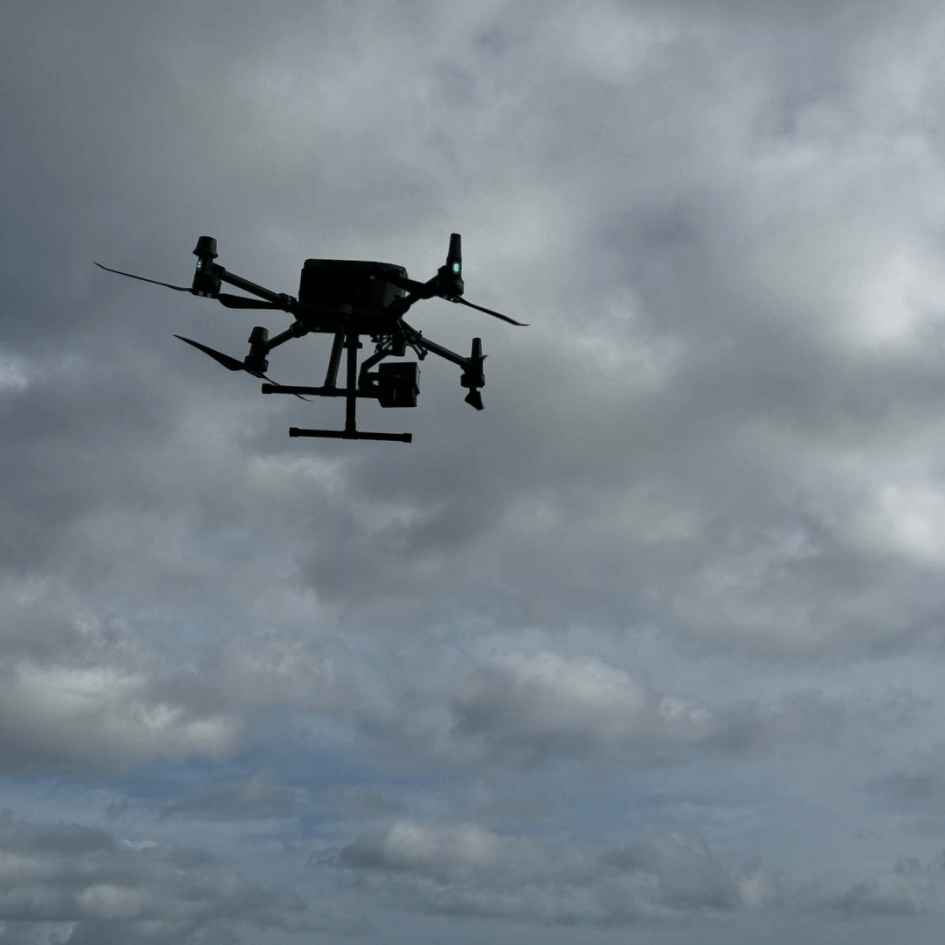
Start by keeping detailed records of each drone sighting, including dates, times, and descriptions of the drone’s behavior. If possible, take photos or videos as evidence.
These records will be pivotal if you decide to pursue legal action.
Next, consult with an attorney who specializes in drone law and property rights. They can assess your situation and determine if you have grounds for a civil trespassing claim based on local laws.
Your lawyer might recommend sending a cease and desist letter to the drone operator if they can be identified.
If the drone activity persists, you may need to file a civil lawsuit for trespassing.
The success of your case will depend on factors like the drone’s altitude, local regulations, and the nature of the flights. Keep in mind that drone laws are complex and evolving, so professional legal guidance is indispensable.
Incidents Of People Shooting Down Drones In USA
You might be surprised to learn that there have been several notable incidents of people shooting down drones in the USA.
These incidents span from 2015 to 2024 and include cases in Kentucky, New York, and Florida, involving both private citizens and law enforcement.
While the circumstances varied, these events have raised important questions about drone regulations, privacy rights, and the limits of property owners’ authority to protect their airspace.
Florida Walmart Delivery Drone Incident (2024)
In January 2024, a 72-year-old Florida man made headlines when he shot down a Walmart delivery drone flying over his property.
Dennis Winn, a resident of Clermont, Florida, believed the drone was spying on him and decided to take matters into his own hands.
Using a 9mm pistol, Winn fired at the drone, causing it to crash.
Winn’s actions, while stemming from privacy concerns, were illegal and resulted in serious consequences. He was arrested and charged with multiple offenses, including shooting an aircraft, criminal mischief with damage over $1000, and discharging a firearm on public or residential property.
It’s important to understand that shooting down drones is illegal in the United States, regardless of where they’re flying.
This case serves as a reminder that, even if you believe a drone is invading your privacy, taking the law into your own hands can result in severe legal repercussions.
If you have concerns about drone activity, it’s best to contact local authorities or the FAA.
Long Island, New York Incident (2019)
Another unfortunate drone-shooting incident unfolded in Long Island, New York, in 2019, involving Gerard Chasteen and a search-and-rescue operation.
Chasteen, a 26-year-old resident, shot down a drone operated by Long Island Lost Dog Search & Rescue during their efforts to locate a missing dog. The exact motive behind Chasteen’s actions remains unclear, though it’s crucial that he might’ve perceived the drone as an invasion of privacy.
This incident highlights the potential conflicts between drone operations and individuals’ concerns about privacy or property rights.
The consequences for Chasteen were significant, as he was arrested and charged with criminal mischief and prohibited use of a weapon.
These charges underscore the seriousness with which law enforcement treats such actions against drones, even when they’re being used for beneficial purposes like search and rescue operations.
The Long Island incident serves as a reminder that, regardless of your personal feelings about drones, taking matters into your own hands by shooting them down is illegal and can result in serious legal repercussions.
Kentucky Drone Shooting Case (2015)
The Kentucky drone-shooting case of 2015 sparked nationwide debate over privacy rights and drone use when William Merideth shot down an unmanned aerial vehicle flying over his property.
Merideth, believing the drone was invading his privacy, took matters into his own hands and used a shotgun to bring it down.
This incident quickly gained national attention, raising questions about the limits of property rights and the legality of shooting down drones.
Initially, a local judge cleared Merideth of charges, citing his right to protect his privacy.
However, the drone’s owner wasn’t satisfied with this outcome and decided to pursue legal action at the federal level.
This federal lawsuit further complicated the case, bringing it into a broader legal arena and highlighting the complexities of drone regulations.
The Kentucky case became a significant precedent in discussions about drone laws and personal property rights.
As drone technology continues to advance, cases like this one remain relevant in shaping policy and public opinion.
Mount Dora, Florida Sheriff’s Office Drone Incident (2021)
Controversy erupted in Mount Dora, Florida, when 52-year-old Wendell Doyle Goney shot down a $30,000 sheriff’s office drone during a burglary investigation in 2021.
Goney claimed the drone was ‘harassing‘ him, leading to his decision to take action against the airborne device.
This incident highlights the ongoing tensions between drone operators and individuals concerned about privacy and property rights.
As a convicted felon, Goney’s possession of a firearm was already illegal, compounding the severity of his actions.
He pleaded guilty to possessing a firearm as a convicted felon, a charge that carries a potential sentence of up to 10 years in prison.
This case serves as a stark reminder of the legal consequences that can result from interfering with law enforcement operations and damaging government property.
The Mount Dora incident underscores the significance of understanding drone laws and regulations, as well as the potential ramifications of taking matters into your own hands.
It’s essential to remember that shooting down a drone, especially one operated by law enforcement, is illegal and can result in serious criminal charges.
Conclusion
In summary, you can’t legally shoot down drones in the USA, even on your property. It’s considered aircraft sabotage and violates FAA regulations.
Instead, document any privacy concerns and seek legal advice. There are alternatives to deal with problematic drones, such as reporting to authorities or using drone detection systems.
Remember, the airspace above your property isn’t yours to control. Always prioritize legal methods to address drone-related issues to avoid potential criminal charges.

