
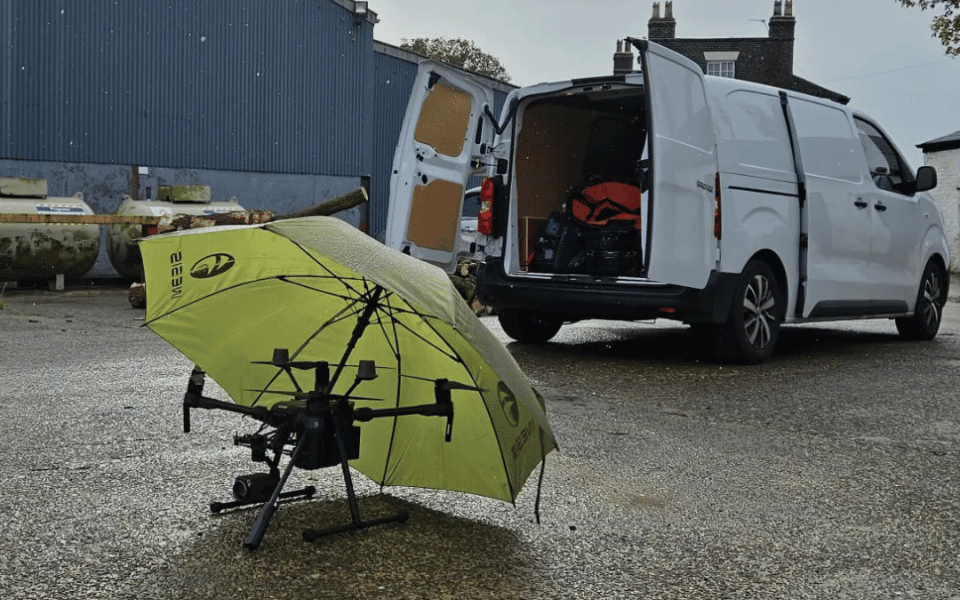

Flying a drone in rainy conditions is a challenging and risky endeavor. Rain, mist, and moisture can wreak havoc on delicate electronics and sensors, potentially leading to malfunctions or crashes.

30 Second Summary
Flying a drone in the rain is generally not recommended, as most consumer drones are not waterproof and exposure to moisture can cause serious damage to internal electronics, motors, and cameras. Even light rain can lead to short circuits, corrosion, and degraded performance, potentially resulting in permanent loss of your drone. While a few specialised or industrial drones may be water-resistant, the vast majority-including popular models from DJI-lack any official waterproof rating and should be grounded at the first sign of rain. For safety and to protect your investment, always consult your drone’s manual and avoid flying in wet conditions unless you have a drone specifically designed for such environments.
Most consumer drones – including popular DJI models – are not designed to be water-resistant, and manufacturers explicitly warn against flying in rain or snow.
For example, DJI advises pilots to avoid bad weather and even to land immediately if it starts raining to prevent damage.
In this guide, we provide a detailed look at what happens when drones meet rain and how hobbyist pilots can mitigate the risks.
We’ll cover how rain affects drone hardware and performance, safety tips for operating in light wet conditions, modifications to improve water resistance, relevant legal regulations, and recommended gear to protect your drone.
By understanding these factors, you can make informed decisions about whether that rainy flight is worth it (and how to survive if you try).
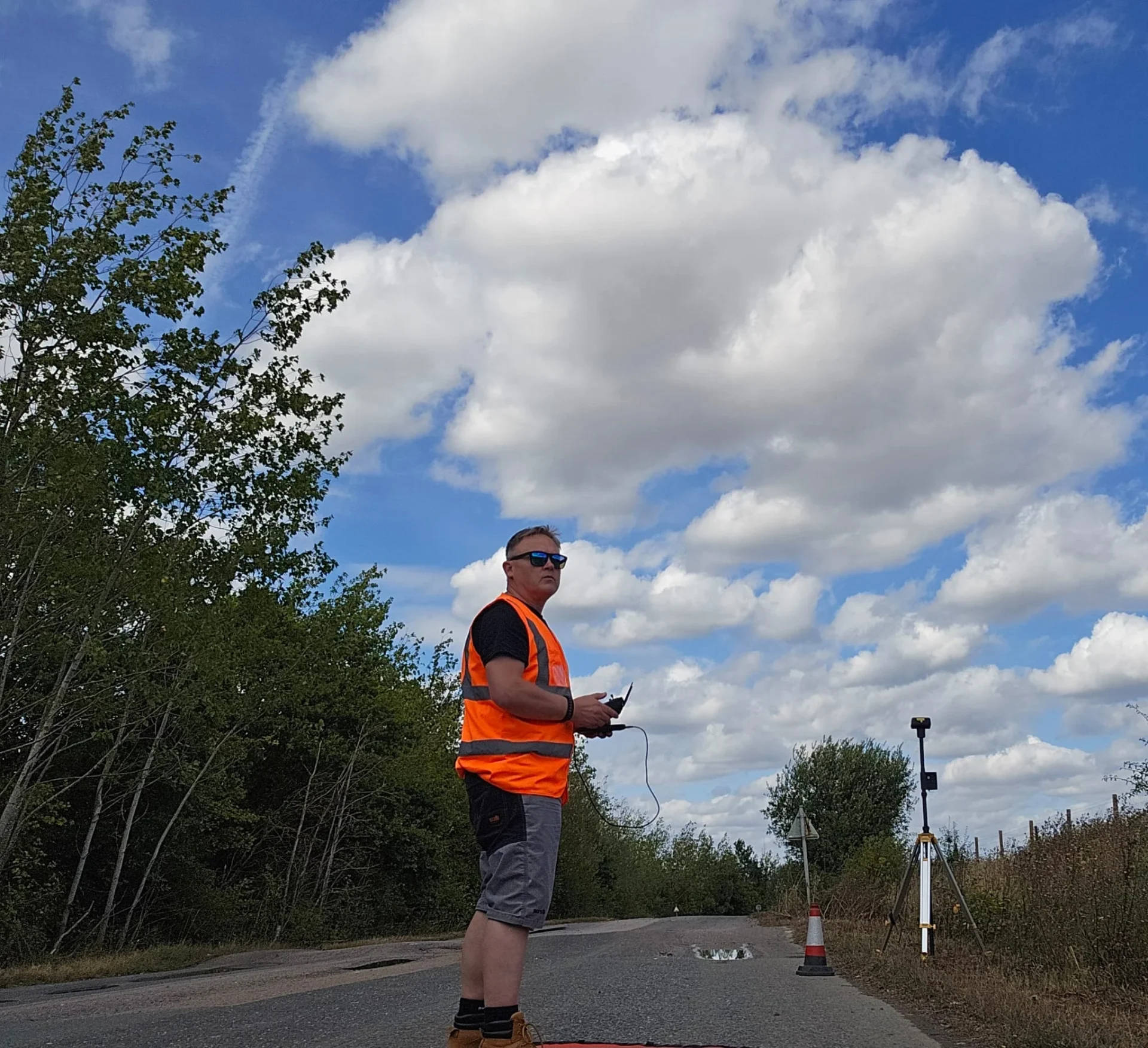
Effects of Rain on Flying Drones
Rain can impact a drone in numerous ways – from immediate electronic failures to longer-term corrosion and performance degradation. Below is a data-driven look at the key effects of exposing drones to rain.
Most hobby drones lack any official waterproofing. Ingress Protection (IP) ratings indicate water/dust resistance, but consumer DJI drones generally have no IP rating at all.
Drone Ingress Protection (IP) Ratings and Water Resistance Levels
| IP Rating | Water Protection Description | Drone Relevance |
|---|---|---|
| IPX0 | No protection against water. | Standard for hobby drones (no waterproofing). Even a few drops can cause damage. |
| IPX3 | Protected against water spray up to 60° from vertical (light rain). | Tolerates light drizzle at best. Few drones have this; likely minimum for “rain-flying.” |
| IPX4 | Protected against splashing water from any direction. | Can handle rain showers from all angles. Some enterprise drones (DJI M200 series ~IP43) approach this – okay in light rain but not heavy soaking. |
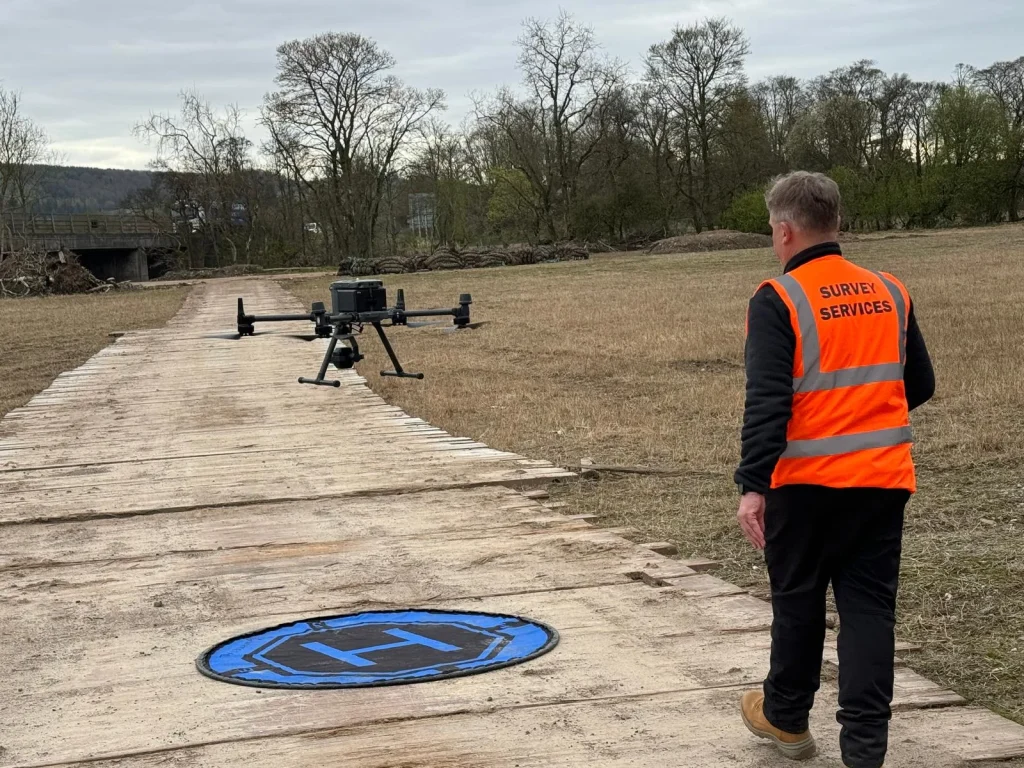
| IPX5 | Protected against low-pressure water jets (sustained rain or water spray). | Handles heavy rain and water jets for short periods. DJI Matrice 300 RTK is IP45 (dust 4, water 5) – meaning it can fly in moderate rain reliably. |
| IPX7 | Protected against immersion in water up to 1 meter for 30 minutes. | Essentially “waterproof.” Few drones achieve this; DJI Agras T30 has IP67, meaning it can be rained on heavily or even briefly dunked and keep working. |
| IPX8 | Protected against continuous immersion beyond 1m depth. | Above and beyond typical needs – found in specialized underwater drones or action cams. (Not applicable to aerial drones, except some niche waterproof models.) |
They are neither waterproof nor dustproof, so even a light shower can penetrate the shell. Only specialized enterprise drones carry modest IP ratings; for instance, the DJI Matrice 300 RTK is rated IP45 (protected against solid objects and low-pressure water jets), and the newer Matrice 350 RTK is rated IP55 (more robust weather sealing).
High-end agricultural drones like the DJI Agras series even achieve IP67 (fully dust-tight and submersible) so they can be washed after crop spraying.
However, the typical DJI Mavic, Air, or DJI Mini you fly for fun has no water protection.
This means rain can easily find its way into vents, battery compartments, and seams. In practice, even a few drops of rain can start causing problems, and sustained exposure is very likely to lead to failure.
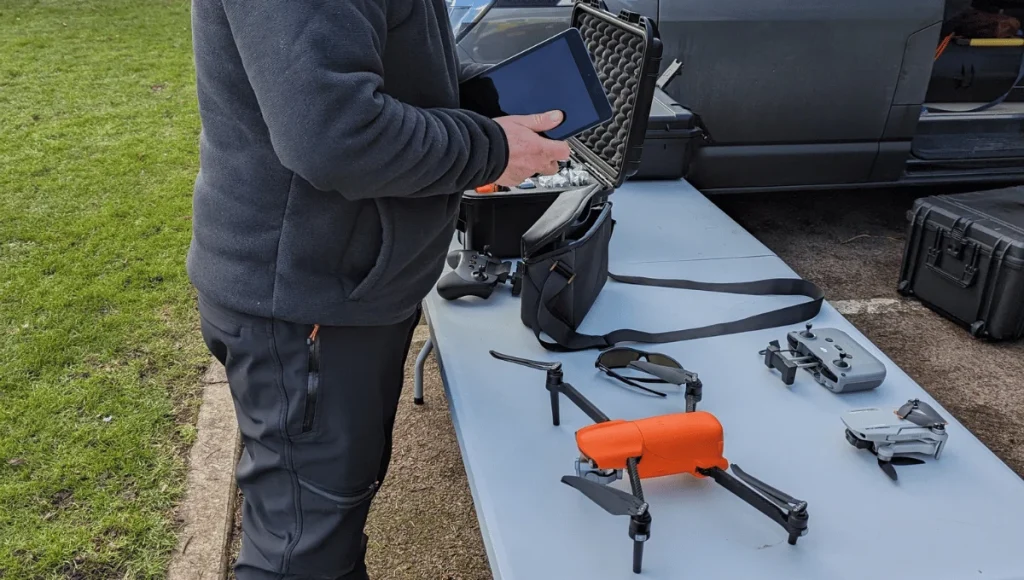
Electronic Failures and Short Circuits
Water and electronics don’t mix. Rainwater can cause short circuits by bridging contacts on circuit boards or connectors. The moment moisture reaches critical electronics (flight controller, ESCs, battery terminals), it can trigger errors or total failure mid-flight. Rain can directly damage sensitive components like motors, sensors, and cameras by causing shorting or erratic behavior.
Even if a drone doesn’t immediately shut down, ingested water can create latent failures – for example, residual moisture might not cause an instant short, but as you continue flying, it could eventually lead to a sudden glitch or loss of control. DJI engineers caution that even small amounts of water can cause electrical shorts that lead to errors or damage if the drone isn’t completely dried.
Consumer drones typically have cooling fans or airflow that pulls air (and fine mist) through the body to cool components.
In rainy conditions, that means your drone might be sucking in a fine mist through its vents, distributing water inside the shell – a recipe for corrosion and circuit failure later on/
In short, flying in rain greatly increases the chance of electronic malfunction. Many pilots who have tried it report sudden power losses or gimbal errors as water hits the circuitry.
Corrosion and Water Damage
Beyond immediate short-circuiting, moisture poses a long-term threat: corrosion. Water (especially if it’s not pure distilled water) can leave conductive residues on the drones electronics. Over time, these residues corrode metal contacts, solder joints, and wiring, which can permanently damage your drone days or weeks after the wet exposure.
Saltwater is especially destructive – it is highly conductive and corrosive, so flying in ocean spray or rain near the sea can do extreme damage quickly
If not cleaned, this corrosion can lead to component failures later (for example, rusted motor bearings or corroded battery connectors). In essence, any time your drone gets wet, you’re potentially starting a corrosion clock – the internal damage might not be immediate, but it can be irreversible if not addressed.
This is why manufacturers and experienced pilots stress that no “one-time rain flight” is worth the risk of ongoing damage to your expensive gear.
Drone Flight Performance Issues in Rainy Conditions
Rain doesn’t only threaten electronics – it also affects flight performance. Water drops hitting the propellers and airframe can alter the aerodynamics: raindrops striking spinning propellers cause small disruptions in lift and can produce vibration or imbalance. In heavy rain, propellers may even begin to accumulate water, adding weight and drag.
A scientific test of drone flight in rain found that heavy rainfall significantly degrades lift and efficiency, forcing the motors to work harder to keep the drone airborne.
This means your drone will consume battery power faster in rain.
Additionally, rain is often accompanied by wind and turbulence. Strong gusts or downdrafts from stormy weather make the drone less stable and harder to control, and the motors draw more power to compensate. Combined with cooler temperatures (which can reduce battery performance), it’s common to see shorter flight times in wet weather.
For example, cold or rainy conditions can shorten typical drone flight time by several minutes due to the extra strain on the battery and motors
Rain and fog can also interfere with the drone’s sensors and navigation. Many DJI drones use optical sensors (cameras) and infrared sensors for obstacle avoidance and positioning. Precipitation can obscure the lens or confuse these sensors – e.g. the drone may falsely detect obstacles or have trouble maintaining a hover if the ground imaging system sees a blur of rain.
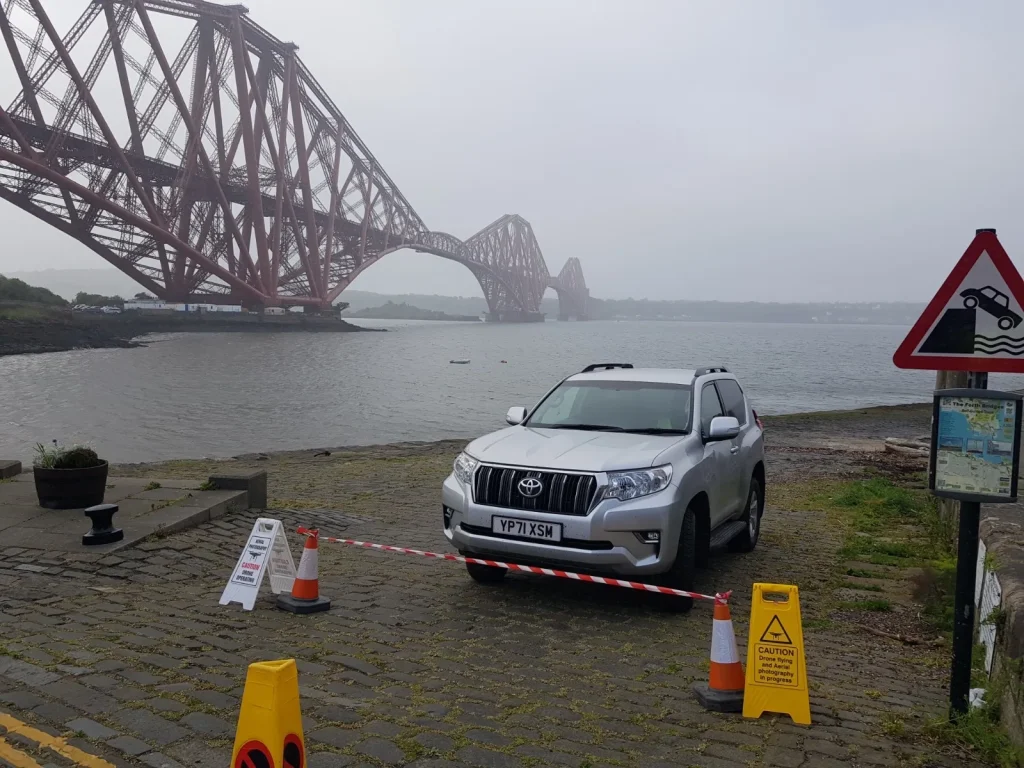
In fact, fog or thick mist can trigger obstacle avoidance systems by making the drone “think” something is in front of it, causing it to brake or hover unexpectedly
Reduced visibility from rain on the camera lens will also make it harder for you to pilot via FPV (first-person view) – your video feed may become blurry or distorted by water droplets. And of course, rain hampers radio signal and GPS to a small degree: heavy rain can attenuate (weaken) radio signals and degrade GPS accuracy, though this is usually only significant in very severe downpours.
All these factors mean that a drone in the rain will not handle as predictably as it does in clear conditions.
Control inputs might feel less responsive, autonomous features (like Return-to-Home or obstacle sensing) might misbehave, and the drone could drift or struggle to hold position. Worst case, strong rain and wind can cause a total loss of control, leading to fly-aways or crashes
In summary, rain dramatically raises the challenge level of flying by impairing both the drone’s hardware and its flight performance.
Rain Intensity vs. Flight Risk and Recommended Actions
Not all “rain” is equal – flying a drone in a light drizzle is very different from flying a drone in a downpour. This table breaks down rainfall intensity and its potential impact on a drone.
| Rain Intensity | Description (approx. rate) | Impact on Drone | Recommended Action |
|---|---|---|---|
| Very Light (Drizzle) | Misty drizzle, few drops, < 1 mm/hour. | Minimal immediate impact. Likely no puddling on drone, just a fine mist. Electronics could tolerate brief exposure. | Acceptable for short flights if necessary. Still exercise caution: wipe drone dry immediately after. |
| Light Rain | Steady light rain, ~1–2 mm/hour. | Water begins to accumulate on drone surfaces. Possible minor ingress through vents if prolonged. Battery and sensors may start getting wet. | Fly only with protective mods (cover, coating). Keep flights very short (<5 minutes). Land at first sign of issues. |
| Moderate Rain | Steady rain, 2.5–7 mm/hour (moderate shower). | Significant water exposure. Likely to overwhelm non-waterproof drones – water will get inside eventually. Drone stability affected; battery life reduced. Sensor errors or short-circuits possible. | Not recommended to fly. If caught unexpectedly, return home immediately. Use Return-to-Home if needed (ensuring a safe altitude under clouds). |
| Heavy Rain | Downpour, >7 mm/hour (stormy rain). | Severe impact: rapid water ingress, high risk of immediate failure. Visibility extremely poor. Strong winds likely present. High chance of crash due to electronics failure or loss of control. | Do not fly. Postpone mission. If somehow in air, get down now – find a safe spot to land before the drone fails. |
| Torrential (Thunderstorm) | Deluge rain, possible lightning. | Drone will almost certainly fail within moments. Water intrusion is a given; electrical shorts and power loss inevitable. Extremely dangerous conditions (lightning, wind shear). | Ground all flights! No drone should be in the air. Prioritize personal safety – seek shelter. |
Note: Rainfall rates in mm/hour correspond to standard meteorological definitions for light, moderate, heavy rain.
The thresholds above are approximate – even “light rain” can vary. Also consider rain duration: a 2-minute light shower might do little harm, but 15 minutes in light rain could equal a short burst of heavy rain in terms of total water exposure. Always lean conservative with these recommendations.
If in doubt about whether the rain is “light” or “moderate,” it’s safer to assume the worse and land.
Safety Tips for Flying Drones in the Rain
The best advice is to avoid flying a drone in rain whenever possible – especially with drones that are not water-resistant.
However, if you’re a hobbyist determined to fly in light rain or you get caught by an unexpected shower, here are some best practices to minimize risk and improve safety:
Prefer Drizzle Over Downpour
Only consider flying in very light rain or drizzle, not in heavy rain. A few tiny droplets are less likely to cause immediate damage, whereas a downpour greatly increases the risk.
If rain intensifies beyond a light sprinkle, land as soon as safely possible – don’t push your luck.
Plan Ahead and Monitor Weather
Check the weather forecast and radar before flight. If there’s a high chance of rain, it’s better to postpone the flight.
Sudden weather changes can happen, so monitor the sky during your session. The moment you feel raindrops or see them on your controller or screen, start wrapping up.
It’s wise to set a short flight window in damp weather – get the shot and land before the weather worsens.
Use a Covered Launch Area
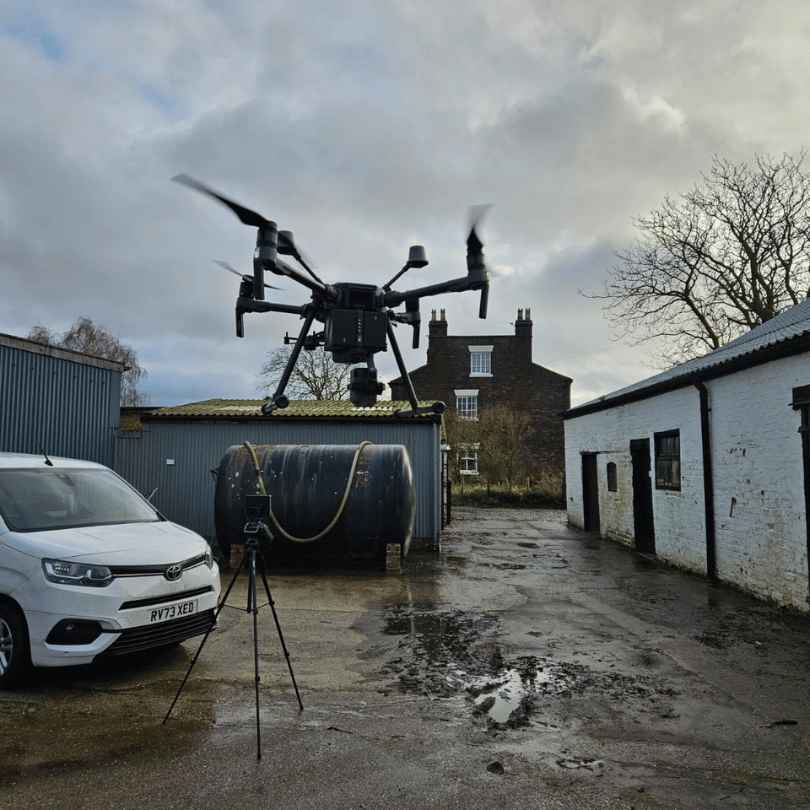
Keep the drone dry until it’s in the air. If possible, launch from a sheltered spot – for example, under a porch, a car hatchback, or have a friend hold an umbrella over the drone during takeoff and landing.
This prevents water from pelting the drone on the ground (when it’s most vulnerable) and reduces water ingress through the top vents during takeoff.
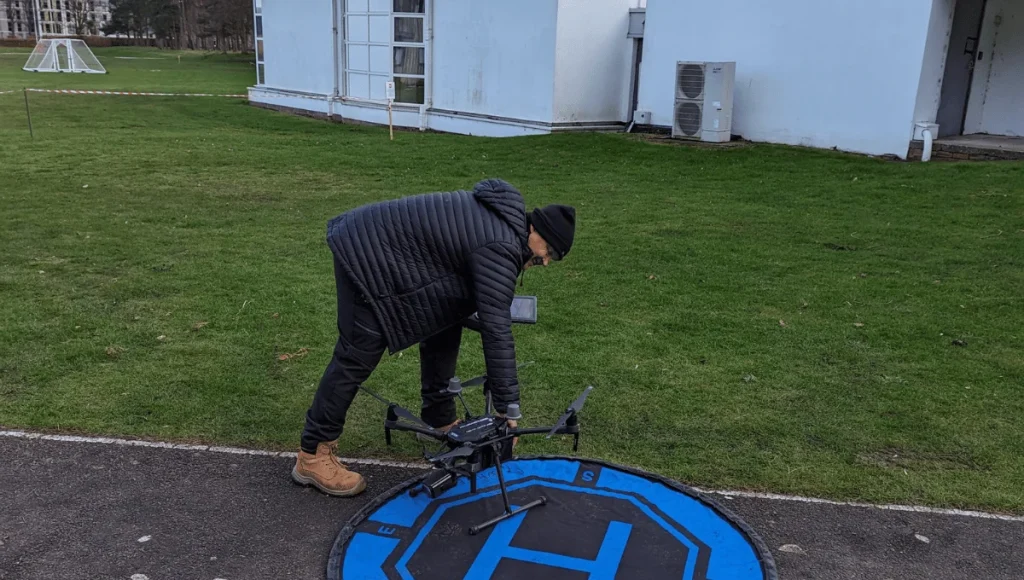
Also, use a waterproof landing pad or a dry surface so the drone’s bottom doesn’t get muddy or wet on takeoff/landing.
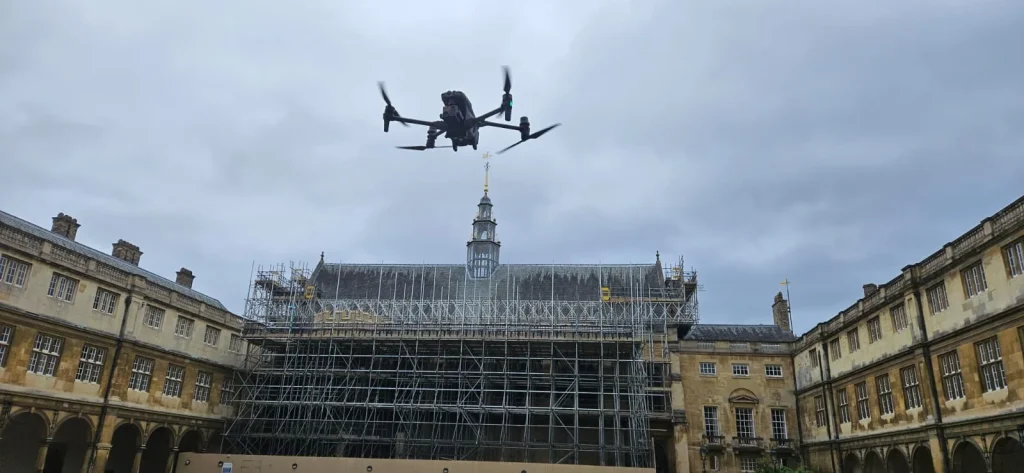
Keep Flights Low and Nearby
In rainy conditions, do not send the drone far away or to high altitudes. Stay relatively low (but clear of tree/building obstacles) and within close line-of-sight.
Low altitude reduces exposure to high winds and keeps the drone within quick reach if something goes wrong.
Keeping it nearby also means if a failure occurs, you might still recover the drone before it’s lost. Avoid flying over water in rain – if the drone fails, it will be very hard to retrieve from a pond or river.
Maintain Visual Line of Sight
Rain can make it harder to see your drone, especially if the sky is gray. It’s crucial to maintain direct line-of-sight (VLOS) at all times, as required by safety rules.
Don’t solely rely on the video feed (which might blur); periodically look up and locate the drone. If you have an observer with you, ask them to help watch the drone’s position.
Keeping orientation is important – in poor visibility, it’s easy to become disoriented, so consider using the drone’s bright LED lights (if your model has them) to help you track its front/back.
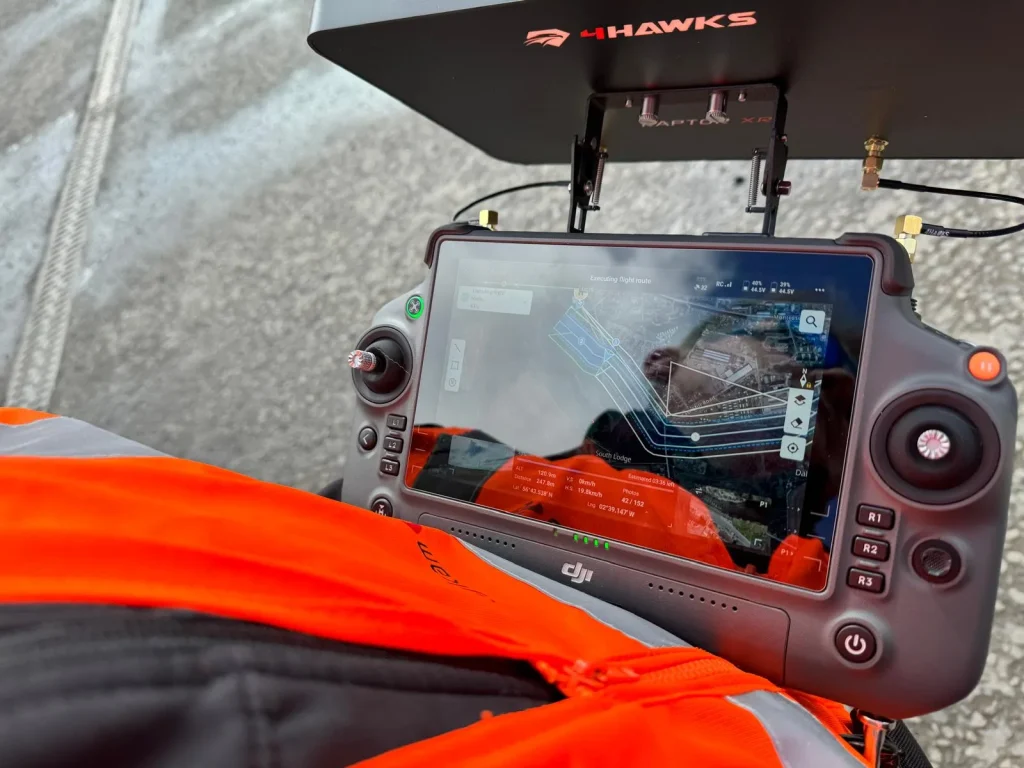
Monitor Drone Status Constantly
Pay extra attention to your drone’s behavior and telemetry when flying in rain. Watch for any erratic movements – if the drone twitches, drifts, or shows sensor errors, bring it back immediately.
Keep an eye on the battery level; expect it to drop faster than normal.
Also, periodically check the camera view for water droplets (quadxdrones.com). If the lens gets wet and your view is obscured, it’s time to land. (You can gently dry the lens and continue if the weather improves.)
Fly Slowly and Smoothly
In wet conditions, avoid aggressive maneuvers. Fly in a slow, controlled manner to reduce the force of water hitting the drone.
High-speed flight or sudden attitude changes can drive rain into vents and gimbal joints.
Using gentle stick inputs and perhaps switching to a smoother flight mode (e.g. “Cine” mode on DJI drones) can help keep the drone stable and minimize water intrusion.
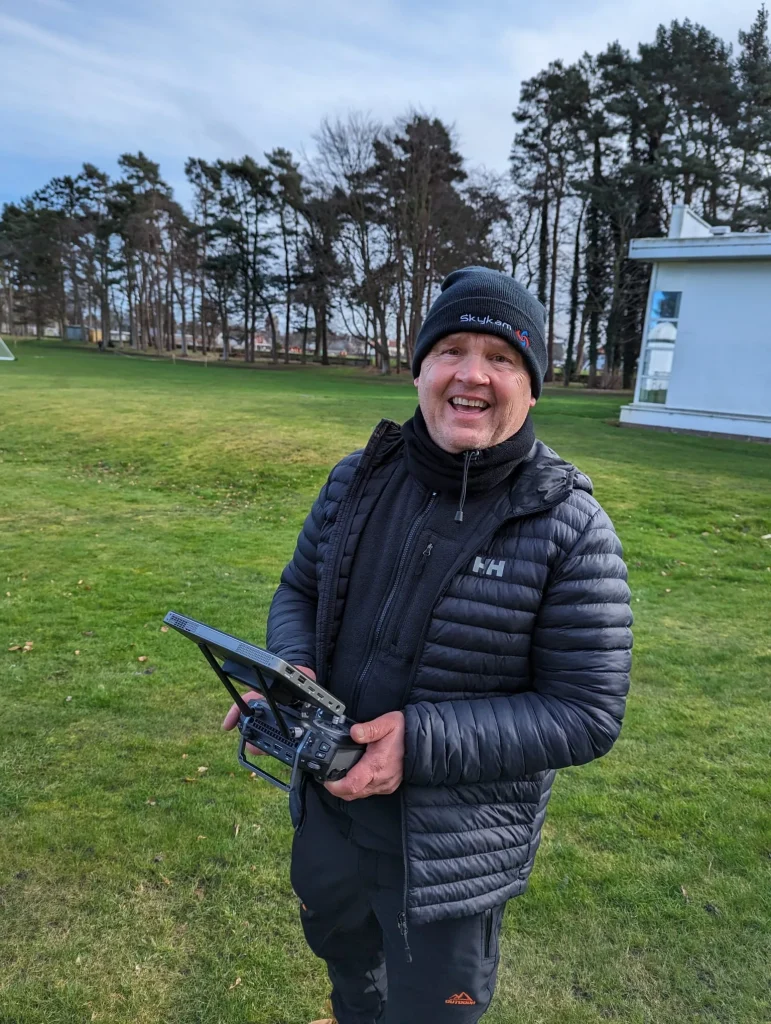
Avoid Hovering in Rain
Counterintuitive as it sounds, hovering in rain might actually soak your drone more. The downdraft from the propellers can blow rain around and potentially force droplets into the drone’s openings.
If you must be in the rain briefly, it might be better to keep the drone moving forward slowly rather than sitting in one spot collecting water.
However, be cautious not to fly far. Small controlled circuits or orbits around your position can keep airflow over the drone and possibly shake off water, but this is not foolproof.
Utilize Emergency Return Features Wisely
If your drone has a “Return-to-Home” (RTH) function, ensure the RTH altitude is set appropriately before flying in case you need to use it.
Low clouds accompany rain – you don’t want the drone ascending into a cloud on RTH. Set RTH altitude high enough to clear obstacles, but not so high that it goes into thick fog or cloud. (Stay well under any cloud ceiling.)
If rain intensifies and you’re not confident in manual return, trigger RTH sooner rather than later. Keep in mind obstacle avoidance might be less reliable, so give the drone a clear path home.
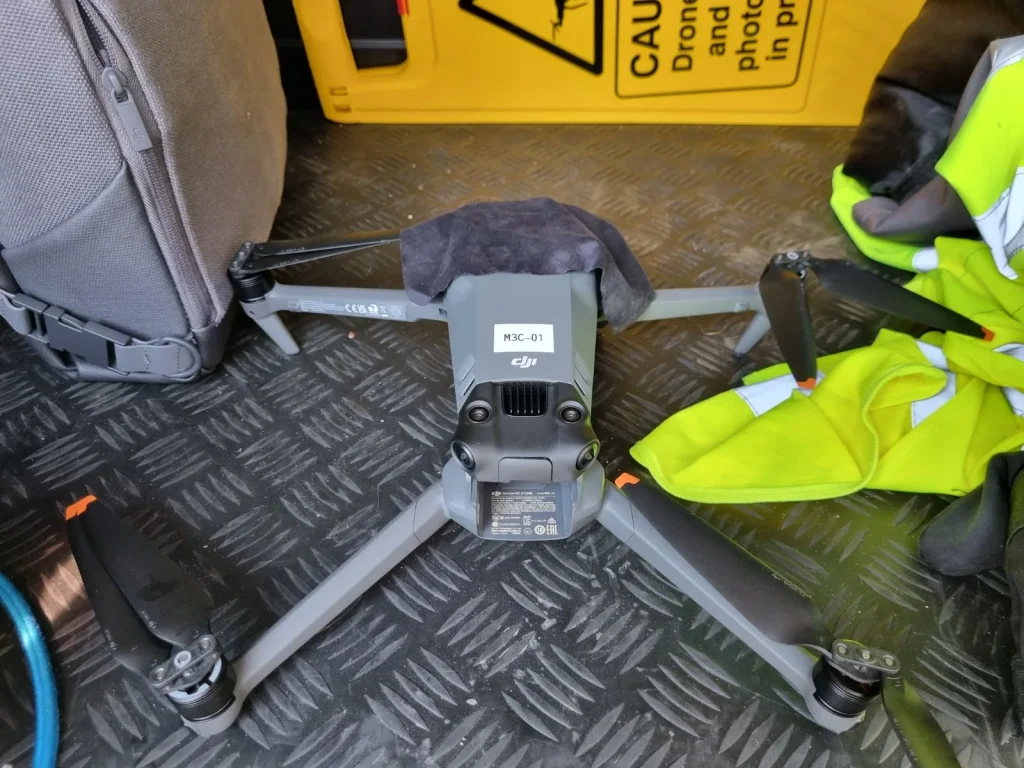
Protect the Controller and Yourself
Don’t forget that you and your remote controller are also out in the weather. Use a hood or umbrella for yourself so you can keep flying without your eyes and hands being drenched.
Many controllers (and your phone/tablet screen) are not water-resistant either – consider a protective cover or at least wipe off water frequently.
A wet touchscreen can become unresponsive, so having a dry cloth handy to wipe your device and hands is smart.
After Flight – Dry Everything Thoroughly
The moment you finish a rain flight, power down the drone and remove the battery. (Water and batteries don’t mix.)
Wipe off any visible moisture on the drone, controller, and batteries.
We’ll discuss post-flight recovery in detail later, but the key is to not let water sit on/in the drone for long. Even if the flight went fine, take the time to dry and inspect the drone (see the recovery steps in Section 7).
Prompt drying can make the difference between a safe drone and a corroded one.
Flying in the rain should be done only with extreme caution, if at all. The above tips can improve your odds, but there’s always a risk. Many pilots simply adhere to, “When in doubt, don’t fly,” which is wise. If you absolutely must fly in light rain, do it as quickly and safely as possible, and then get your drone dry.
(Safety Note: Unless your drone is specifically built for rain, you are flying at your own risk in wet weather. Be prepared for the possibility of a malfunction and have a plan to handle it – e.g., know where it might crash and how you would recover it. Always prioritize safety of people and property over getting the shot.)
Post-Flight Recovery: Steps to Save a Wet Drone
If your drone does get wet (whether from rain or an accidental dip in water), following proper recovery steps can make the difference between a minor scare and permanent damage. Here’s a quick-reference checklist (and why each step matters):
| Step | Action | Purpose / Rationale |
|---|---|---|
| 1. Power Down | Immediately turn off the drone (and remote controller). If the drone fell into water, remove it from water ASAP and then power it down. Remove the battery as soon as you can safely do so. | Cutting power prevents short-circuits. A powered drone with water inside can fry circuits instantly. Removing the battery isolates power and reduces risk of electrical damage. |
| 2. Shake Off Water | If the drone was in heavy rain or submerged, gently shake it to expel water from crevices. Hold it upright and tilt in different directions to drain water out of openings. | Physically removing as much water as possible right away can prevent water from seeping deeper. Every drop you shake out is one less drop causing potential shorts or corrosion. |
| 3. Initial Dry Wipe | Use a clean dry cloth to wipe the exterior, especially around joints, battery contacts, and ports. Dab carefully – do not power on. Open any compartments (battery slot, SD card cover) and pat them dry. | Surface water can slowly find its way in, so drying external areas helps stop that. Also, you’ll prevent water from sitting and staining or corroding surfaces. Getting the obvious moisture out makes the next steps more effective. |
| 4. Rinse (Fresh Water for Contaminants) | If the drone fell into dirty or salt water, do a freshwater rinse. This sounds scary, but salt or mud must be removed. Use distilled water (or at least fresh tap water) to gently rinse electronic parts. For salt water, some experts even submerge the drone in distilled water to flush out salt. | This step is crucial for saltwater incidents: Salt and minerals will actively corrode electronics. Rinsing with pure water removes these harmful residues. Distilled water is non-conductive and leaves no residue, so it can safely dilute and wash away contaminants. It’s counter-intuitive, but controlled fresh water rinsing can save a drone from the far worse damage of salt or chlorine deposits. |
| 5. Displace Moisture (Alcohol Bath) | For serious water intrusion, especially in electronic components, a rinse with 99% isopropyl alcohol is recommended. You can gently bathe circuit boards or flooded components in alcohol. Alcohol pushes out water and evaporates quickly. Afterward, gently shake out excess alcohol. | Isopropyl alcohol is a common electronics cleaning step after water exposure. It absorbs water and carries it away, and since it evaporates, it doesn’t remain behind to conduct electricity. It also helps clean off impurities. This step is optional for light rain exposure, but for a drone that went for a swim or got significantly wet, it’s a lifesaver for the electronics. |
| 6. Drying (Desiccant or Air Dry) | Now, let the drone dry thoroughly for at least 24–48 hours in a warm, dry environment. Do not rush to power it on. Place the drone in a bag or container with desiccant packets or uncooked rice, or use a gentle heat source (a fan heater at low setting, or a dehumidifier nearby). Make sure air can circulate around the drone. If possible, remove some panels or covers to allow inner parts to dry. | Complete drying is essential to avoid hidden moisture causing a short later. Time is your friend here – even if the drone looks dry outside, tiny droplets might remain in connectors or under chips. Silica gel or dry rice helps absorb moisture from the air around the drone (many pilots swear by the rice method for phones/drones). The key is patience: only when you are confident that all moisture has evaporated should you attempt to power the drone on again. |
| 7. Inspection | After drying time, inspect the drone carefully. Look for any signs of corrosion (whitish or green deposits on copper, rust on steel parts) or mineral residue. Also sniff for any burnt electronics smell. Gently clean any visible residue with isopropyl alcohol and a soft brush. Check that mechanical parts like motors or gimbals move freely (no grit). | This step ensures that when you do power up, there are no immediate shorts. Sometimes water leaves a film or mineral traces that could cause issues – cleaning them off is the final touch. If something is severely corroded or burnt, you may need professional repair. But if everything looks clean and dry, you’re ready for the final test. |
| 8. Power On Test | Reinstall a fully dry battery (not the one that got soaked, unless you’ve verified it’s dry internally too). Power on the drone and controller in a safe area (have a fire-safe surface in case of battery issue). Be ready to immediately turn it off if something seems wrong (strange noises, smoke, etc.). If it powers up normally, do a short test flight at low altitude. | The moment of truth – does it still work? Often, if you followed the steps, the drone will power on like nothing happened. Many users have reported saving drones this way even after total submersion. Still, be cautious on the first flight: fly low and slow, test all controls. Sometimes you might notice a component acting odd (e.g., a sensor malfunctioning) – that may need repair or additional cleaning. |
These recovery steps might sound involved, but they greatly improve the chance of a full recovery if your drone gets wet. One key point is not to power on the drone while it’s wet to “see if it still works” – this is how you fry electronics. Instead, go through the drying process, as tedious as it is.
As a real-world example, one pilot shared that after a rain crash, they left their drone (battery removed) in a warm dry room for a week and it eventually came back to life with no issues – the drying saved it.
If after doing all this the drone still doesn’t power on or shows major issues, you may have to send it for professional repair. Some manufacturers (DJI included) have a service policy that does not cover water damage under warranty, but if you have a care/refres**h plan, you might be able to get a replacement by paying the service fee. Check your drone’s service terms.
Lastly, remember to also take care of the battery if it got wet. Do not use a battery that was soaked until you’re sure it’s dry internally and not damaged – a wet LiPo battery can short out or even catch fire.
If a battery was submerged, it’s often best to safely dispose of it, as water can cause internal cell damage or corrosion that isn’t immediately visible.
Modifications for Waterproofing A Drone
If you anticipate flying in wet conditions regularly, or just want some insurance against surprise rain, there are various modifications and add-ons to make your drone more water-resistant. Keep in mind that no DIY solution will make a standard drone 100% waterproof, but these measures can help it survive light rain or splashes. Here are some ways to enhance a drone’s resistance to water:
Apply Conformal Coating to Electronics
Conformal coating is a thin protective chemical layer you can apply to circuit boards to shield them from moisture. Hobbyists often use silicone or acrylic conformal coating on drone flight controllers, ESC boards, and other exposed electronics.
This coating insulates the circuitry against moisture, preventing corrosion or short circuits (amazon.com). For example, products like MG Chemicals 422B Silicone Conformal Coating can be brushed or sprayed onto a drone’s printed circuit boards (avoiding connectors and sensors) to waterproof them.
This is a common technique in the FPV drone community for waterproofing racing drones (oscarliang.com).
Important: Applying conformal coating requires partially disassembling your drone to reach the boards, and it may void warranties. One should also avoid coating heat-generating components or sensors (like barometers) inadvertently.
When done properly, conformal coating creates a water-resistant barrier on the electronics. It has saved many drones that end up in rain or even a brief dunk in water – after coating, they simply shake off the moisture and keep working. (Note: Never coat ports, switches, or connector pins; those should be masked off.)
Use Waterproof Skins or Covers (Drone “Rain Jackets”)
To protect the exterior and seams of the drone, you can use specially designed water-resistant covers.
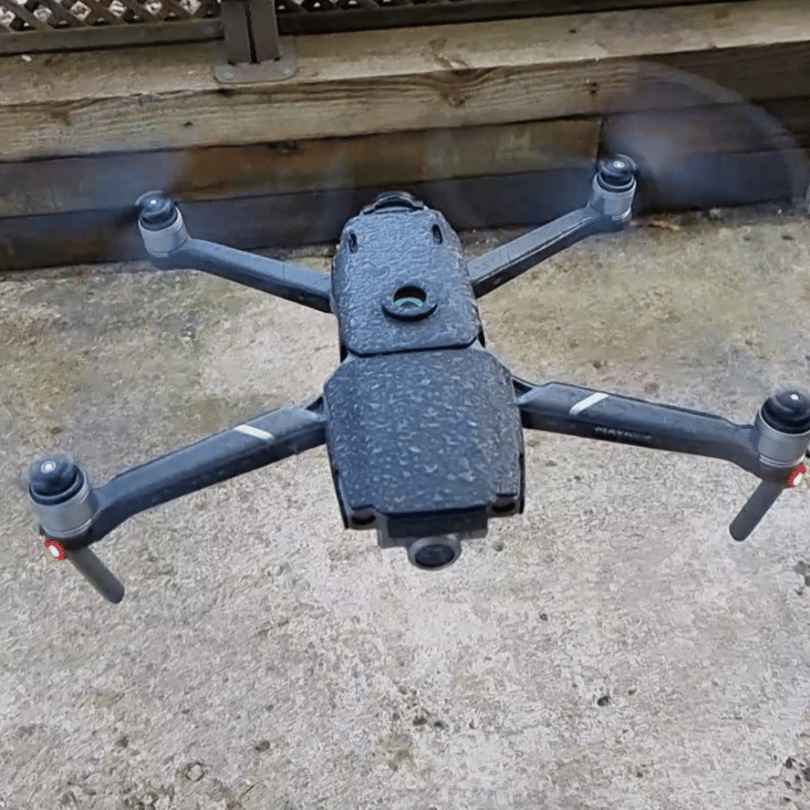
One example is the Phantom Rain “Wet Suits,” which are neoprene jackets custom-cut for DJI drones (Mavic series, Phantom, etc.) that cover the top and sides of the drone. These wet suit kits claim to shield most ventilation openings and repel rain, allowing drones to be flown in moderate rain without damage.
A wet-suited DJI Mavic can handle “pouring rain” flights that would normally be very risky.
While such aftermarket skins can be pricey, many users find they do help keep the internals dry by covering gaps and using water-repellent material.
If a dedicated product isn’t available for your model, even a DIY approach – like wrapping parts of the drone with a thin plastic film or vinyl skin – can reduce water ingress. (For instance, some pilots put electrical tape over speaker holes or USB ports before flying in wet conditions.)
Be cautious not to block essential sensors or cooling vents completely; covers should balance water blocking with allowing airflow.
Hydrophobic Coatings on Exterior and Lens
Applying a hydrophobic nano-coating to the drone’s shell and camera lens can help water bead off quickly rather than sticking.
There are consumer sprays for electronics (sometimes used on phones) that create a water-repellent nano-layer. Products like NeverWet or UltraTech waterproofing spray have been used on drone shells. These can make rain literally roll off the surface.
Additionally, using a hydrophobic protector on the camera lens (or a filter with water-repellent coating) will keep your footage clearer by minimizing droplets.
Exercise caution with such chemicals – avoid spraying directly into vents or on sensors, and follow product instructions to ensure it’s safe for plastics and optics. Hydrophobic coatings can wear off over time, so they may need reapplication.
Seal Gaps and Openings
A simple but effective mod is to seal any obvious gaps in the drone’s body where water could enter.
For instance, the seams where the top and bottom shell join, or around screw holes. You can use a small amount of clear silicone sealant or even removable tape to cover these seams (just a thin layer so as not to interfere with disassembly).
Some pilots use silicone or rubber gaskets around the battery compartment if the battery isn’t already gasketed.
Be careful not to seal intentionally open vents needed for cooling, but things like the edges of battery doors or loose-fitting hatches can often be tightened up.
Similarly, port covers are useful: if your drone has exposed ports (USB, SD card slot), keep the rubber plugs in, or use third-party port cover plugs to block moisture. These minor seal-ups can stop stray droplets from finding their way inside.
Protect Motors and Propulsion System
The brushless motors on DJI drones are actually somewhat resistant to water by themselves. The coils are enamel-coated, and the electronics driving them are usually encased.
In fact, many drone motors can run briefly while wet without issue (reddit.com). A user quipped, “The motors are brushless and can run underwater, so rain won’t ruin the motors” (reddit.com).
That said, you should still protect the motors from prolonged exposure. You can apply a light oil or corrosion inhibitor on the motor bearings to repel water (some use a product like CorrosionX for this purpose).
Propeller guards can also offer a bit of protection in rain, not so much against water but against accidental collisions if visibility is bad. They form a physical barrier around props, which might help if wind blows the drone into twigs or walls you didn’t see (flylightdrones.com).
There are even silicone motor caps sold for some drone models that cover the top of the motors when not in use (to keep dust/rain out during transport or while on the ground).
Just remember to remove any motor caps before flight! Overall, the motors themselves are the part of the drone you need to worry least about in rain – focus more on the electronics and battery.
Aftermarket Landing Gear or Floats
Attaching snap-on landing gear extensions can keep your drone’s underside higher off wet ground.
This prevents the base from sitting in a puddle or damp grass during takeoff and landing. It’s a cheap accessory that can be useful on drones like the DJI Mini series, which sit very low.
If you ever fly near water (or in rain over water), consider float kits – foam or inflatable pontoons that let a drone land on water.
While not directly a rainproofing mod, floats ensure that if the drone must descend into a wet area, it can stay afloat rather than submerging.
Some wet-weather pilots use floats as a backup if an emergency landing in water becomes necessary due to rain-related failure.
Drying Aids Onboard
This one is unconventional, but a few creative pilots have attached moisture absorbers on or inside their drones.
For example, sticking a small silica gel packet inside the body (if there’s space) to absorb humidity or attaching absorbent foam in non-critical areas to soak up water that enters.
These won’t prevent water ingress, but they might limit how much water reaches the electronics.
This kind of mod should be done carefully (you don’t want loose material that could shift and block a vent or throw off balance), but it shows the lengths one can go to weatherize a drone.
Before attempting any waterproofing modifications, weigh the potential downsides. Opening your drone or adding materials can void your warranty and possibly affect flight performance (e.g., added weight or changed aerodynamics). Always maintain proper cooling – drones generate heat, and waterproofing efforts should not trap heat inside.
Also, test your modifications in a safe way: for instance, after coating electronics, do a short low-altitude test flight or hover to ensure everything still functions correctly.
A good practice is to simulate rain on the ground – use a spray bottle to lightly mist the drone (while it’s off) after your mods and see if any water sneaks in or causes issues when you power up.
No modification can make a non-waterproof drone completely immune to water. Instead, think of these steps as giving you a margin of safety – they might save the drone in a light rain or an accidental splash. If you frequently need to fly in rain, you might eventually consider investing in a drone that’s built for that purpose.
But for occasional needs, these waterproofing tweaks and accessories can significantly improve your drone’s survivability in wet weather.
Legal Considerations Before Flying A Drone In The Rain
Flying in adverse weather isn’t just a hardware risk – it can also have legal implications. Most aviation authorities have rules or guidelines that, while not always explicitly mentioning rain, effectively discourage or prohibit drone flight in conditions that rain typically brings (low visibility, clouds, high winds).
Here are some considerations for various regions:
United States (FAA Regulations)
Under the FAA’s Part 107 rules (which govern commercial drone operations and are good practice for hobbyists too), there are specific weather minimums.
Drones may not be flown in conditions with less than 3 statute miles of visibility, and you must keep your drone at least 500 feet below clouds and 2,000 feet horizontally away from clouds.
Heavy rain almost always comes with low visibility and cloud cover, so flying a drone in a rainstorm would likely violate these rules.
Furthermore, FAA guidelines require pilots to operate only when they can maintain visual line of sight (VLOS). Rain can make it impossible to see the drone, thus breaking this rule.
While a light drizzle might not drop visibility below 3 miles, it’s a grey area. There’s no explicit FAA regulation that says “no flying in rain,” but if an accident occurred, a pilot could be deemed reckless for knowingly flying in adverse weather.
Additionally, the FAA mandates following the drone manufacturer’s operating manual limitations. Since DJI and others state not to fly in rain, a Part 107 pilot who does so could be considered non-compliant with regulations by not following the aircraft’s recommended procedures.
Recreational fliers in the U.S. following the AMA Safety Code are similarly advised to avoid flying in adverse weather.
| FAA Weather Regulations for Drones | Requirement |
|---|---|
| Minimum Visibility | 3 statute miles |
| Minimum Distance from Clouds (Below) | 500 feet |
| Minimum Distance from Clouds (Horizontal) | 2,000 feet |
| Visual Line of Sight (VLOS) Required? | Yes |
| Manufacturer Restrictions Must Be Followed? | Yes |
Lastly, note that insurance (either hobbyist or commercial UAV insurance) might not cover incidents that occur because the operator flew in conditions outside the drone’s specifications.
United Kingdom and Europe
The UK Civil Aviation Authority’s Drone and Model Aircraft Code explicitly advises:
“Do not fly if the weather could affect your flight.”
Adverse conditions like strong winds, heavy rain, fog, or snow are singled out as factors that could make flight unsafe (caa.co.uk).
This is common-sense advice codified into the drone code – if it’s raining hard enough to potentially affect control or visibility, it’s a no-go.
In the UK and EU, drones in the Open Category must always be kept within visual line of sight and not flown in clouds.
Similar to the FAA, if rain causes you to lose sight of the drone, you’re in breach of the basic conditions for legal flight.
European Aviation Safety Agency (EASA) guidelines for drone operations also emphasize not operating in hazardous conditions.
While you might not find a specific line in the law about “rain,” the combination of VLOS requirements and the duty of the pilot to operate safely covers it.
If an incident occurs while flying in poor weather, authorities could determine the pilot did not take sufficient precautions.
Other Regions
Many countries mirror the principles of either FAA or EASA rules.
For instance, Canada’s Transport Canada rules mandate safe weather conditions and maintaining sight of the drone.
Australia’s CASA notes that weather conditions like low cloud, fog, rain, and wind can all impact drone operations and should be avoided for safe flight.
In general, regardless of locale, a drone pilot is responsible for assessing weather-related risks.
If you have a drone license or certification, the training materials likely covered weather hazards. Rain brings multiple hazards – reduced visibility, sensor interference, and slippery control of the drone.
Flying in conditions beyond your drone’s known capabilities could be considered negligent.
Enforcement and Practicality
In practice, if you fly a drone in light rain as a hobbyist, you’re unlikely to immediately get in trouble with the law.
However, if something goes wrong – say your wet drone crashes into someone’s car or causes injury – the fact that you flew in rain against recommendations could make you legally liable for damages.
Authorities and insurance companies would note that you didn’t operate in a safe manner.
Always remember that manufacturer guidelines (like DJI’s no-rain policy) are part of operating the aircraft safely. Ignoring those can invalidate warranties and insurance claims.
Also, if you’re flying under a waiver or in a sensitive area (for example, for a professional film shoot or research), your operations manual may explicitly forbid flight in adverse weather unless specific precautions are in place.
Bottom line: Know the rules in your region, and when in doubt, err on the side of caution. Almost universally, aviation regulations push pilots to avoid unnecessary risks – flying a hobby drone in the rain is usually deemed an unnecessary risk.
No regulator will fault you for postponing a flight due to weather, but they might fault you for proceeding in unsafe conditions. Always prioritize safety and legal compliance over getting that rainy shot.
My Final Word…
Flying a drone in the rain sits at the intersection of thrill and risk. On one hand, you might be aiming for that epic shot of storm clouds or a unique perspective that requires flying when it’s wet.
On the other hand, you’re challenging the very environment for which most hobby drones were not made. In practicality, regularly flying in the rain with a standard DJI drone is not advisable – the risks to your equipment (and potential safety hazards) usually outweigh the rewards. A few moments of rain can incapacitate your drone, leading to costly repairs or replacement.
That said, with careful preparation and precautions, a hobbyist pilot can occasionally manage a flight in light rain. It requires implementing some of the waterproofing measures (or flying a model built for weather), and always having an exit strategy (landing quickly) when weather turns.
Think of it like driving on a slick road: you go slower, you use special tires (accessories), and you accept a higher level of risk than driving on a sunny day. If you’re unwilling to possibly lose your drone, you probably shouldn’t fly in the rain at all.
For those serious about aerial photography or work that demands all-weather capability, investing in the right equipment is key. This could mean upgrading to an enterprise-grade drone with an IP rating, or using alternative solutions when it’s raining.
Alternative solutions might include creative non-drone approaches: e.g., using a long pole or crane with a camera if you need a brief aerial vantage during rain, or simply waiting for a break in the weather (often storm light after a rain can be even more beautiful). You can also plan flights for immediately after rain – the drone takes off once the rain stops, capturing those fresh puddles and rainbows without the drone ever getting wet.
Another option is capturing simulations of rain: for instance, flying the drone in dry conditions and using video editing to add rain effects, if the goal is a cinematic shot without the hardware risk.
Drones and rain don’t naturally mix, but knowledge and preparation are your best tools if they must. We hope this guide has given you a clear understanding of the challenges and provided practical advice – from understanding IP ratings and the physics of flying wet, to tips and tools that can help your drone survive an encounter with rain.
Always remember to err on the side of caution. No shot or flight is worth endangering your equipment or others.
As one experienced pilot wisely noted, “A once-in-a-lifetime picture is not worth a ruined drone. Fly safe, stay dry when you can, and happy droning – come rain or shine!

