
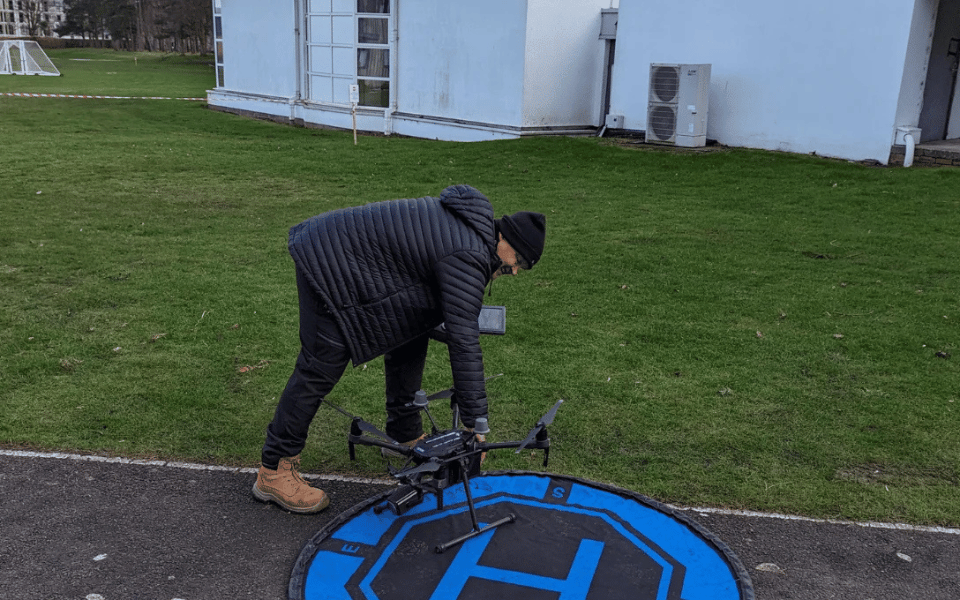

Drones are becoming more common, which means people are increasingly noticing mysterious lights or objects in the night sky and wondering if they’re drones.
There are several reasons you might want to spot a drone at night. Privacy concerns are a big one – for example, a homeowner might feel uneasy if a drone is hovering near their window or backyard after dark.
In one case, an Oregon man discovered a drone flying outside his home at night, sparking questions about privacy and drone use laws.
30 Second Summary
To spot a drone at night, look for blinking or strobing lights that are typically white, red, or green. You can also try to locate the drone by listening for its distinct buzzing sound, which can often be heard when it’s flying within 100-200 feet of your position.
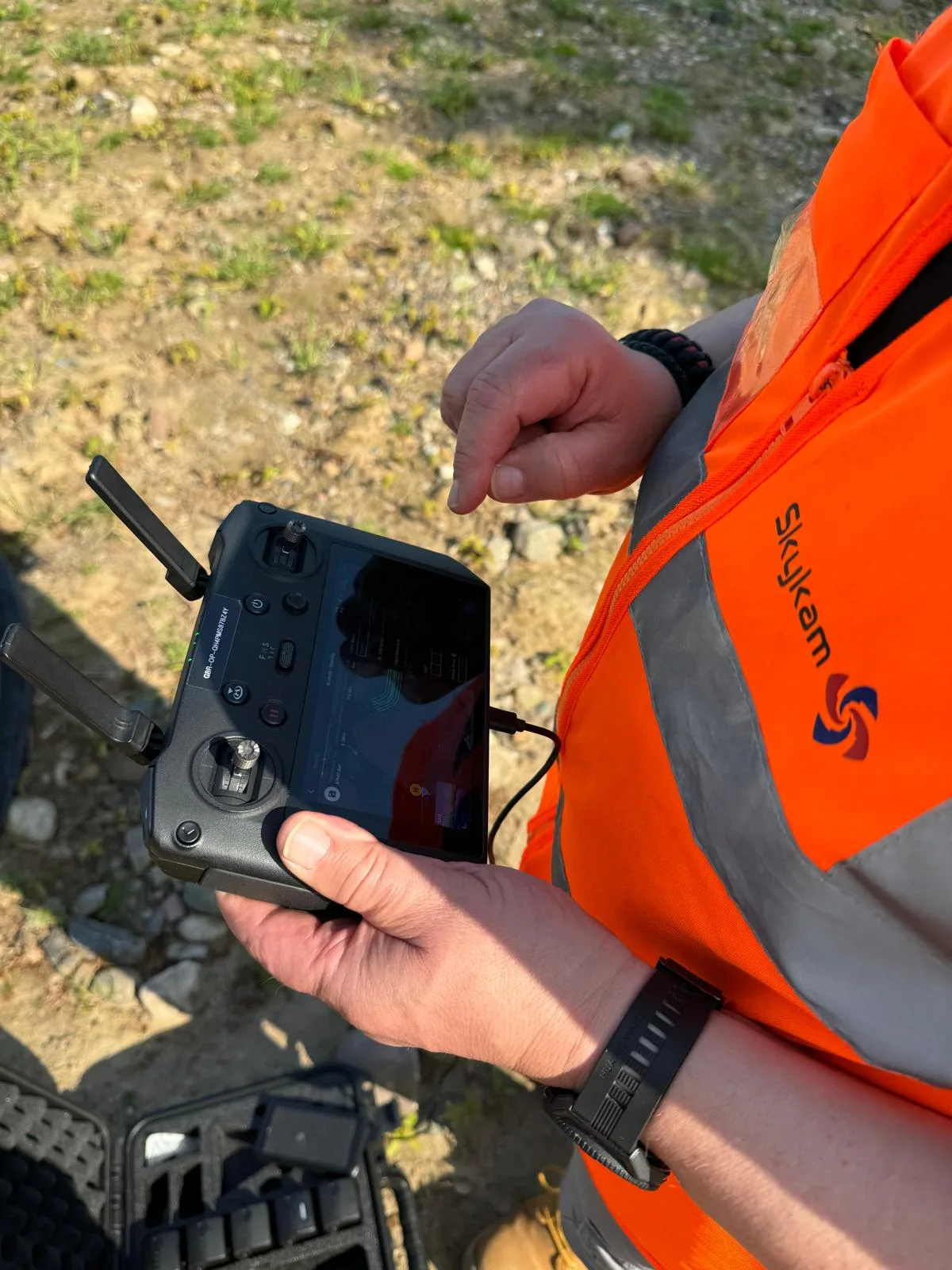
While seeing a drone at night can be unsettling, it’s important to remember that most drones spotted after dark are not spying on you. In fact, research indicates the majority of night-time drones are consumer or commercial models (hobbyist cameras, police or commercial operations) equipped with lights that make them visible
Still, it’s useful to know how to identify drones at night for your peace of mind.
Spotting Consumer Drones at Night
Consumer drones include the common quadcopters used by hobbyists, photographers, and recreational fliers. They are the ones you’re most likely to encounter buzzing around neighborhoods or parks after sunset.
Lights
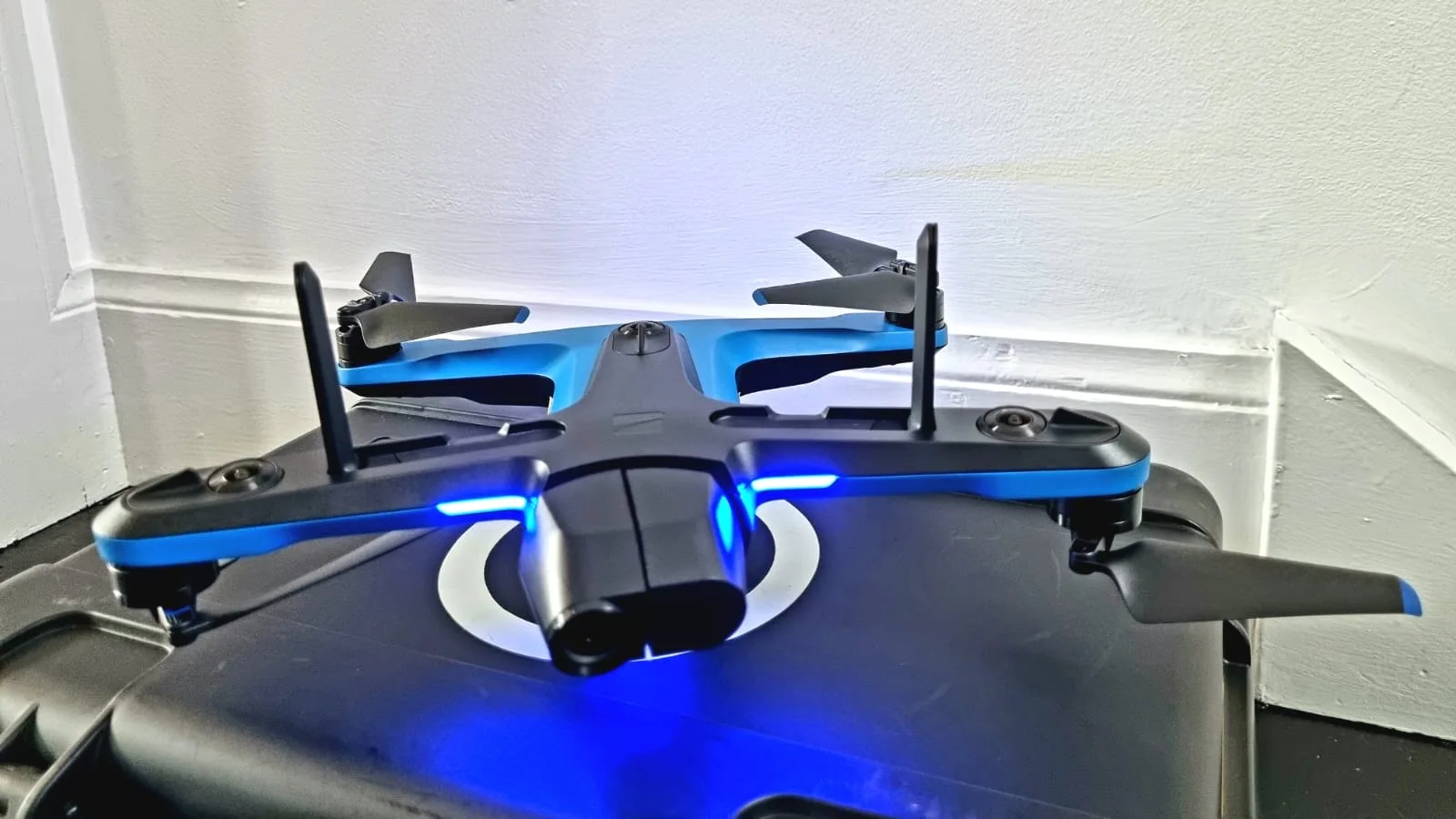
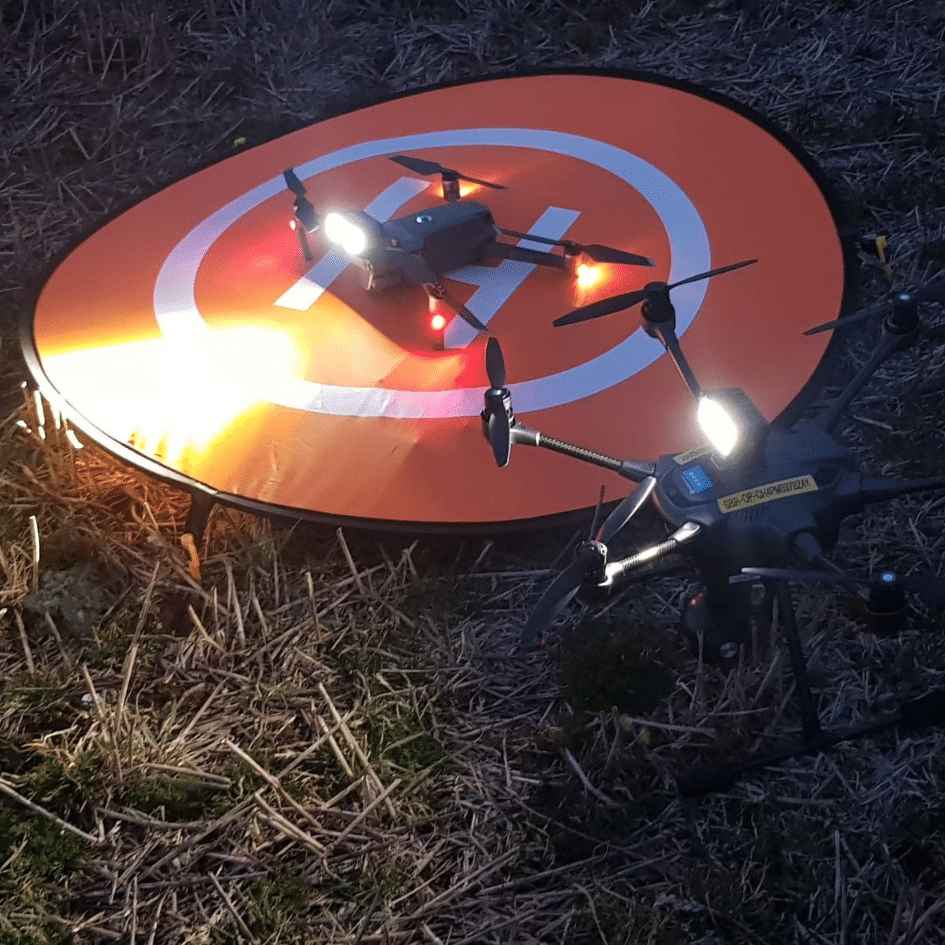
Most consumer drones are equipped with small LED lights for navigation and orientation. These can be red, green, or white lights mounted on the drone’s arms or body.
At night, these LEDs often appear as tiny, bright dots that may blink or change color to indicate front/back or other statuses. Regulations in many areas (like FAA rules in the U.S.) require drones flying at night to have at least one anti-collision light visible from a considerable distance (up to 3 miles/5 km).
If you see a single bright flashing light in the sky at night, there’s a good chance it could be a drone’s required safety light rather than a star.
Sound
Drones produce a distinct buzzing or humming noise due to their rapidly spinning propellers. This sound is often compared to an angry mosquito or a small weed-whacker.
In the relative quiet of night, this high-pitched buzz can be a crucial clue. If you’re outdoors and hear an incessant whirring hum, you might be hearing a drone’s propellers.
Closer drones are louder, but even a small drone can be heard from dozens of yards away in a quiet environment.
(By contrast, large airplanes make a roaring or rumbling noise, and birds or bats flap rather than buzz.)
Size and Shape
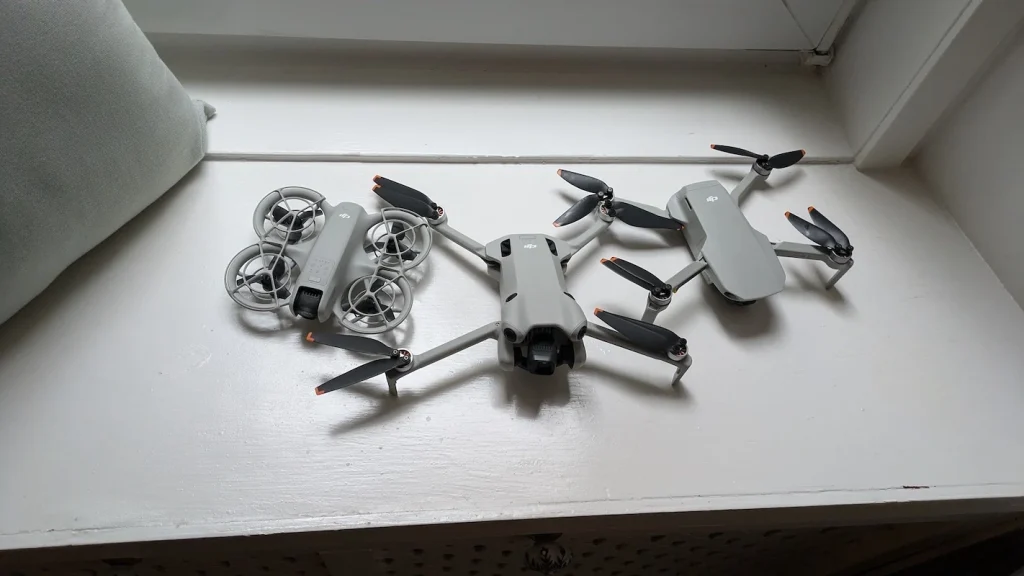
Most consumer drones are small and have a quadcopter shape, meaning four arms with propellers in an “X” configuration. A typical consumer drone might be between the size of a dinner plate to a shoebox, weighing a few pounds at most.
At night, you likely won’t discern the exact shape unless it’s very close or illuminated by a spotlight. However, you might notice the pattern of its lights moving together.
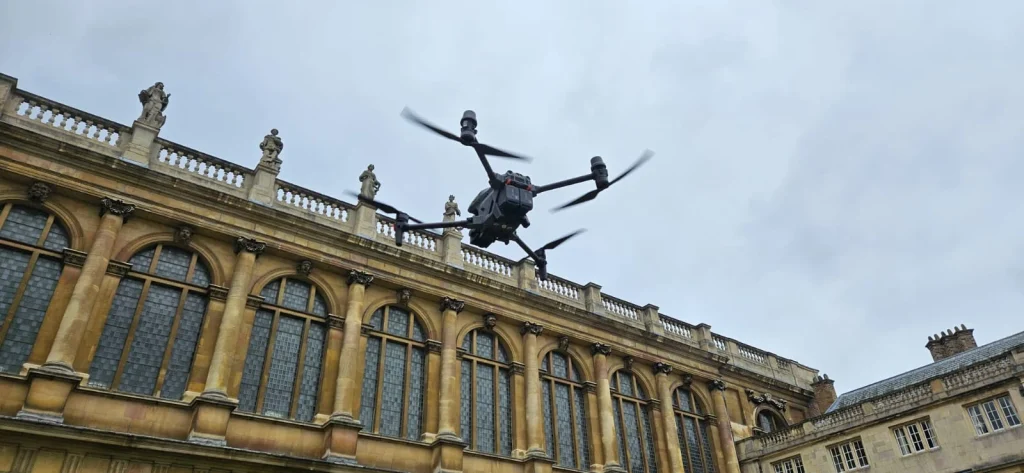
Unlike a plane, whose lights are very far apart (wingtips), a drone’s lights are close together because of its small size. If you do manage to see a silhouette against the sky or a nearby light source, a consumer drone often looks like a dark cross or spider with four rotors.
Flight Behavior
Consumer drones can hover nearly in place, move slowly, or zip around quickly in bursts. They tend to fly below 400 feet (122 m) altitude due to legal limits in many countries.
If you see or hear something that seems very low in the sky (just above treetops or buildings), it could be a drone. They can also stop and change direction much more abruptly than airplanes.
A drone might hover in one spot, then dart off in a different direction or even zigzag. This agility is a hallmark of small drones. Many have programmable light patterns, so you might see the lights blink in a certain sequence rather than the regular navigation light pattern of an aircraft.
Best Methods to Detect Drones in Different Environments
How you spot a drone can depend on whether you are in a city, the suburbs, or a rural area. The background noise and lighting in these environments differ, affecting how you might notice a drone:
Urban Areas (City)
City environments have lots of ambient light and noise. Streetlights, neon signs, and building lights can make a drone’s tiny LEDs harder to pick out. Likewise, traffic, air conditioners, and city life create a constant din that can mask the buzz of a drone.
In urban areas, try to find a relatively quiet, dark vantage point – for example, a higher floor or rooftop away from street noise – to listen and look. Look for movement: a drone’s light might blend in with city lights, but if it’s moving against the backdrop of stationary lights or hovering in an odd spot (between buildings or over a park), that’s a clue.
Also, drones in cities may be closer to the ground (flying between buildings), so you might catch a glimpse of the device itself if it passes in front of a building or streetlight. If you suspect a drone but can’t hear it due to noise, using a radio frequency (RF) scanner or a mobile app (more on those later) can help detect its signal in urban settings where your ears won’t.
City dwellers should rely more on visual cues (spotting an unusual moving light or reflection) since the drone’s sound can be drowned out by urban noise.
Suburban Areas
In the suburbs, night skies are a bit darker than the city and it’s usually quieter late at night. You might have streetlights or yard lights around, but there are more gaps of open, dark sky to spot a drone’s lights.
There is still some ambient noise (distant traffic, neighbors, insects), but during a calm night, you have a better chance of hearing a drone’s buzz than in a city. Step outside and listen if you think a drone is around – you might catch the faint whine of propellers between other sounds.
Visually, scan for any moving light that doesn’t fit the pattern of an airplane (for example, a small light hovering or doing short back-and-forth moves). Using binoculars can help in the suburbs if you see a blinking light: you might resolve it into multiple lights on a single object or see it change direction, confirming it’s a drone.
Also, many consumer drones have red/green lights that indicate front/back; if you see a tiny light that changes from red to green and back as it maneuvers, that’s a giveaway.
Suburban environments allow a mix of both visual and auditory detection – look for odd lights and listen for a buzz when the neighborhood is quiet.
Rural Areas (Countryside)
Rural or remote areas are dark and quiet at night, which actually makes spotting a drone both easier and harder in different ways.
The good news is there’s minimal light pollution, so even a small drone’s LED will stand out against a dark sky. You also won’t have much man-made noise at night, so the soft hum of a drone can be heard from a greater distance with little background interference.
In fact, in a quiet countryside, a drone’s whine can carry quite far since there are no competing sounds and few structures to block the sound. The challenge in rural areas is that the sky is filled with many stars, and you might initially confuse a drone’s light with a star or plane (we’ll cover how to tell them apart below).
Also, because it’s so dark, judging distance is hard – a drone could be relatively close or very far away with a bright light. In rural settings, use the wide-open silence to your advantage: stop and listen carefully for any motor sounds.
If you hear a drone, you might even pinpoint its direction by sound since there are no echoes from buildings. With vision, look for movement against the starry background. Stars won’t suddenly zigzag or hover in a different spot, but a drone might.
Using a telescope or night-vision scope can be especially effective in rural areas to get a closer look at a suspect light.
In summary: The countryside provides a dark canvas for spotting lights and a quiet backdrop for hearing drones, making it one of the easiest places to notice a drone – as long as you know what to look and listen for.
Distinguishing Drones from Stars, Aircraft, and Other Objects At Night
At night, many things can be mistaken for a drone. A bright star, a high-flying airplane, or even a satellite can all appear like moving or twinkling lights in the sky.
Here’s how to tell a drone apart from other common nocturnal sights:
| If you saw… | It might actually be… | How to Differentiate from a Drone |
|---|---|---|
| A bright “star” that isn’t moving, but you’re suspicious (maybe it seems to change colors or flicker). | A Star or Planet (e.g., Venus is very bright, or a twinkling star) | A star will stay in place (relative to other stars) and might twinkle. It won’t move around on a human timescale. A drone will move or drift eventually, even if slowly. Also no sound from a star (obviously). If the light remains fixed in the same spot for an hour, it’s definitely an astronomical object, not a drone. Stars often have a slight blue/red twinkle; drone lights typically blink in a set pattern or glow steadily without the atmospheric twinkle effect. |
| A single light moving steadily across the entire sky, no blinking, and then disappearing. | Satellite or ISS (International Space Station) | Satellites move in a straight line at a constant speed. They do not blink or have multiple lights. They often slowly fade out as they enter Earth’s shadow (appearing to “vanish” when overhead). Drones usually won’t travel for miles in one direction at constant altitude – they tend to stay within a zone. Also satellites are totally silent and very high up. If you see a light glide from horizon to horizon in ~5-10 minutes, it’s a satellite/ISS. A drone would either not go that far or you’d notice it turning or coming back. |
| A blinking airplane-like light high in the sky, moving with a steady course. | Airplane (jetliner or small plane) | Airplanes at night have a distinct multi-light setup: often you can see a flashing white strobe and sometimes a steady red or green on either sidebgr.com. The lights on a plane are also far apart; sometimes you see two lights (landing lights) that appear as a pair moving together. Drones at a distance might look like a single point of light. Also, planes fly much faster and higher – a jet crossing the sky at cruising altitude might only be visible for a couple of minutes. A drone would linger or move slower. If you hear anything from a high plane, it’s a low rumble long after it passes; a drone’s high-pitch whine you’d hear roughly at the same time as the sighting if close enough. Key tip: If you see a red blinking light paired with a green light, that’s an aircraft’s navigation lights, not a drone (drones’ lights are much closer together on the body)bgr.com. |
| A hovering bright light that suddenly moves erratically at low altitude. | Probably a Drone (or possibly a helicopter if larger) | A genuine drone likely appears exactly this way – a light that can hover, then zip or change direction. If you considered it might be a helicopter, check for sound: a helicopter will have a loud rotor “whomp” and often a searchlight or multiple lights. A drone will be smaller with a whine. Erratic motion (sharp turns, quick zigzags) at night is almost exclusively a drone’s domain; manned aircraft don’t do that near the ground. If it’s low enough, you might even make out a drone’s outline as it passes near street lights or against a background. |
| A slow-moving, somewhat erratic flapping object, no lights, just visible against the sky briefly. | Bird or Bat (especially large bats or nocturnal birds) | If it has no lights at all and you only see it because it’s a dark shape against the sky or it passes in front of a light, it could be a bird. Bird flight is characterized by flapping or gliding. You might see it swoop or flutter. Drones do not flap; their movement is more mechanical. Also if it’s truly a bird or bat, you might hear natural sounds (wings flapping, a chirp or screech) whereas a drone has the consistent motor buzz. Birds generally won’t stay in one spot — they either fly by or circle looking for food. If something is circling erratically near a light (like insects swarming or bats catching bugs near a lamp), that’s not a drone either. Drones usually have lights and a purpose; a random dark fluttering thing at night is wildlife. |
| A sudden streak of light that lasts a second or two and then disappears. | Meteor (Shooting Star) | A meteor will streak very fast, often with a tail, and vanish. Drones cannot move anywhere near that fast – even racing drones would take tens of seconds to cross the sky visibly. If you blink and the object is gone, it was not a drone. Meteors also sometimes have a blue or green tint and leave a brief trail; a drone is a solid object with persistent lights. So if you see a quick streak that covers a large portion of sky in an instant, you witnessed a meteor. (Make a wish! 😊) |
| Multiple tiny lights moving in formation, high up. | Starlink Satellites (or similar satellite train) | Recently, people have reported “a line of moving lights” which is actually a train of satellites (like SpaceX’s Starlink launching many satellites at once). They appear as a string of pearls moving one after another. This can look very otherworldly, but it’s not drones – drones do not fly that high in perfect formation over long distances. If you see a line or grid of lights way up, that’s almost certainly satellites. They usually dim out as they enter shadow. Drones could theoretically fly in formation (some light shows do this with many drones), but those are done at lower altitude and you’d likely know if there was a drone light show scheduled in your area. |
Drone vs. Star/Planet
Stars (and planets) are distant celestial objects that appear as fixed points of light. A star might twinkle (changing brightness due to atmospheric distortion), but it will not move rapidly or make any sound.
If the light you see is completely stationary relative to other stars for long periods, it’s probably a star or planet, not a drone. A drone’s light will move or shift position noticeably over time (even if just bobbing in place slightly). Also, if you’re unsure, listen – a star won’t buzz, but a drone might.
Tip: Pay attention to any unusual lights in the sky that do not resemble the steady pinpoints of stars. For example, a drone’s anti-collision light might flash in a regular pattern or appear as a cluster of two or three close-together lights, which a star would never do.
Drone vs. Airplane
Drones can look similar to distant airplanes at first glance because both can have bright lights. However, there are key differences in their lighting and behavior.
Airplanes (and helicopters) are required to have a specific array of navigation and anti-collision lights: typically, a flashing white strobe on the tail and/or wing tips, a steady red light on the left wing, a steady green light on the right wing, and often flashing beacon lights on the top and bottom of the fuselage. These lights are usually far apart (since aircraft are large) and move smoothly across the sky in a straight line.
If you see multiple lights in a pattern (red/green on either side, with one or two blinking whites) high up moving steadily, that’s an airplane. By contrast, a drone at night often shows just one or two concentrated lights.
Under U.S. rules, drones flying at night need only have one bright anti-collision light visible from three miles away – so you might just see a single point flashing.
Also, consider movement: airplanes cruise in a straight line or gentle curve across the sky, and they won’t suddenly reverse direction or hover. Drones can hover and make abrupt turns or even stop mid-air and change course, which planes cannot do.
Altitude is another clue: if the object seems extremely high up (with tiny lights that take many minutes to cross the sky), it’s likely a plane or even a satellite, because most consumer drones stay well below the altitude of commercial aircraft.
Finally, sound: a jet plane or full-size helicopter, if low enough, will produce a deep roar or throbbing sound you can hear from far away. A drone has that distinctive high-pitched buzz. If a plane is high enough to be nearly silent, it will also be visibly moving like a typical plane, not hovering.
Drone vs. Helicopter
Helicopters at night can sometimes hover and might be mistaken for drones, especially police or news helicopters that use searchlights.
A key difference is size and sound. A helicopter, even when hovering, makes a loud chopping or thumping noise due to its rotors – it’s a sound you can feel as much as hear when it’s low.
It also typically carries bright spotlights and the same kind of aviation lights planes use (red/green nav lights and white strobes). If you see a single extremely bright spotlight moving around in the sky or hear a heavy “whup-whup” rotor sound, that’s a helicopter.
A drone, on the other hand, will have much smaller lights (not powerful searchlights) and that higher buzzy mosquito noise. Additionally, helicopters are much larger – if it’s close, you’ll see a helicopter’s body or at least a very bright profile of lights; a drone will remain just a point or small cluster of lights.
Police and rescue helicopters often broadcast announcements or sirens; a drone will not. Essentially, scale and noise separate them: a helicopter is a large vehicle, while a drone is more like a flying gadget.
Drone vs. Satellite
Satellites (and the International Space Station, ISS) are common in the night sky and can look like a “moving star.”
A satellite is usually seen as a single steady light (not blinking) that glides across the sky at a constant speed, often taking 2-5 minutes to go from horizon to horizon.
Satellites do not have flashing lights – they shine by reflecting sunlight and often appear and disappear as they enter Earth’s shadow. If you see a light that moves steadily in one direction across the entire sky and never changes course or speed, it’s likely a satellite or high-altitude aircraft.
A drone, by contrast, typically wouldn’t be moving dozens of miles across the sky; it stays within a relatively local area. Also, satellites are completely silent and usually very high up (hundreds of miles), so they appear as tiny consistent dots.
If you track a light and it suddenly fades out as it moves (disappearing as if someone dimmed it) with no sound, that was probably a satellite going into Earth’s shadow, not a drone turning off its lights.
Drone vs. Bird/Bat
You normally wouldn’t see birds at night illuminated in the sky (except perhaps large bats or night birds briefly in front of a light). Birds and bats do not have lights, of course, and they generally don’t fly high enough to appear as lights against the sky.
However, a bird might be mistaken for a drone if you only hear something whir by or see a quick fluttering shadow. The difference is, birds flap their wings and their movement is usually a flapping or gliding motion.
Drones have continuous propeller thrust, so their movement is smoother (or at least mechanically stable) and they hover or move in straight lines that birds cannot maintain.
If you hear fluttering or chirping it’s a bird; if you hear a steady electrical buzz, it’s a drone. Occasionally, people have reported seeing what they thought was a drone hovering, but it turned out to be an owl or large bird perched on a post with a bright star or light behind it!
Such cases are rare. In general, if you see any kind of light, it’s not a bird. And if you don’t see a light, just a dark flying object at night, it could be a bird or bat – but then you likely would hear natural sounds (wings, calls) instead of a motor.
Drones can also fly in bad weather or at night when birds typically roost, so time and conditions are a clue too.
Drone vs. “UFO” (Unidentified Flying Object)
Drones have probably replaced a lot of UFO sightings nowadays. Many classic UFO reports – a hovering light, zipping in impossible ways – match what modern drones can do.
If you see an odd light performing unusual movements, think drone before alien. 😄
Drones can start and stop abruptly, hover then speed off, and their lights can appear and disappear if the drone turns (because the orientation of lights changes). So before assuming something inhuman, consider that a hobby drone with LED lights might be the culprit.
If it’s relatively close, you might even hear that telltale buzz confirming it’s a man-made craft.
By considering the lights, movement, altitude, and sound, you can usually figure out whether that night sky object is a drone or something else. Next, we’ll look at how military drones differ, since they can be harder to spot.
| Feature | Consumer Drones (Hobbyist/Commercial) | Military Drones |
|---|---|---|
| Size & Altitude | Small (often quadcopters a few pounds). Usually fly below 400 ft (122 m) per regulations, close to the ground and operator. | Often large (wingspans like small planes for big drones, or specialized small tactical units). Commonly operate at high altitudes (thousands of feet), often above normal sight ranges. Small tactical mil drones fly lower but typically still within mission needs (can be just above treetops for recon). |
| Lights | Have bright LED navigation lights (red, green, white) for orientation and visibility. Legally required to use an anti-collision strobe visible ~3 miles at night. Often you’ll see one or multiple lights blinking or changing color on the craft. | Little to no visible lights; military drones run dark to avoid detection. They do not display the standard red/green/white lights that civilian aircraft do (or might use infrared lights invisible to human eye). If you see no lights at all on a craft at night, it could be military (or a stealthy illicit drone). |
| Sound | Distinct buzzing or humming sound from propellers, especially on quadcopters. Easily heard at close range; moderately loud up to a few hundred feet in quiet conditions. Higher-pitched for smaller drones. | Very quiet or distant-sounding. High-altitude drones are nearly silent from the ground. Low-altitude military drones (including small ones) may emit a hum but generally are quieter than consumer models (due to design or distance). Large military drones have engine noises but if flying high you may not hear anything. |
| Flight Behavior | Can hover in place, move in spurts, and even do acrobatics or quick turns. Often seen making erratic or agile movements (a hobbyist might zip around for fun). Limited flight time (usually 20-30 minutes), so they won’t stay all night. | Tend to fly in steady, systematic patterns (e.g., straight reconnaissance paths or circular loitering) for long durations. Rarely performs sudden aggressive maneuvers unless it’s a small tactical drone. Can remain airborne for hours, maintaining a presence over an area. |
| Technology | Equipped with consumer-grade cameras (you might see a gimbal underneath) and LED indicators. Control link via radio (2.4/5.8 GHz) – can be detected by RF scanners. Often emits Wi-Fi signals (for video feed) that can be intercepted. | Equipped with advanced sensors (thermal cameras, radar, etc.) and possibly weapons (on combat drones). Use encrypted radio or satellite links that are harder to detect. May have coatings or design features to reduce radar and noise. Unlikely to emit Wi-Fi or easily detectable signals publicly. |
| Typical Use Cases | Photography, hobby flying, surveying, delivery. Likely to be seen around populated areas, events, or wherever hobbyists might be (parks, neighborhoods). Often operated within line of sight of a nearby pilot on the ground. | Surveillance, reconnaissance, military operations. Seen near military bases, conflict zones, borders or during special operations. Operators could be miles away (remote piloting from a base). Rarely seen over random residential areas without reason. |
| Examples | DJI Phantom/Mavic series (white or grey quadcopters with blinking lights), small racing drones with LEDs, photography drones hovering to take night shots (with a red or green tail light). Even police drones (they are similar in shape but might have identification markings or flashing police lights during use). | MQ-9 Reaper or Predator (large airplane-like drone, usually no lights), RQ-20 Puma (small hand-launched military drone, looks like a little plane glider, usually quiet electric motor), Surveillance drone at border (flying high and quiet, only visible on radar). These would appear as either a dark moving shape against sky or not visible at all, perhaps a faint engine hum. |
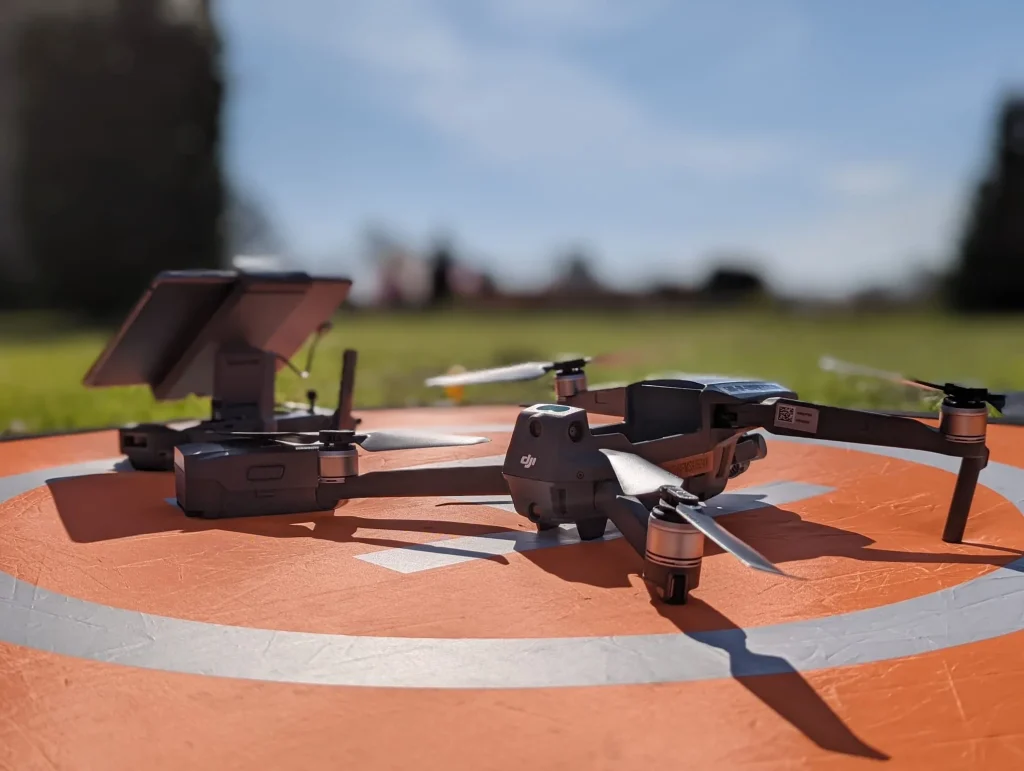
Spotting Military Drones at Night
Not all drones are small toys – some can be much larger, more sophisticated, and operated by militaries or government agencies. Military drones (also known as UAVs – Unmanned Aerial Vehicles) include everything from high-altitude surveillance drones to smaller tactical drones used by the military or special forces.
Spotting a military drone at night can be more challenging because they are often designed for stealth and endurance.
Here are some characteristics and signs that differentiate military or government drones from typical consumer drones:
Minimal Visible Lights
Unlike consumer drones that often have bright orientation lights, military drones usually fly without noticeable lights at night. They intentionally minimize lighting to avoid detection.
A large military UAV on a night mission will likely have no external LEDs or beacon (or only dim, infrared lights invisible to the naked eye).
If you see a flying object at night with absolutely no lights (yet you have some other indication something is there, like engine noise or it blotted out stars), it could be a military drone.
Example: A Predator or Reaper drone (used by military forces) typically doesn’t display the kind of running lights that civilian aircraft do when it’s in a combat zone – it relies on other methods to avoid collisions, staying dark to the ground observer.
Quieter or Distant Sound
Military drones tend to be larger aircraft (often fixed-wing drones with propeller or jet engines) that operate at higher altitudes than hobby drones, so you might not hear them at all from the ground.
High-altitude reconnaissance drones can fly tens of thousands of feet up, effectively nearly silent from the ground. Even lower-flying military drones use advanced propellers or jets that may be quieter or have a less noticeable sound profile compared to the high-pitched whine of a quadcopter.
For example, a large surveillance drone might sound like a distant low hum or buzz, much softer than a nearby consumer drone. On the other hand, small tactical military drones (like those used by soldiers for scouting) might resemble consumer drones in size and noise, but those are usually used at closer range and still often lack the bright lights.
Higher Altitude and Longer Distance
Military drones often fly much higher and further than consumer models.
A consumer drone usually stays within a few hundred feet of altitude and within line of sight of the operator (often within a mile or so). Military drones, however, can operate at altitudes above 10,000 feet (3,000 m) and may be controlled via satellite links, allowing them to roam dozens or even hundreds of miles away from the operator.
This means if a drone-like object is so high that it’s just a tiny dot or not visible at all (only maybe caught on radar or as a shadow crossing stars), it could be a military UAV.
Flight Patterns and Behavior
Military surveillance drones often have distinct flight patterns.
They might loiter over an area for a long time (circling or flying racetrack patterns for hours) or fly in straight reconnaissance paths over a border or battlefield. They rarely perform the quick, jerky maneuvers that a hobby drone might do for fun.
If you observe an aircraft at night that seems to be persistently orbiting the same area at a relatively constant speed for a long duration, that could indicate a military or law enforcement drone.
Consumer drones, by contrast, usually have limited battery life (20-30 minutes typically) and won’t stay aloft in the same spot for hours on end. So, duration of flight is a clue: a drone that just keeps going and going (especially at high altitude) is likely not your neighbor’s quadcopter.
Size and Shape
Many military drones are larger, fixed-wing aircraft rather than the small quadcopters people fly at home.
For instance, the MQ-9 Reaper has a wingspan of over 50 feet – about the size of a small plane. At night you probably can’t directly gauge size unless it’s low enough to see against something.
But if by chance you see a silhouette passing in front of the moon or a low-flying large drone with city lights behind it, you might notice it has an airplane-like shape (with wings) rather than four rotors.
Some military drones do use rotor designs (like smaller reconnaissance drones or VTOL drones), but again those typically wouldn’t have blinking LED arrays.
Context and Location
Consider where you are spotting the drone. Military drones are rarely seen over ordinary residential areas unless there’s a special operation or emergency.
They are more likely to be operating near military bases, training ranges, borders, or conflict zones.
If you live near a military installation or in an area with known military training exercises, seeing a drone at night with no lights and hearing a distant hum might indeed be a military UAV.
Conversely, if you’re in a typical suburb far from any base, the chances of a large military drone overhead are very low – it’s more likely a hobby or commercial drone.
Example: During certain disaster responses or large-scale events, the National Guard or police might deploy military-grade drones for surveillance; in such cases, you might hear reports in local news.
But in general, if you think you spot a military drone in a normal neighborhood, think twice – it could be a false alarm.
Detection Difficulty
Military drones are designed to avoid detection, so spotting them is inherently difficult.
They might employ quieter engines, low-observable profiles, and of course no running lights, making them virtually invisible at night to the naked eye.
Often, even enthusiasts can only track military drones with special equipment (like radio scanners, radar, or thermal scopes) rather than visually.
If you are specifically on the lookout for military drones, a thermal imaging device or night vision could pick up something you can’t see normally.
For example, a military drone’s exhaust or electronics might emit heat that a thermal camera could detect as a moving blob against a cool night sky.
A military drone at night will usually be inconspicuous: likely no visible lights, possibly a faint distant hum (or no sound if very high), and flying in a steady, purposeful way at altitudes or durations far beyond a hobby drone. If it has lights, they might be infrared (visible through night vision goggles but not to the eye). The average person will rarely encounter a military drone directly; most often, mysterious night drones are of civilian origin. But being aware of these differences can help you make an educated guess about what you’re seeing.
(Note: If you suspect you’re seeing a military or law enforcement drone conducting surveillance and it concerns you, the advice is generally to not interfere – these drones are likely operating legally in restricted airspace. You can inquire with local authorities if needed. But at least you’ll know the signs that it’s not just a hobbyist.)
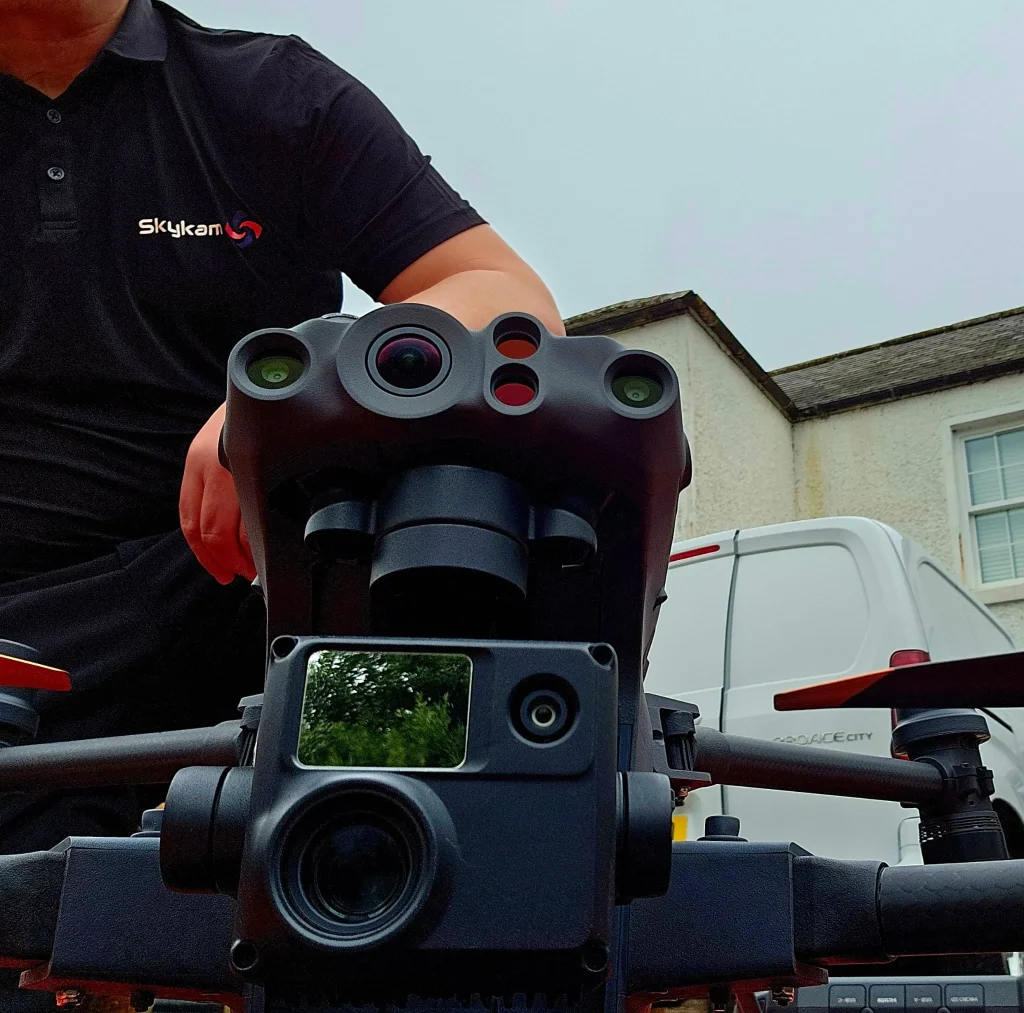
How To Spot A Drone In at Night In Different Weather
Weather plays a huge role in whether you can spot a drone. Certain conditions will obscure visual or audio cues, while others might enhance them:
| Weather | Visual Visibility | Auditory Cues |
|---|---|---|
| Clear Sky 🌕 | Excellent – Unobstructed air means drone lights are clearly visible from far away. A moving light stands out against stars. On moonlit nights, you might even see the drone’s body briefly. | Good – Minimal ambient noise. In the still of a clear night, the drone’s buzz can be heard from a considerable distance. Sound travels well in cool night air, though very strong calm conditions (temperature inversions) can sometimes carry sound oddly far. |
| Light Fog / Mist 🌫️ | Poor – Fog diffuses and dims lights. A drone’s LEDs will appear as a faint glow or not at all until the drone is quite close. The misty air scatters the light, so you might just see a blob of light, not a distinct point. | Fair – In a quiet foggy setting, you may still hear the drone if it’s nearby, since fog itself doesn’t make noise. Sound may carry a bit in fog, but it can also be dampened slightly. You might hear a soft buzz without being able to see the drone well. |
| Heavy Fog / Low Clouds 🌁 | Very Poor – Thick fog or low clouds can almost completely hide a drone. You likely won’t see any lights until the drone is virtually overhead (and even then it may just glow faintly). A drone above a low cloud layer is effectively invisible from below. | Fair – You might catch the sound if the drone is directly above you (as the sound can come down through the fog). But heavy fog can absorb higher-frequency sounds, reducing the distance you’ll hear the drone. Overall, you’ll probably hear it before you see it in dense fog. |
| Light Rain 🌧️ | Poor – Light rain can diminish visibility somewhat. You might see drone lights blinking through the rain, but with reduced intensity and perhaps looking distorted as raindrops pass in front. If clouds are thick, the background is darker which helps a bit, but rain can still obscure small lights. | Poor to Fair – The patter of rain creates a constant shhh sound that competes with a drone’s hum. In light rain, you might still pick up a nearby drone’s buzz between the raindrops hitting your umbrella. But any significant rain noise will mask distant drones. Most hobby drones avoid flying in rain anyway. |
| Heavy Rain ⛈️ | Very Poor – Heavy rain will almost entirely obscure a drone’s lights (and likely force the drone to land soon). You might see a vague flash if the drone is extremely close, but generally visibility is near zero in downpour for small lights. | Very Poor – The loud noise of heavy rain on roofs, trees, and ground will drown out nearly all but the loudest drones. Unless the drone is mere feet away, you won’t hear it over a downpour. Again, few drones would stay out in such weather. |
| Snow ❄️ | Poor – Snowfall, especially big flakes, acts like fog. It can hide or blur lights. You might see a soft pulsing glow if a drone is flying in snow, but determining distance or exact location is hard. On the upside, if there’s snow on the ground, a drone’s light might faintly illuminate the snow directly below it, indirectly revealing its presence. | Fair – Snow itself falls quietly, so a calm snow night can be nearly silent. This means if the drone is within earshot, you could hear it. However, snow can muffle sound slightly, and if there’s wind with the snow, that wind noise will be an issue. Overall, you have a chance to hear a drone in snow if you’re attentive and conditions are still. |
| Windy (Clear) 💨 | Good (visually) – Wind alone doesn’t hide the drone from sight; on a clear windy night you can see lights fine. But a drone might be less stable, causing its lights to bob around more. No visual obstruction unless the wind is kicking up dust/debris. | Poor – Wind noise (trees rustling, howling around buildings) can cover up the drone’s sound. Additionally, if you are upwind of the drone, the wind will carry the sound away from you, effectively reducing what you hear. In strong wind, you might not hear a drone at all until it’s very close. |
| Calm, No Moon 🌑 | Good – A very dark, moonless night makes any light stand out sharply. If a drone has lights, they will be extremely apparent against a black sky. However, if a drone has no lights, a moonless night makes it essentially invisible (unless you have night vision or it passes in front of stars). So lights = easy to see; no lights = nearly impossible. | Excellent – If it’s dead quiet (no wind, no traffic) and dark, your hearing becomes more sensitive. You might detect a drone from hundreds of yards away as a faint buzz. Many reports of drone sightings at night start with “I heard this weird buzzing” in such calm conditions. |
Clear Skies
A clear, calm night is the best scenario for spotting drones. With no fog or precipitation, a drone’s lights can be seen from afar and the sound isn’t drowned out.
Stars are visible, which helps you have reference points (a moving light among fixed stars stands out). On a very clear night with a moon, there’s even a chance you could see the actual shape of the drone if it flies between you and the moon.
Clear air allows any sound to travel without much attenuation, so you might hear the drone’s buzz from further away. However, note that crisp cold nights sometimes carry sound farther (sound travels well in cold dense air), so a drone might sound closer than it is.
In summary, clear skies = high visibility and audibility.
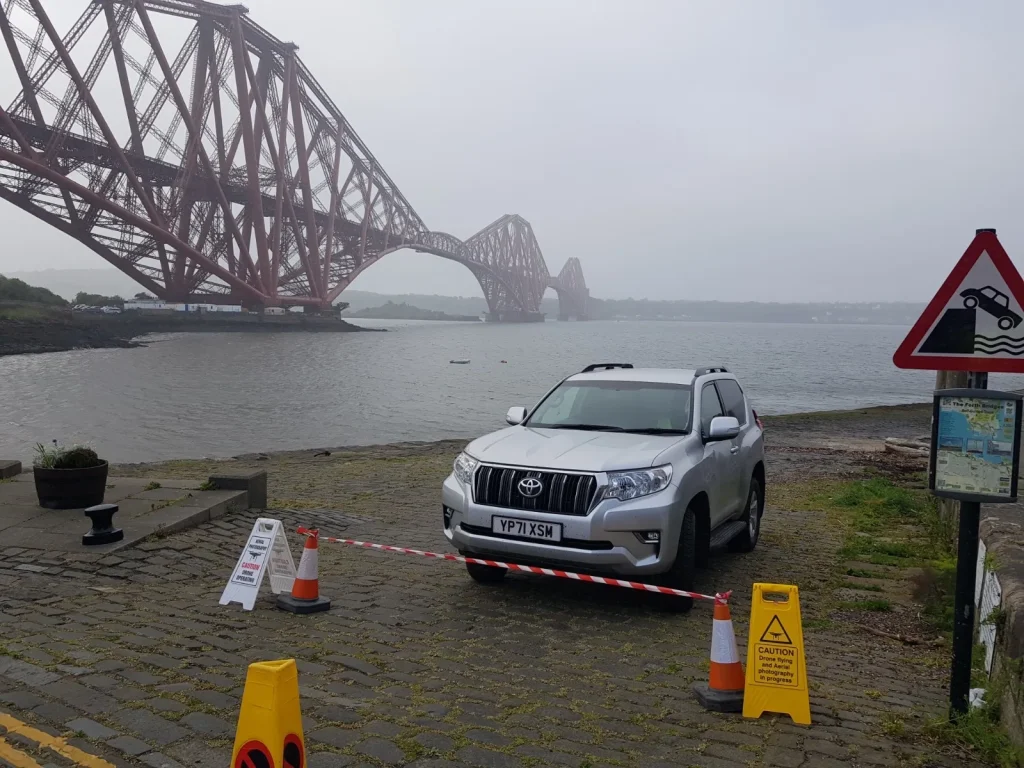
Fog or Mist
Fog is tough for drone-spotting. Even a shallow mist can diffuse light, causing a drone’s LEDs to appear as a faint glow or not visible at all until the drone is quite close.
Fog, rain, or mist can scatter light and obstruct a drone’s visibility. You might only notice a drone in fog when it’s within a few dozen yards, as the lights will look dim and hazy.
Sound in fog can be a mixed bag: sometimes fog can actually help sound carry (moist air can transmit sound waves effectively), but often the droplets slightly muffle and distort the sound. The drone’s hum may seem lower-pitched or harder to locate in thick fog.
If it’s very foggy, even a fairly large drone could fly overhead unseen, with only a vague noise. Your best bet in fog is to rely on hearing; you likely won’t see much until the drone is right on top of you.
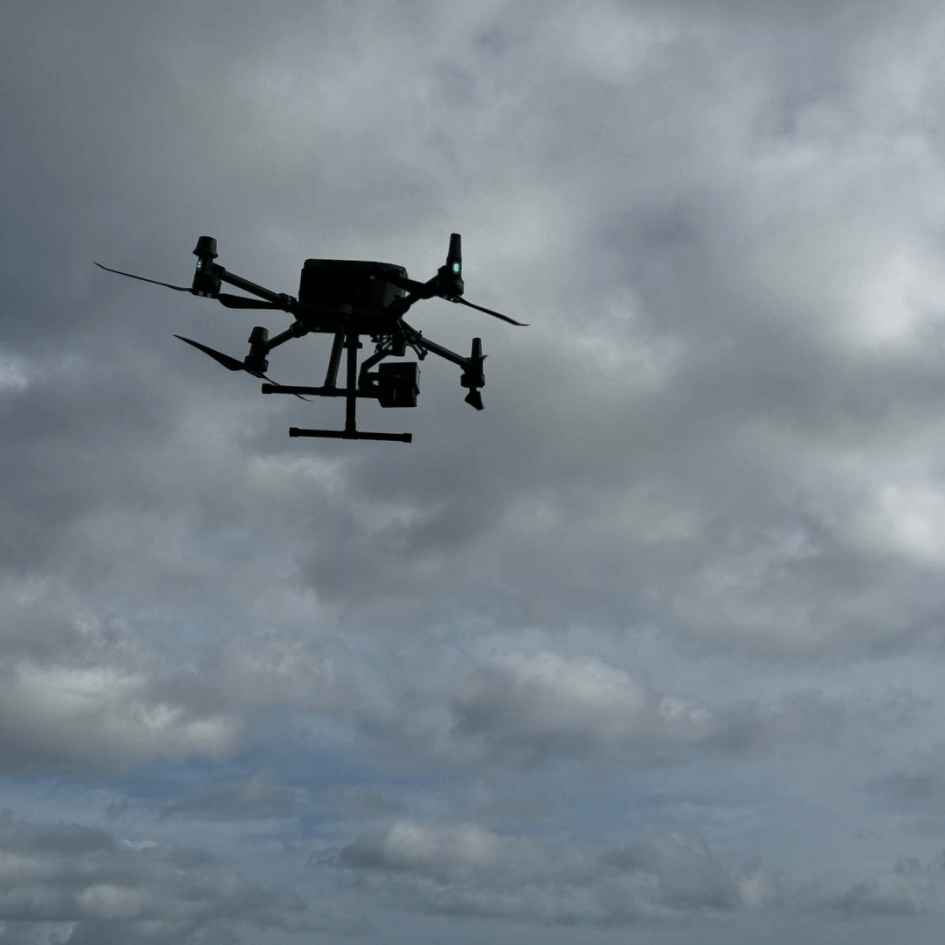
Rain
Drones and rain generally don’t mix well, at least for consumer drones – heavy rain can short out circuits or add weight. So chances are you won’t see a hobby drone flying in anything more than a light drizzle.
Rain produces a similar effect to fog by obscuring and refracting light. You might see the drone’s light blinking through rain but it will be weaker or sporadic as rain passes in front of it.
Sound-wise, rain creates a constant background noise – the patter of raindrops on roofs, trees, and ground can drown out the soft buzz of a drone. A light rain might not completely mask the drone’s sound, but a heavy downpour almost certainly will.
If you suspect a drone in light rain, you might catch glimpses of its light reflecting off water droplets (like a tiny flicker in the rain), or you might notice an unusual buzzing between the sound of rain if you’re under a shelter.
Snow
Snowfall can range from light flurries (not much effect) to heavy snow (nearly like fog). Snow can reduce visibility significantly if it’s falling densely.
The drone’s lights might be seen as a faint blink through the snow or not at all if it’s really heavy. One advantage is that snow-covered ground can reflect light; if a drone is low, you might see a reflection of its lights on a white snowy ground or trees for a brief moment.
Snow is typically quieter than rain – a calm snowfall at night is very quiet, which is good for listening. However, if there’s wind with the snow, then you have wind noise as a factor. Cold air (often accompanying snow) can help carry sound, but the snow itself can absorb some of it.
Wind (Without Precipitation)
Windy conditions by themselves affect drone spotting mainly through noise. A strong wind can create a loud rustling of leaves, howling through structures, and other ambient noises that will mask the relatively quiet sound of a drone.
Visually, wind might cause a drone to struggle and sway, which could make its light move in a less predictable way (but that could actually catch your eye). On a clear but windy night, you might see a drone’s light but not hear it at all until it’s very close, because the wind noise is covering it.
Also, wind can carry sound away – if you are downwind of a drone, you might hear it well, but if you’re upwind (the wind blowing from you toward the drone), the sound may not reach you effectively.
Clouds and Moonlight
If the night is cloudy (overcast) but without precipitation, it’s simply darker (no moon/star light). That actually makes drone lights stand out more against the dark clouds – many drones flying high have been noticed because their light reflected off low clouds.
If a drone is below the cloud layer, you’ll see it normally (unless the clouds are literally on the ground as fog). If a drone is above a low cloud layer, you won’t see the drone itself, but you might see an occasional flash on the clouds if the lights are strong enough (similar to how lightning illuminates clouds, but in a tiny localized way).
Moonlight on a clear night can silhouette a drone if it passes in front of the moon, and generally gives a bit more ambient light so you might catch a reflection off the drone’s body. However, moonlight also brightens the sky which could slightly reduce contrast of a drone’s lights.
In summary, good weather = good drone-spotting. Adverse weather makes it much harder to see or hear drones (and usually discourages drones from flying in the first place). The table in the next section provides a quick comparison of how different weather conditions impact drone detection.
Drone Detection Tools and Methods
Sometimes your eyes and ears alone might not be enough to confirm a drone, especially at night. Thankfully, there are tools and techniques that can augment your natural senses. .
Using Your Eyes (Visual Detection)
Scan for Lights
As obvious as it sounds, the first step is always to visually scan the sky for any out-of-place lights. At night, LED lights are the easiest giveaway for a consumer drone.
Look for small, moving lights that don’t match the usual appearance of stars or aircraft. If you spot a light, observe its behavior: Does it hover or move erratically? Does it blink in a pattern? This can confirm a drone sighting quickly.
Be patient and watch one area of the sky for several seconds since drones can zip by quickly or hover momentarily and then move.
Binoculars or Telescope
Using optical aids can greatly improve your ability to identify what you’re looking at.
Binoculars are very handy for drone spotting at night – they gather more light than the naked eye and can magnify a small drone light into something where you might even see the drone’s shape or multiple lights.
If you suspect a drone and have binoculars, focus on the moving light: you may suddenly see the outline of the drone or the separate red/green lights on it, confirming it’s not a star.
A telescope can do the same for a more distant object, though it’s harder to track a moving drone with a telescope’s narrow field of view. Still, a telescope could show you details like the form of the drone if it’s not too fast-moving.
Using these tools, observers have noted seeing the arms of a quadcopter or the blinking pattern more clearly. Just be careful not to mistake lens flares or internal reflections in your optics for additional mystery lights.
Night Vision Devices
Night vision goggles or scopes amplify very low light and can turn a dark sky into a much brighter scene. Night vision equipment can help you spot drones that have dim lights or no visible lights.
For example, some drones might use infrared LEDs (invisible to the naked eye) – a night vision scope could pick up those as a glow. Even if the drone has no lights at all, a good Gen 2 or Gen 3 night vision device might let you see the actual object against the sky if there’s starlight or moonlight.
You could see a faint silhouette or the movement of a shape. Night vision won’t help with the drone’s sound, but it’s a powerful visual aid if you have access to it.
Bear in mind that consumer night vision can be pricey, but there are also apps that attempt to use your phone’s camera for night vision (with limited success).
If you’re very determined, even a low-light camera or a camera with a long exposure setting can catch the streak of a moving drone at night, which you might review after.
Tip: Night vision tools can reveal drones with dim or no lights by amplifying low-light conditions, helping to spot faint silhouettes or infrared LEDs.
Thermal Imaging Cameras
A thermal imager (infrared camera) detects heat rather than light.
Drones, especially larger ones or those working hard to hover, emit heat from their motors and batteries. Security professionals use thermal cameras to detect drones at night by their heat signatures.
Even if you can’t see a drone’s lights, a thermal scope might show a bright spot moving in the sky if the drone’s components are warm. This works well against a cold night sky background.
Handheld thermal monoculars are becoming more common (though still expensive). If you happened to have one (or some advanced smartphone attachment like a FLIR camera), you could scan the sky and perhaps pick up a moving heat source that correlates to where you think a drone might be.
Thermal can even detect drones in modest fog or behind thin foliage, since heat can be sensed through some obstructions better than visible light.
It’s worth noting that some military drones are designed to have low thermal signatures, but your typical drone will glow on thermal after a bit of use.
Thermal imaging has been effectively used to spot drones that are otherwise invisible in darkness.
Using Your Ears (Auditory Detection):
Careful Listening
In a quiet environment, simply listening can often confirm a drone’s presence. As discussed, drones make a unique buzzing or high-pitched humming sound.
At night, ambient noise is generally lower, so this sound can stand out if you’re attentive. If you suspect a drone, try to eliminate other noises: turn off your music or TV, ask others to be quiet for a moment, and focus your hearing.
You might even close your eyes, as removing visual distractions can enhance your auditory perception. If you hear a faint zzzZZzz rising and falling in pitch, that’s a strong indicator of a drone flying nearby.
Tip: Move around a bit to see if the sound gets louder, indicating you’re getting closer or facing the drone’s direction. Keep in mind, higher-frequency sounds from small drones dissipate faster with distance – so if you hear it clearly, it’s probably not too far away.
Multiple Listeners
If you’re with family or neighbours, have others listen from different positions. Sometimes one person might hear the drone better from one spot than another due to buildings or walls blocking sound.
By triangulating where the sound is heard loudest, you can get an idea of the drone’s location.
For example, if Person A hears it loud in their backyard and Person B hears it faintly in front of the house, the drone might be towards the back side.
This is a bit informal, but it can help track a moving drone by sound if it’s dark.
Sound Detection Devices
There are specialized acoustic sensors made to detect drone noises. These are typically used in professional anti-drone systems and consist of arrays of microphones tuned to pick up the specific frequencies of drone motors.
However, there are simpler versions the public can use. One example is a parabolic microphone – a dish-shaped mic that focuses sound from a direction (often used for bird watching or eavesdropping at a distance).
For under $100, one can get a parabolic mic that can pick up sounds hundreds of feet away. Such a device can let you hear a drone from farther away or pinpoint the direction by swiveling it until the drone buzz is loudest.
Keep in mind though, parabolic mics work best if you generally know where to point them.
There are also reports of smartphone apps that use your phone’s microphone to detect drone-like sounds, but those are less proven.
In any case, using technology to amplify or detect the sound can give you an early warning of a drone approaching even if you can’t see it yet.
Electronic and Tech Aids
Radio Frequency (RF) Detectors/Scanners
Drones are controlled via radio waves (commonly on 2.4 GHz or 5.8 GHz frequencies for consumer drones) and many transmit telemetry or video feeds back to the operator.
An RF scanner or RF detector can pick up these communications. There are devices specifically marketed for drone detection that scan for the radio signature of popular drones.
When they detect a signal, they can alert you that a drone is nearby and sometimes even what type of drone it is. These devices are becoming more accessible to consumers.
Some are handheld, others are set up around a property for continuous monitoring. They work by identifying the unique frequencies and protocols drones use to talk to their controllers.
Tip: If you are technically inclined, a software-defined radio (SDR) dongle attached to a laptop can also scan the wireless spectrum for drone control signals. Even a standard wireless network scanner might show a DJI drone’s Wi-Fi network if it’s using Wi-Fi for video (some drones create a Wi-Fi access point you can detect).
One limitation: if a drone is on but not nearby (say the operator is powering it up a block away), you might catch the signal without seeing the drone. Also, military or advanced drones may use encrypted or frequency-hopping signals that basic scanners can’t decode.
Mobile Apps and Phone Technology
Believe it or not, your smartphone can help spot drones. New apps leverage the Remote ID system now required for drones in some countries.
Remote ID is like a digital license plate broadcast by the drone. For example, apps like Drone Scanner or Air Sentinel can use your phone’s Wi-Fi and Bluetooth to pick up signals from drones broadcasting their ID.
These apps then display information like the drone’s model, position, altitude, and possibly the operator’s location if encoded.
So if you suspect a drone and open such an app, it might literally tell you “Drone XYZ detected 200 meters northwest.”
Aside from Remote ID apps, there are also simpler detection apps that use the phone’s camera and sensors. Some use the camera to look for movement of lights in the sky, while others use the microphone to detect drone sounds and then alert you.
These apps work best when you’re outside with a clear view. However, they have limitations and won’t magically find a drone through walls or from miles away.
Radar Systems
On the high end of technology, radar can detect drones by bouncing radio waves off the sky and catching the reflection from a drone.
This is what airports and militaries use to track aircraft. Some specialized home or commercial systems now have mini drone-detecting radars.
These can cover a wide area and spot even small drones, but they are expensive and usually require installation and calibration.
It’s unlikely a general consumer will use radar, but it’s good to know that radar can see drones even when we can’t (unless the drone is made of special materials).
For completeness, there are also laser sensors and RF fingerprinting systems being developed. These are primarily used in sensitive areas (such as airports and power plants), where sophisticated systems actively watch for drones.
Lighting and Laser Pointers
A simple tool in your arsenal could be a flashlight or laser pointer. If you see a drone, flashing a strong light at it might illuminate it briefly, confirming its shape.
(Be careful not to shine high-powered lasers at any aircraft, as that can be illegal and dangerous to pilots’ eyes, including drone cameras.)
A laser pointer moved in the vicinity might make a drone’s reflective parts glint. This isn’t so much detection as identification.
Shining a regular flashlight where you think a drone is hovering could help you catch the body in the beam for a second (if it’s close enough), giving you a visual confirmation.
Setting Up a “Drone Detection Zone”
If you are very concerned about drones (for example, protecting a property), you can combine multiple methods to enhance detection.
For example, you could have a motion-activated camera pointing at the sky, a sound detector running, and an RF scanner all together.
Some privacy-conscious individuals create a sort of digital fence. When a drone comes by at night, the camera might catch its light and trigger an alert, or the RF scanner picks up the signal and sets off an alarm.
This setup is more common among security professionals, but layering detection methods (visual, audio, electronic) increases your chances of catching a drone.
Using these tools and methods can significantly improve your ability to spot and confirm drones at night. Even something as simple as a good pair of ears and maybe a smartphone app can turn you from wondering about that light in the sky to confidently saying, “Yes, that’s a drone up there.” In the next section, we summarize some of this information in tables and charts for quick reference, and then we’ll address some frequently asked questions about drones and your rights.
As you can see, many things can mimic a drone at first glance, but by paying attention to details like movement pattern, number of lights, color of lights, and sound, you can usually figure out what it really is. When in doubt, use multiple clues: for example, a stationary light with no sound is likely a star; a moving light with no sound might be a satellite; a moving light with sound is likely a drone or aircraft; multiple widely spaced lights is a plane, etc.

